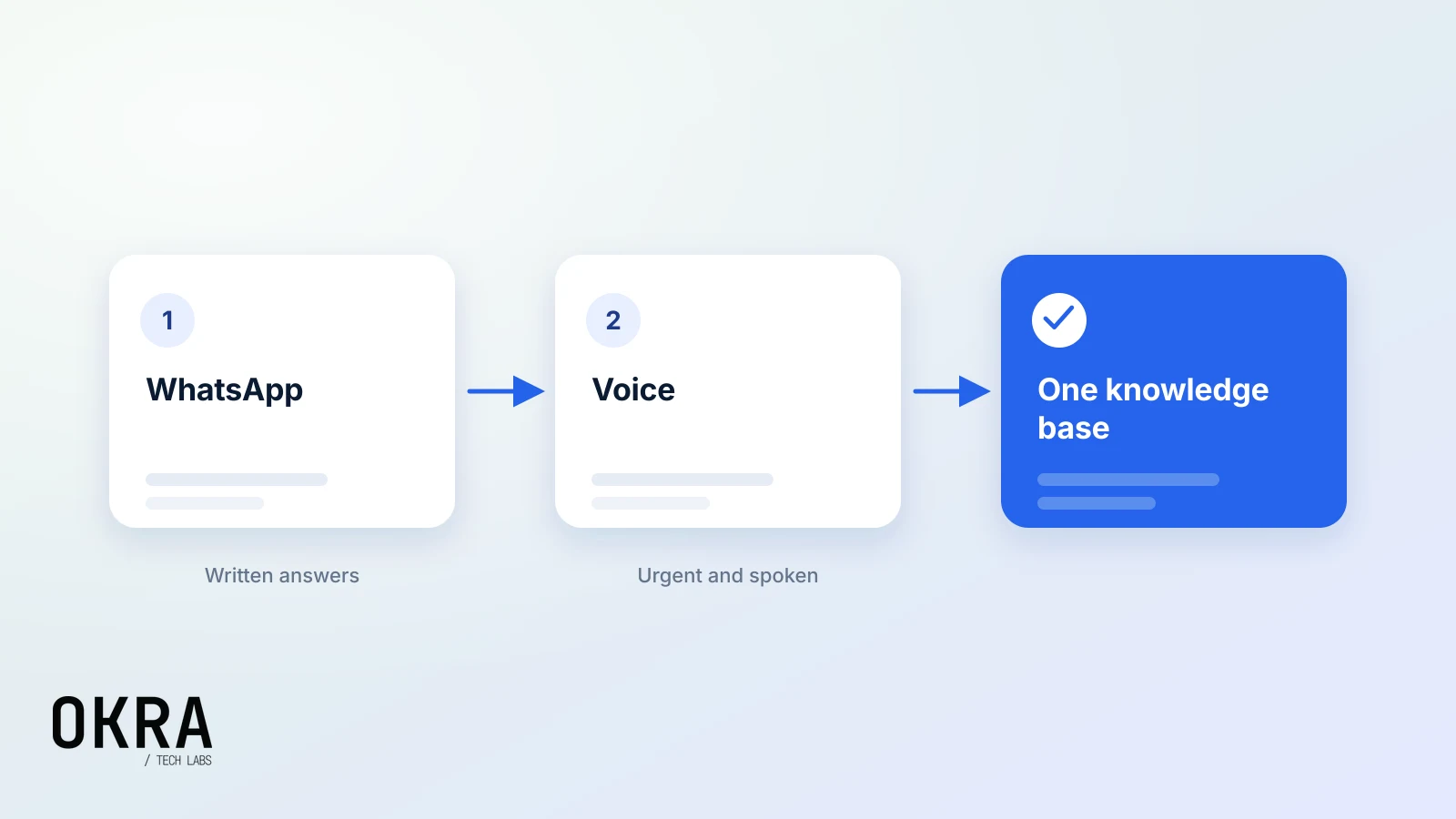
Indian customers reach businesses on two channels above all: WhatsApp and the phone. A WhatsApp AI agent suits questions with a written answer, documents, payments and order updates. A voice agent suits urgent requests, older customers and anyone who would rather talk. The best setups share one knowledge base and one handover process across both, and follow Meta's template rules for WhatsApp and TRAI's rules for calls.
In India, customer support happens on two channels before anything else: WhatsApp and the phone. Email and web chat matter, but a shop owner, a patient or a home buyer will usually message or call. AI agents now work well on both. The question is which to use for what.
What each channel is good at
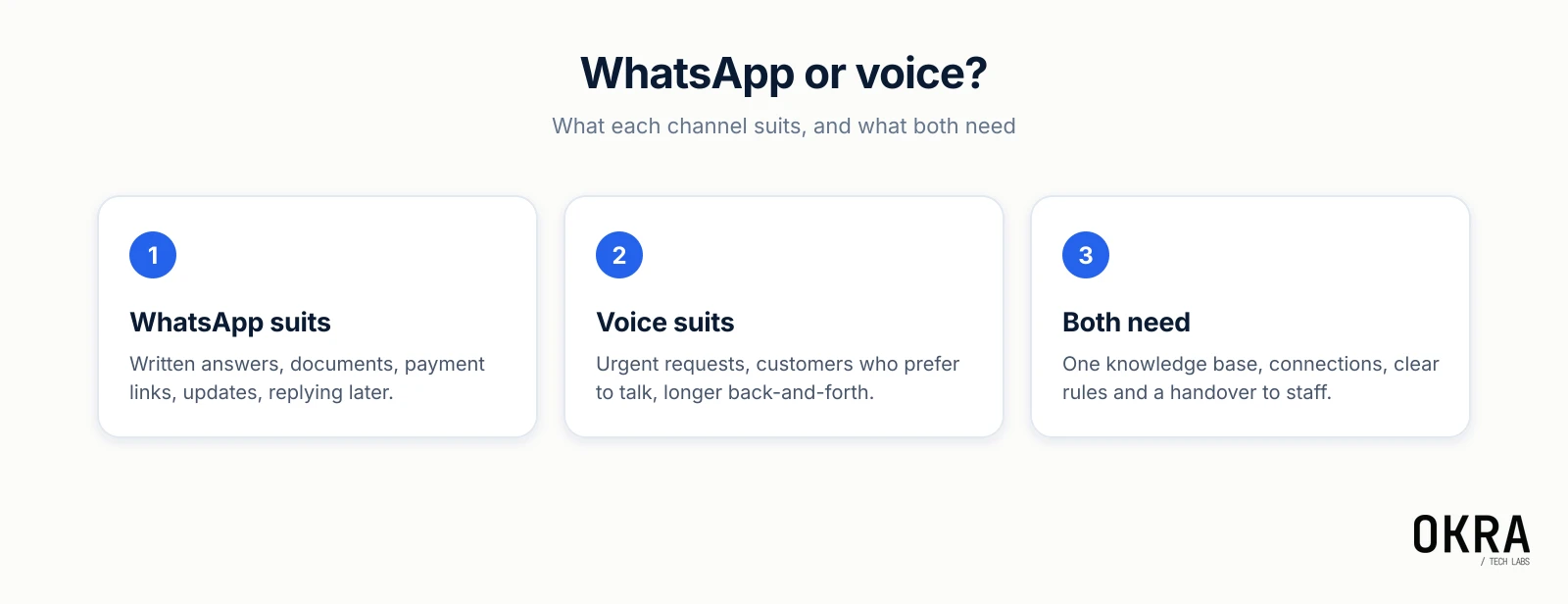
WhatsApp agents suit:
- Questions with a written answer: prices, timings, policies, order status.
- Anything involving documents, photos, locations or payment links.
- Customers who want to reply later, at their own pace.
- Updates you send: confirmations, reminders, delivery notices.
Voice agents suit:
- Urgent requests: a booking for today, a problem happening now.
- Customers who would rather talk, including many older customers.
- Conversations with several back-and-forth questions, like qualifying a property buyer.
- Businesses whose phone lines are busy or closed when calls arrive.
Most businesses need both, and the strongest setups connect them: a call ends with a WhatsApp confirmation, and a WhatsApp chat can ask for a callback.
What runs underneath
Whichever channel you start with, the same four pieces decide whether the agent is useful:
- A knowledge base. Your real prices, policies, timings and FAQs, kept up to date by one owner.
- Connections. Your booking system, CRM, order system or calendar, so the agent can do things, not just talk.
- Rules. What the agent may do alone, what needs a confirmation, and what always goes to a person.
- Handover. A clear way to pass the conversation to staff, with the history attached.
Costs and rules to plan for
WhatsApp. Business messaging runs on Meta's WhatsApp Business Platform. Meta charges per delivered template message, by category and by the recipient's country, and messages a business starts must use approved templates. Plan your templates (confirmations, reminders, follow-ups) and their categories early, because they decide both what you can send and what it costs.
Voice. Calls you receive on your own number are the simplest case. Calls you make are governed by TRAI: promotional calls must come from 140-series numbers and respect DND, and regulated financial firms must use the 1600 series for service calls. Our post on TRAI calling rules sets these out.
Data. Chats and call recordings are personal data under India's DPDP Rules. Decide where they are stored and for how long. See our post on DPDP Rules and AI systems.
A sensible rollout
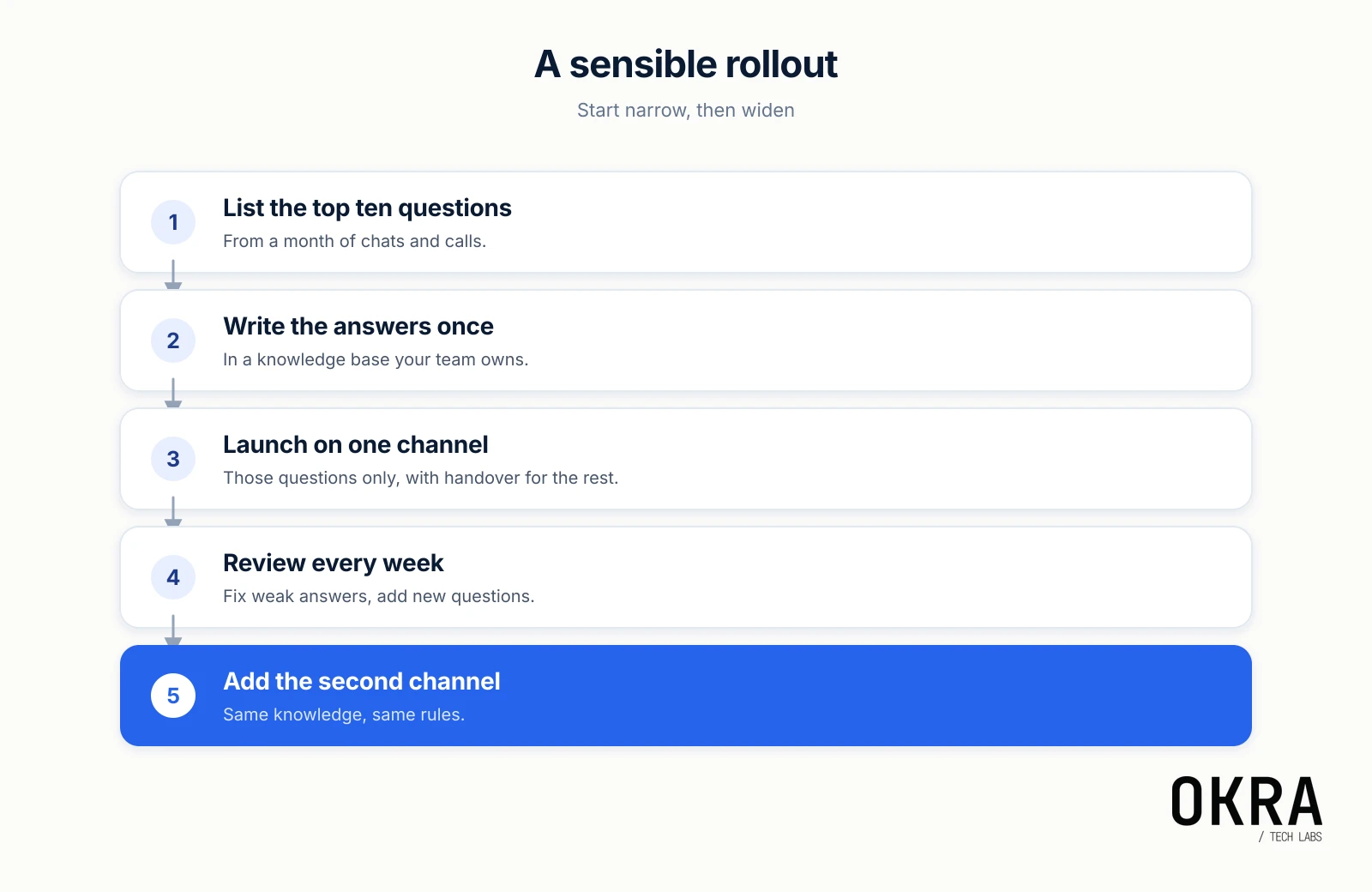
- List the top questions. Pull a month of chats and calls, and find the ten questions that come up most.
- Write the answers once, in a knowledge base your team owns.
- Launch on one channel, for those questions only, with handover for everything else.
- Review every week. Read conversations, fix wrong or weak answers, add new questions.
- Add the second channel using the same knowledge and rules.
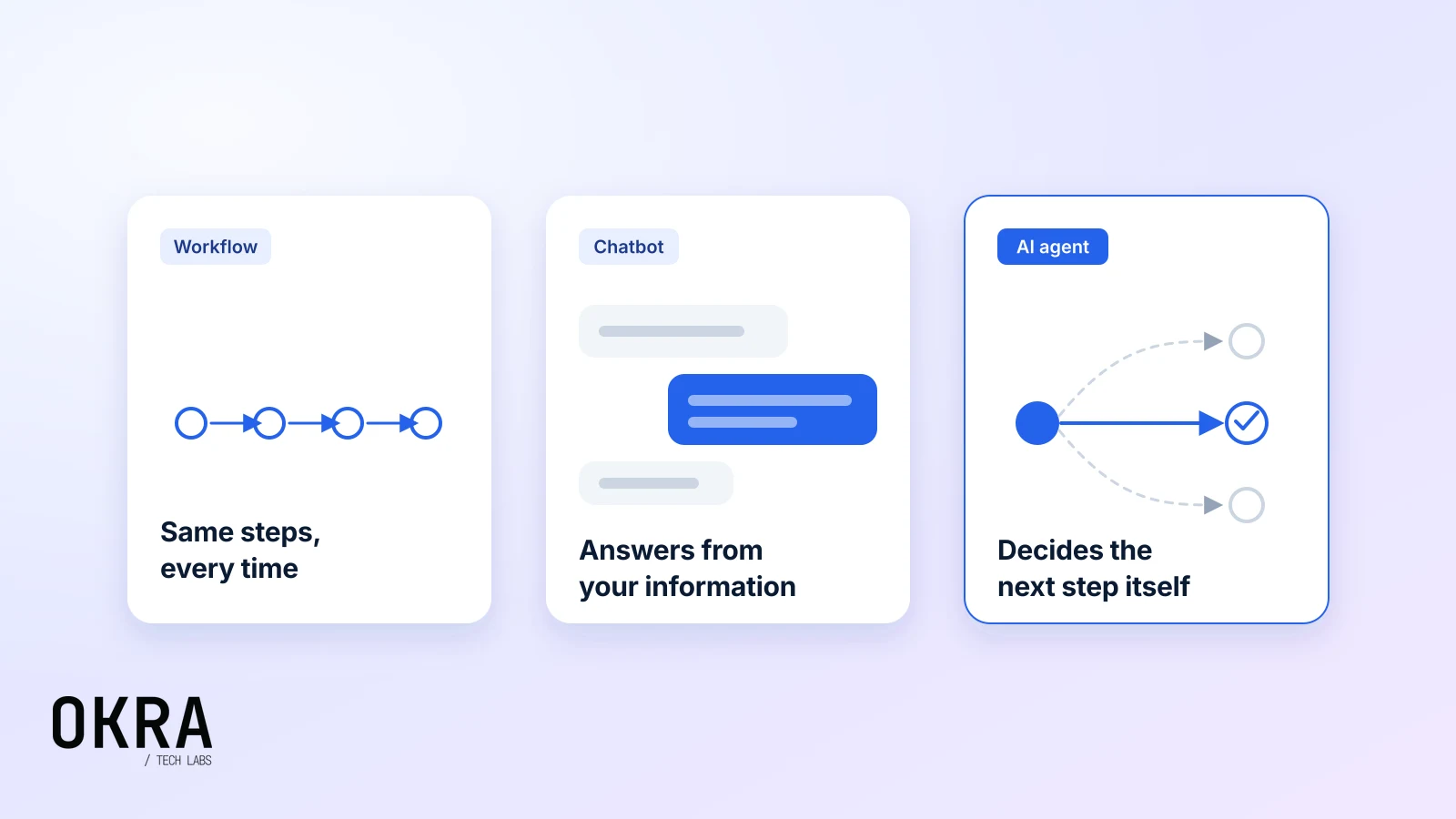
Our post on AI agents, chatbots and workflow automation explains the difference between an agent that only answers and one that takes action. For voice in particular, our AI voice agents answer in Gujarati, Hindi and English and send WhatsApp confirmations at the end of each call.
Questions people ask
Should I start with a WhatsApp agent or a voice agent?
Start where most of your customers already contact you and where you miss the most. If customers message, start with WhatsApp. If they call and your lines are busy, start with voice.
How is WhatsApp Business messaging charged?
Meta charges per delivered template message, by category (marketing, utility, authentication) and by the recipient's country. Replies inside an open customer service window are treated differently. Check Meta's current rate card before you plan volumes.
Can one AI agent handle both WhatsApp and calls?
The same knowledge, rules and handover can sit behind both channels. The conversation design is different, because people speak and type differently, so each channel needs its own testing.
What should always go to a person?
Complaints, refunds, anything about health or money that needs judgement, angry customers, and any question the agent is not sure about.