Generative engine optimization (GEO) is the work of making your pages easy for AI answers to find, trust and quote. AI answers in Google and chat assistants still start from search: they retrieve pages, then summarise and cite a few. Pages that answer the question plainly, show evidence and sources, are easy to crawl and are mentioned by other trusted sites are the ones that get cited. Google says there are no special extra requirements beyond good SEO.
People increasingly get answers instead of links. They ask a chat assistant which AI company in Ahmedabad builds voice agents, or Google shows an AI Overview above the results. If your business is not in that answer, the searcher may never see you.
Generative engine optimization, or GEO, is the name for the work of getting into those answers. This post explains how AI answers pick their sources, and what actually helps.
Where the term comes from
GEO was named in a 2023 paper by researchers from Princeton, IIT Delhi, Georgia Tech and the Allen Institute for AI, published at KDD 2024. They tested ways of rewriting web content and found that some methods, such as adding citations, quotations and statistics, could boost a page's visibility in generative engine responses by up to 40%. They also found the best method depends on the subject.
That last point matters. GEO is not one trick. It is making each page the clearest, best-supported answer to a specific question.
How AI answers choose sources
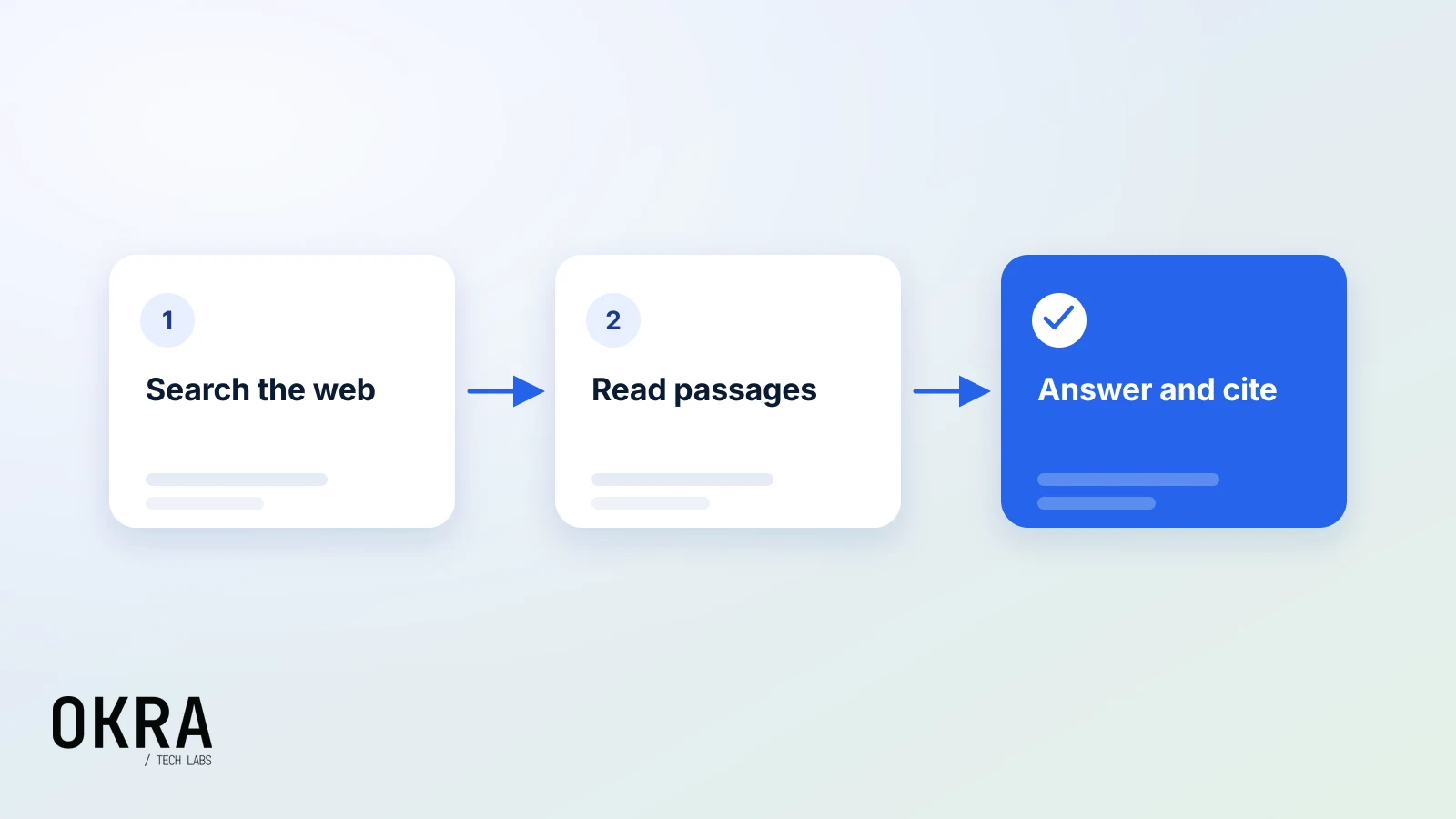
Most AI answers follow the same broad steps:
- Retrieve. The system searches the web or its index for pages related to the question, often running several related searches at once.
- Read. It pulls passages from the pages it found.
- Answer. A language model writes a summary from those passages.
- Cite. It links a few of the pages it used.
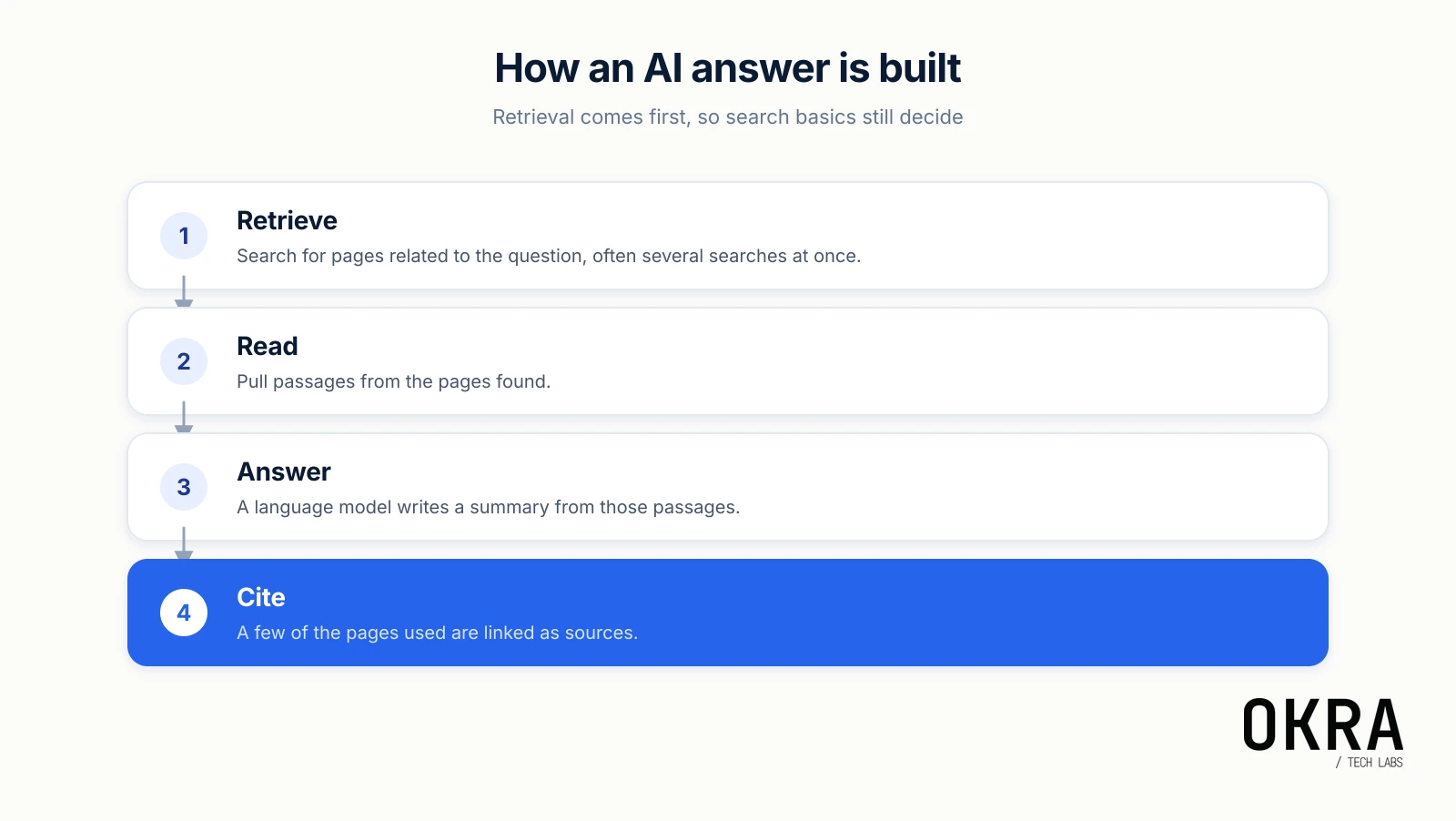
The first step is still search. If your page is not found, it cannot be quoted. That is why Google's own guidance says the best practices for SEO remain relevant, and that there are no additional requirements to appear in AI Overviews or AI Mode beyond them. Google lists basics such as allowing crawling in robots.txt, making content findable through internal links, and a good page experience.
What gets a page cited
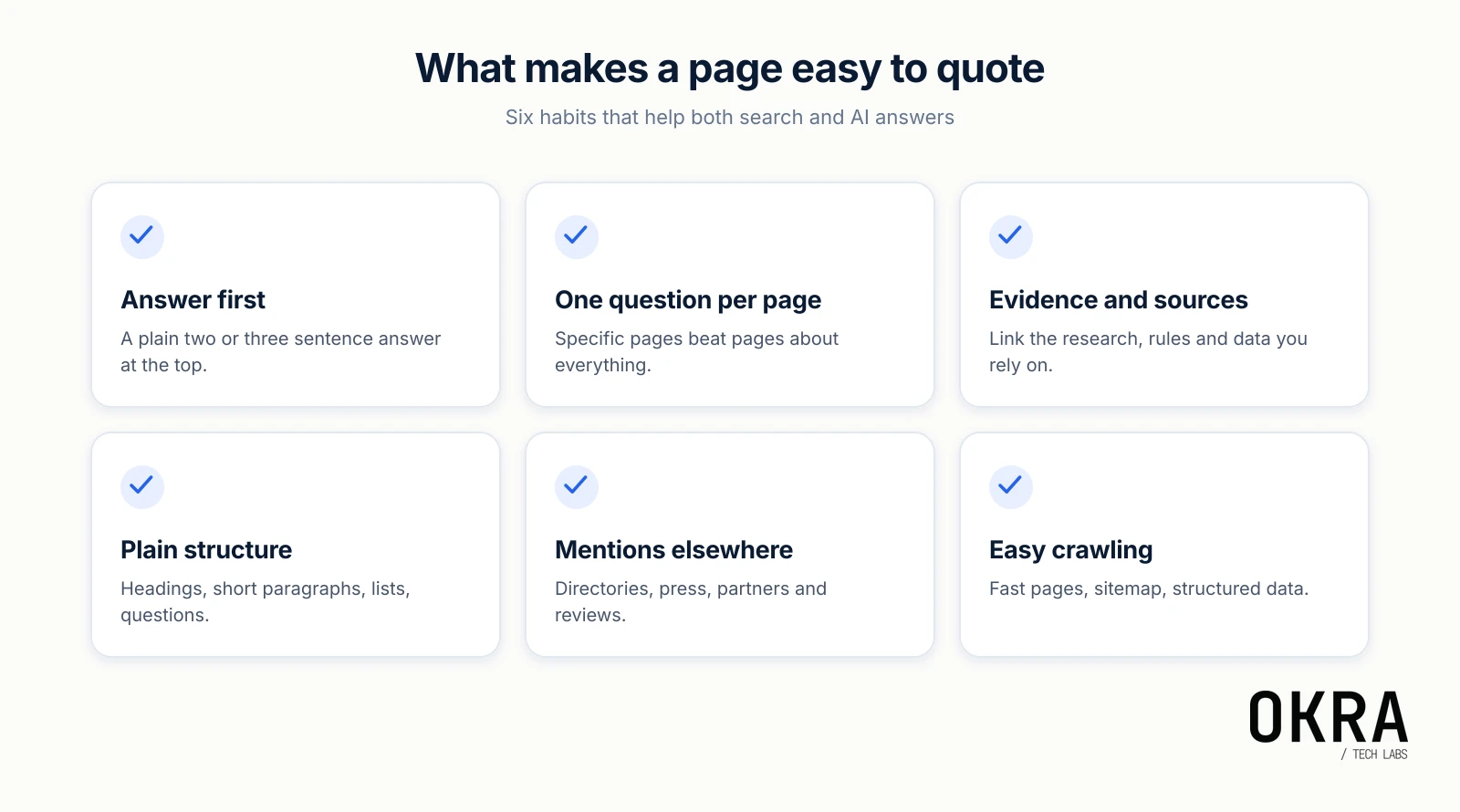
- Answer first. Put a plain, two or three sentence answer at the top of the page. AI systems lift short, self-contained passages.
- One question per page. A page about "AI voice agents for hospitals in Gujarat" beats a page about everything you do.
- Evidence and sources. Link the research, rules and data you rely on. The GEO paper found citations and statistics help, and they also help human readers trust you.
- Plain structure. Clear headings, short paragraphs, lists and a frequently-asked-questions section.
- Mentions elsewhere. Directory profiles, press, partner pages and reviews tell both search engines and AI tools that you are real and relevant.
- Easy crawling. Fast pages, a sitemap, no content hidden behind scripts or logins, and structured data describing your organisation.
What about llms.txt?
llms.txt is a proposed file at the root of a website that gives AI tools a short guide to the site and links to clean versions of its pages. It takes an hour to write and does no harm. Treat it as a helpful map for tools that read it, not as a ranking factor.
Measuring it
There is no single dashboard for AI visibility yet. A simple routine works:
- Write ten questions your customers would really ask.
- Once a month, ask them in the main AI assistants and in Google.
- Record whether your business is mentioned, whether your pages are cited, and which competitors appear.
- When a competitor's page is cited instead of yours, read it and ask what it answers better.
Where to start
Pick the three questions that matter most to your sales. Write one page for each that answers it in the first paragraph, shows evidence, and links to your related pages. Make sure your business has consistent profiles on the directories your customers use. Then measure every month. It is slower than buying ads, but the pages keep working.
Questions people ask
What is generative engine optimization?
It is the practice of shaping your content so that AI-generated answers, such as Google's AI Overviews or chat assistants, include and cite it. The term comes from a 2023 research paper by researchers at Princeton, IIT Delhi and others.
Is GEO different from SEO?
Mostly it is SEO done well. Google says there are no additional requirements to appear in AI Overviews or AI Mode beyond its normal search guidance. The difference is emphasis: clear answers, evidence and citations matter even more.
Does llms.txt help?
llms.txt is a proposed file that gives AI tools a short guide to your site. It is cheap to add and can help tools that read it, but it is not a ranking signal for Google.
How do I know if AI answers mention my business?
Ask the main assistants a fixed list of questions your customers would ask, once a month, and record whether your business or pages appear and are cited.