Claude Ship, announced by Anthropic on 23 November 2026 in beta for Team and Enterprise plans, reviews code changes on GitHub, fixes failing checks and review comments, and can approve routine changes under a policy your team writes. Test it first on small, low-risk changes in one repository, run approvals in observe-only mode, and keep people on anything that touches payments, logins, personal data or the database.
On 23 November, Anthropic announced Claude Ship, a set of tools that reviews proposed code changes, fixes what is wrong with them and, if a team allows it, approves the routine ones. TechCrunch's report describes it as letting AI agents review, fix and approve changes. It is in beta for Claude Team and Enterprise plans.
For a business, the interest is simple. AI now writes code faster than people can check it, so the checking has become the slow step. Claude Ship is aimed at that step. Here is what launched, five uses worth testing, and what should stay with people.
A note on sources: this post is based on launch-day press coverage. Check Anthropic's own documentation before you configure anything, because beta features change.
What launched
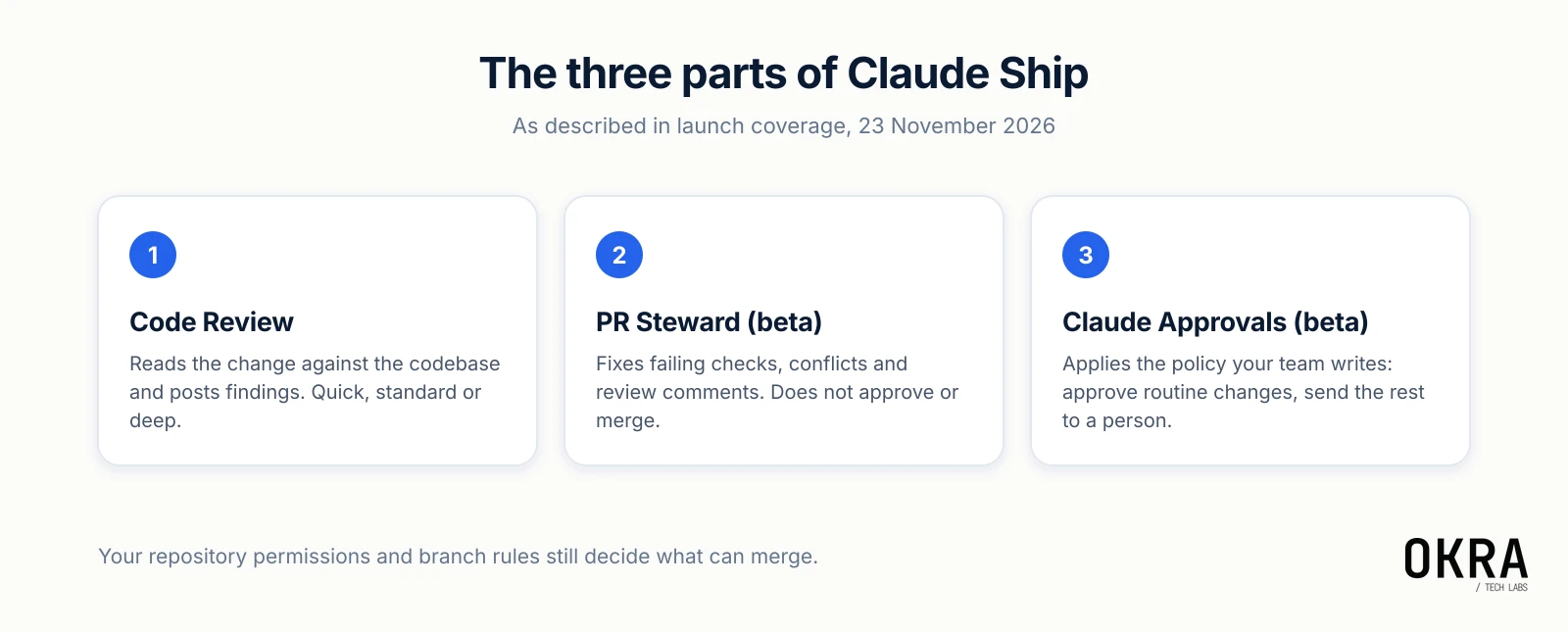
Claude Ship has three parts, according to TechCrunch and TestingCatalog's summary:
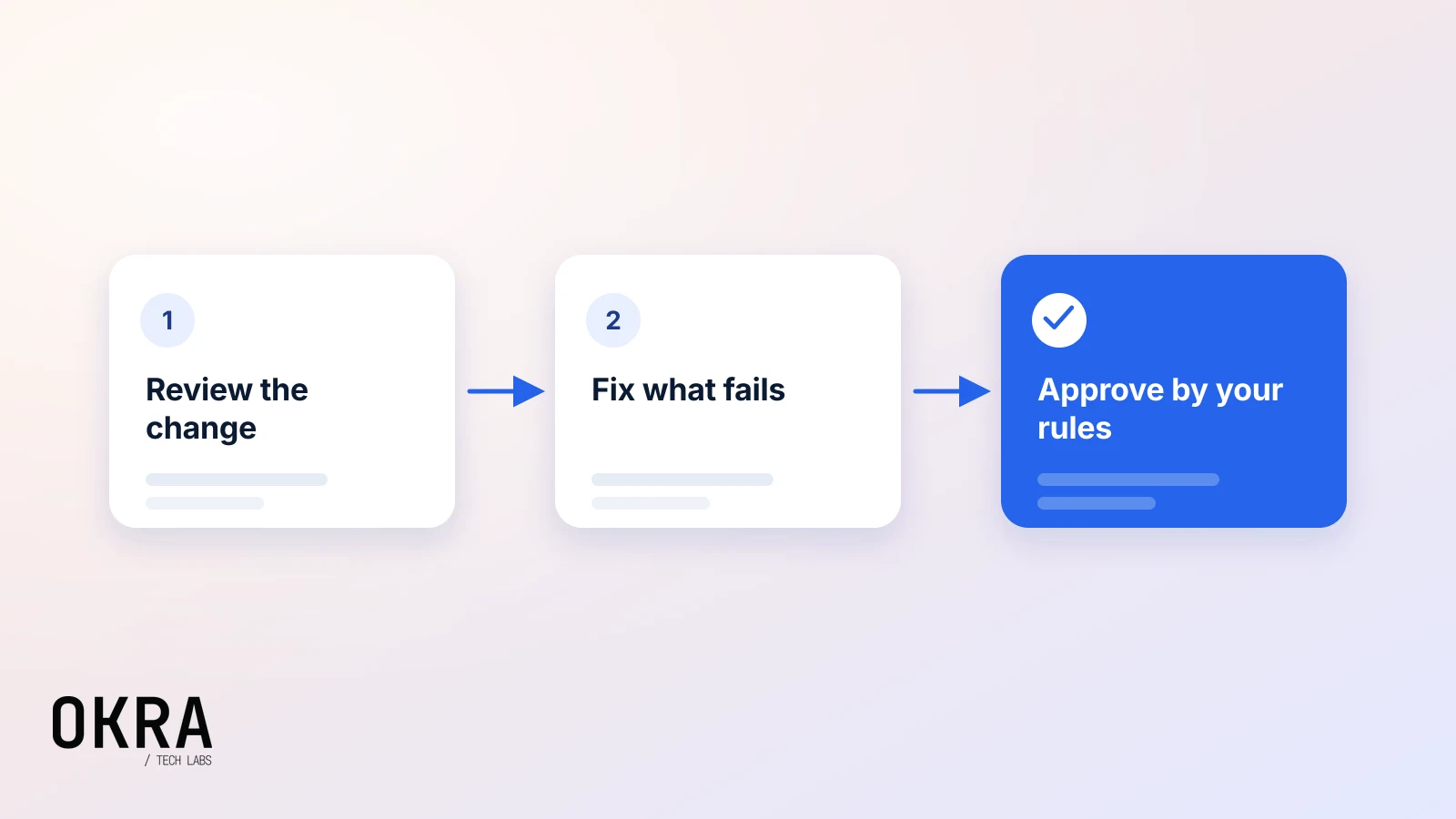
- Code Review reads a proposed change against the rest of the codebase and posts its findings on the change. Teams choose a quick, standard or deep review for each repository. This part is generally available.
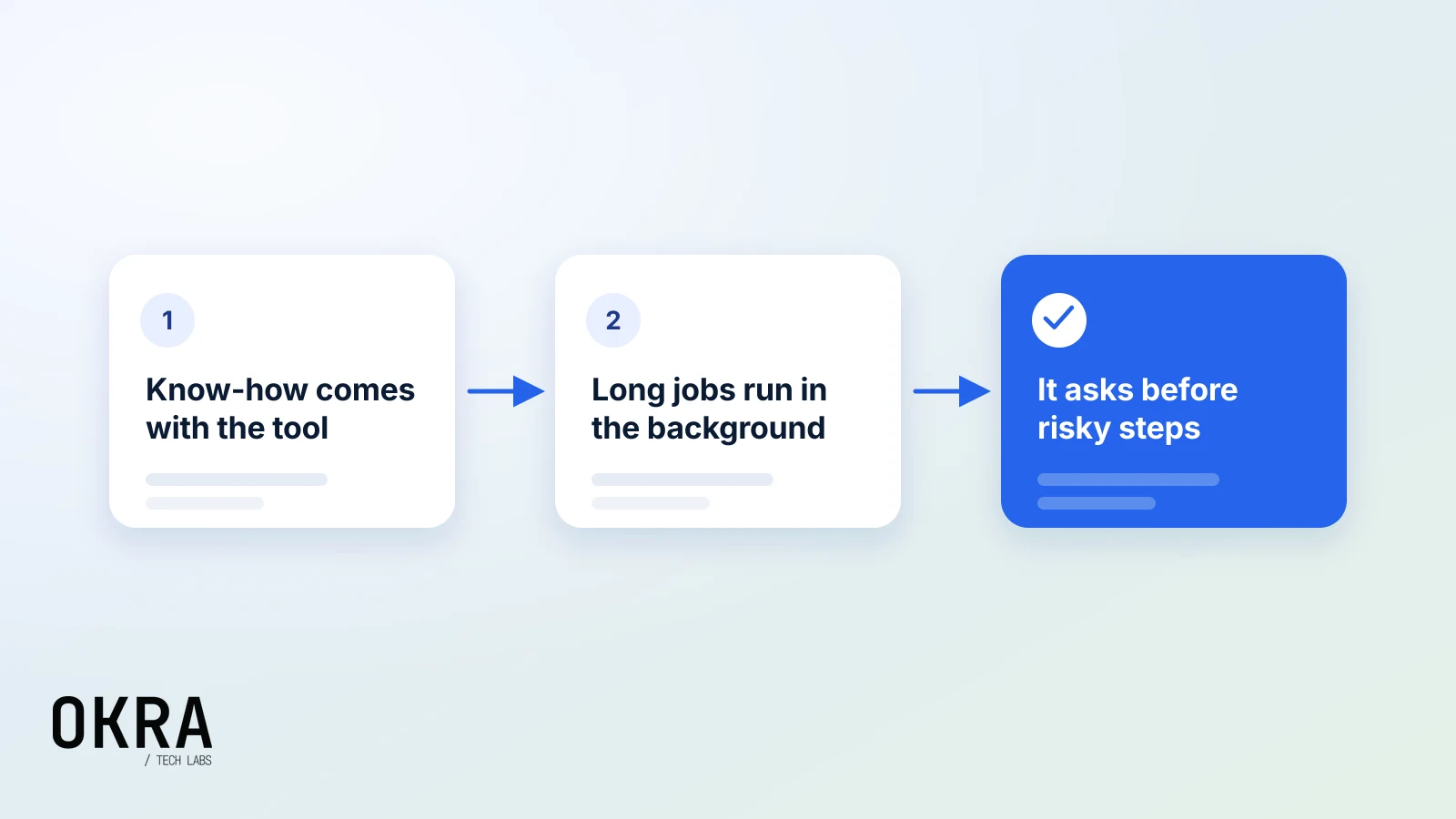
- PR Steward (beta) works through failing automated checks, merge conflicts and review comments. After each fix it leaves a comment saying what it changed and how to undo it. It is designed not to approve or merge.
- Claude Approvals (beta) applies a policy the team writes in plain language and keeps as a file in the repository. The policy says which changes can be approved automatically and which must go to a person.
Developers can start the whole sequence with one command, /ship, in Claude Code. They can steer the fixing agent with comments on the change, and stop it the same way.
A few practical points from the same reports:
- It works with GitHub repositories. Neither report mentions other code hosts.
- An admin turns it on per repository and sets the review level, when reviews run and a monthly spending limit. Usage is billed like other Claude Code usage.
- Your existing rules still apply. The repository's permissions and branch protection decide what can actually merge.
- Some organisations are excluded, including those on zero data retention, HIPAA or customer-managed encryption key setups, according to TestingCatalog.
Five business uses worth testing first
1. A first review on every change
Most teams have more changes waiting than reviewers to read them. An automated first pass catches the plain mistakes (a missed case, a broken test, a forgotten file) before a person spends time on it. The human reviewer can then think about the design.
Keep a person on: the final look. Treat the AI review as a second pair of eyes, not the only pair.
2. Clearing small, routine changes
Text fixes, documentation updates, small library upgrades with passing tests. These pile up because nobody wants to review them. They are the natural first candidates for automatic approval, because a mistake is cheap and easy to undo.
Example (illustrative): a product team lets the tool approve documentation and wording changes only. Everything else still waits for a person.
3. Keeping work moving across time zones
A developer in Ahmedabad opens a change in the evening; the reviewer is in Dubai or London and offline. If a test fails overnight, the change normally sits until morning. A fixing agent can repair the failing check and leave a note, so the reviewer finds a change that is ready to read.
4. Writing your approval rules down
To use automatic approval you have to write the rules: which folders are sensitive, which changes need two people, who signs off on what. Many teams have never done this. The exercise is useful even if you never let the tool approve anything, because new joiners and auditors can finally read how changes are meant to be approved.
5. Relieving the one senior engineer
In a small team, one experienced person reviews everything and becomes the queue. Letting an AI review handle the first pass, and a fixing agent handle the back-and-forth, gives that person time for the changes that need judgement.
What should stay with people
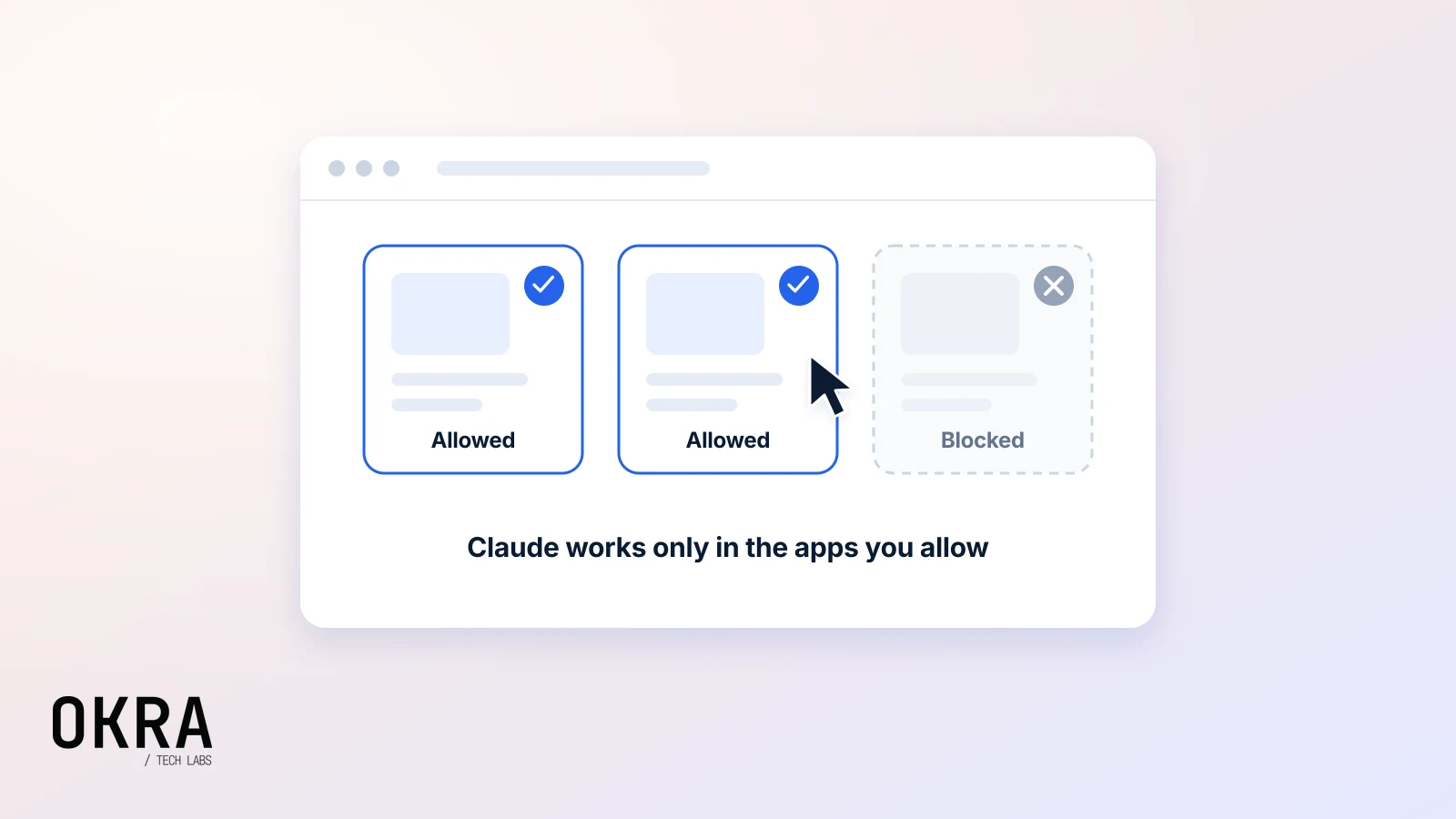
The launch reports say teams control where Claude Ship runs and which changes are escalated to a person. Use that control. We would keep a human approver on:
- Payments and billing code. A wrong sign or rounding rule costs real money.
- Logins, permissions and security settings.
- Anything that reads or writes personal data. For Indian companies this is a legal matter too; see our post on the DPDP Rules and AI systems.
- Database changes that are hard to reverse.
- Infrastructure and deployment settings.
There is also a governance question. If the same AI system wrote a change, reviewed it and approved it, has anyone independent looked at it? If your company is audited, ask your auditor how they view AI approval before you turn it on for anything that matters.
And remember what makes any of this safe: tests. An approval is only as good as the checks behind it. Our guide to testing an AI system before launch applies to the software around it as well.
A rollout list
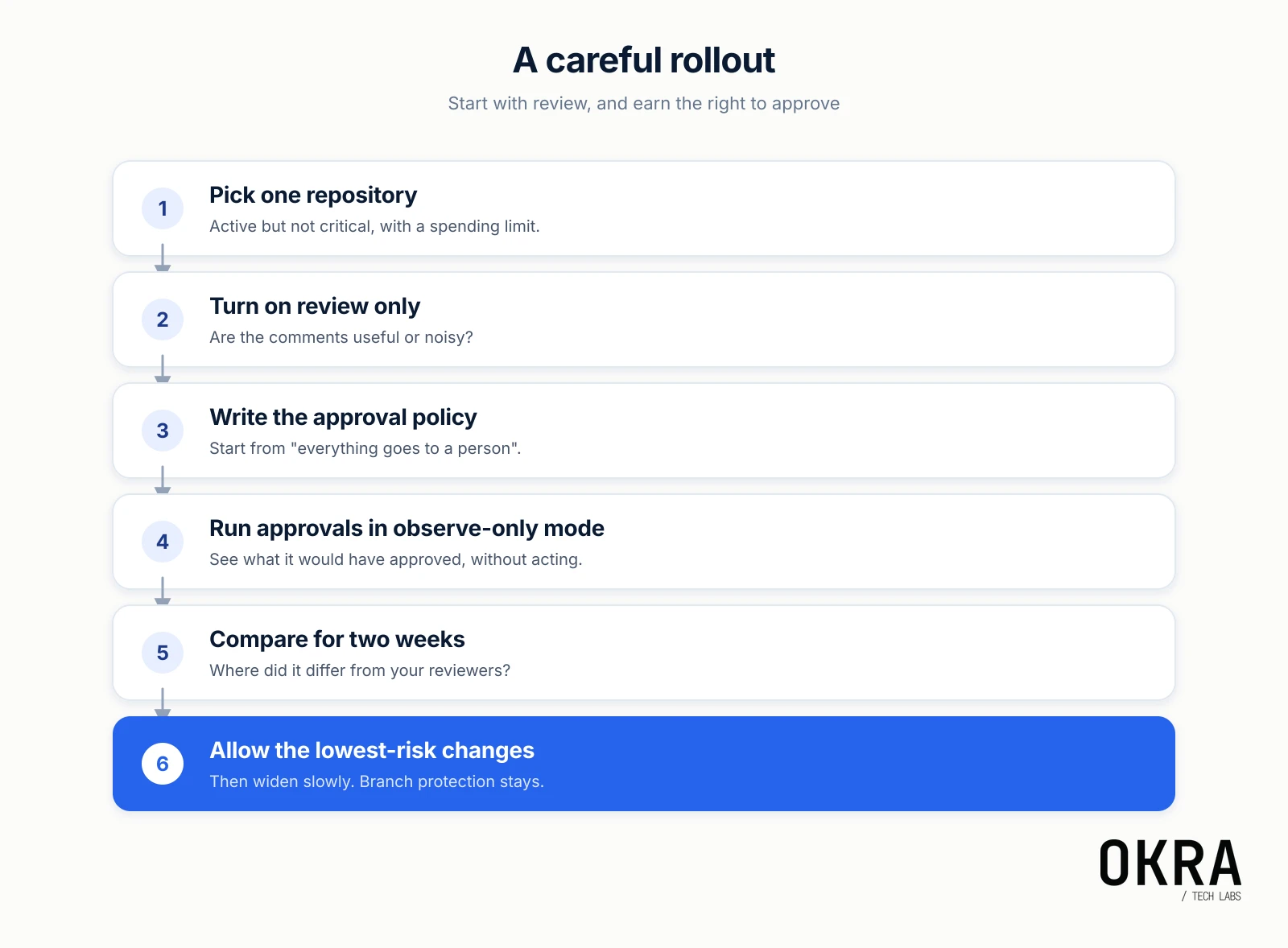
- Pick one repository that is active but not critical, and set a spending limit.
- Turn on review only. See whether its comments are useful or noisy.
- Write the approval policy with the team, starting from "everything goes to a person".
- Run approvals in observe-only mode. Both reports say Anthropic suggests this: the tool shows what it would have approved without acting.
- Compare for two weeks. Where did it agree with your reviewers? Where would it have approved something a person stopped?
- Allow the lowest-risk category, then widen slowly. Leave branch protection as it is.
If someone else builds your software
Many businesses do not have developers of their own. If a vendor or an outside team maintains your systems, three questions are worth asking this month:
- Does AI review or approve changes to our code, and under what written rules?
- Which kinds of change always go to a named person?
- If a bad change gets through, how fast can it be rolled back, and who decides?
A good team will have clear answers. Tools like this can make software delivery faster and more careful at once, but only when people have decided, in writing, where the machine stops. For a wider view of when to let AI act on its own, see our guide to agents, chatbots and workflow automation.
Questions people ask
What is Claude Ship?
It is a set of tools from Anthropic, announced on 23 November 2026, that reviews proposed code changes, fixes problems such as failing checks, and can approve changes that a team's written rules allow. Press reports say it works with GitHub repositories on Claude Team and Enterprise plans.
Does Claude Ship merge code on its own?
According to launch coverage, the fixing agent is designed not to approve or merge. A separate approvals feature can approve changes under a policy file the team writes, and the repository's own permissions and branch rules still decide what can merge.
Is it safe to let AI approve code changes?
For small, routine changes with good automated tests, it can be reasonable. For anything that touches payments, logins, personal data or the database, keep a person as the approver. Anthropic itself suggests starting in observe-only mode, where the tool shows what it would have decided without acting.
We are not a software company. Does this matter to us?
Yes, if someone builds or maintains software for you. Ask them whether AI reviews or approves changes to your systems, which changes always go to a person, and how a bad change is rolled back.