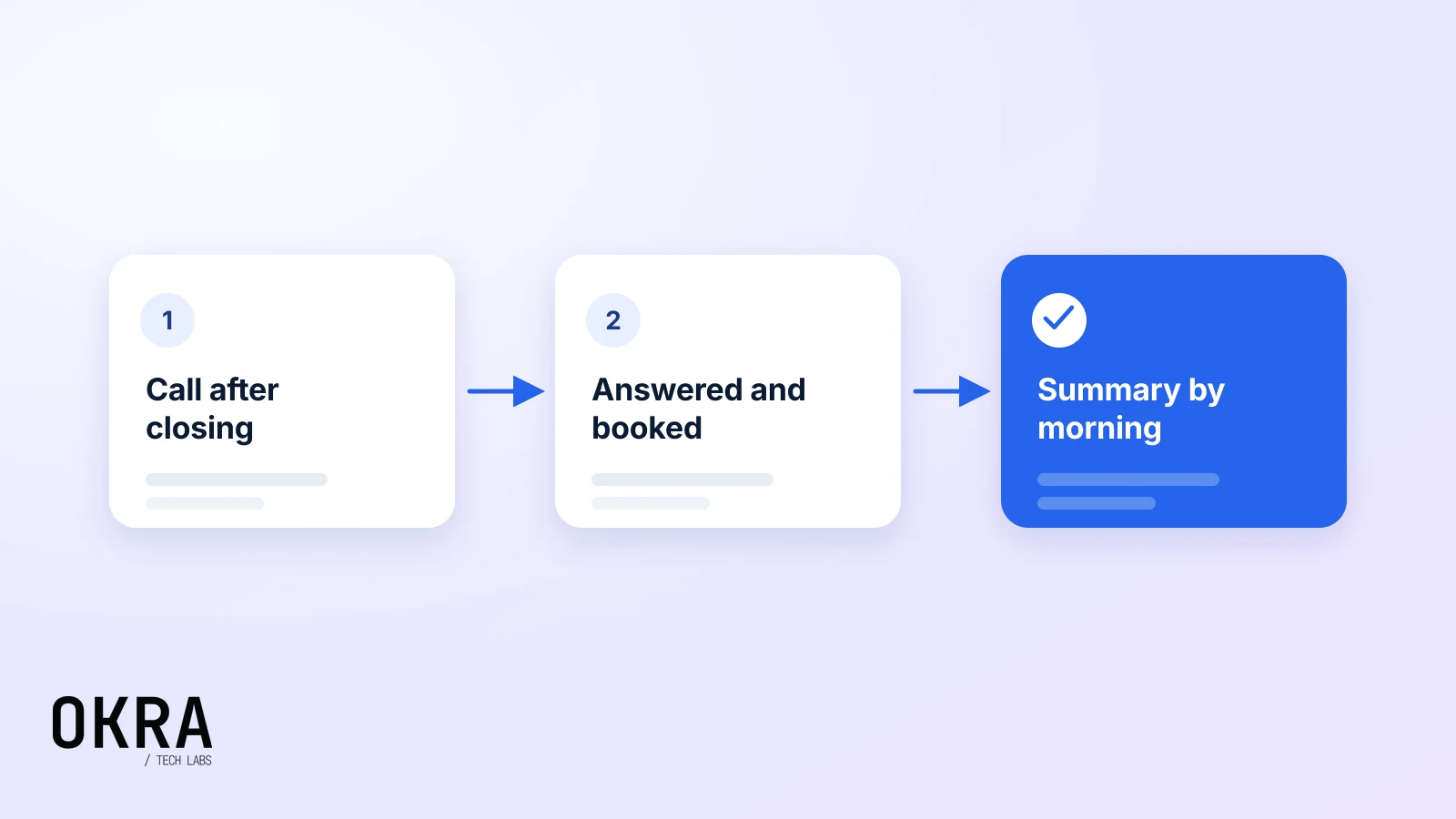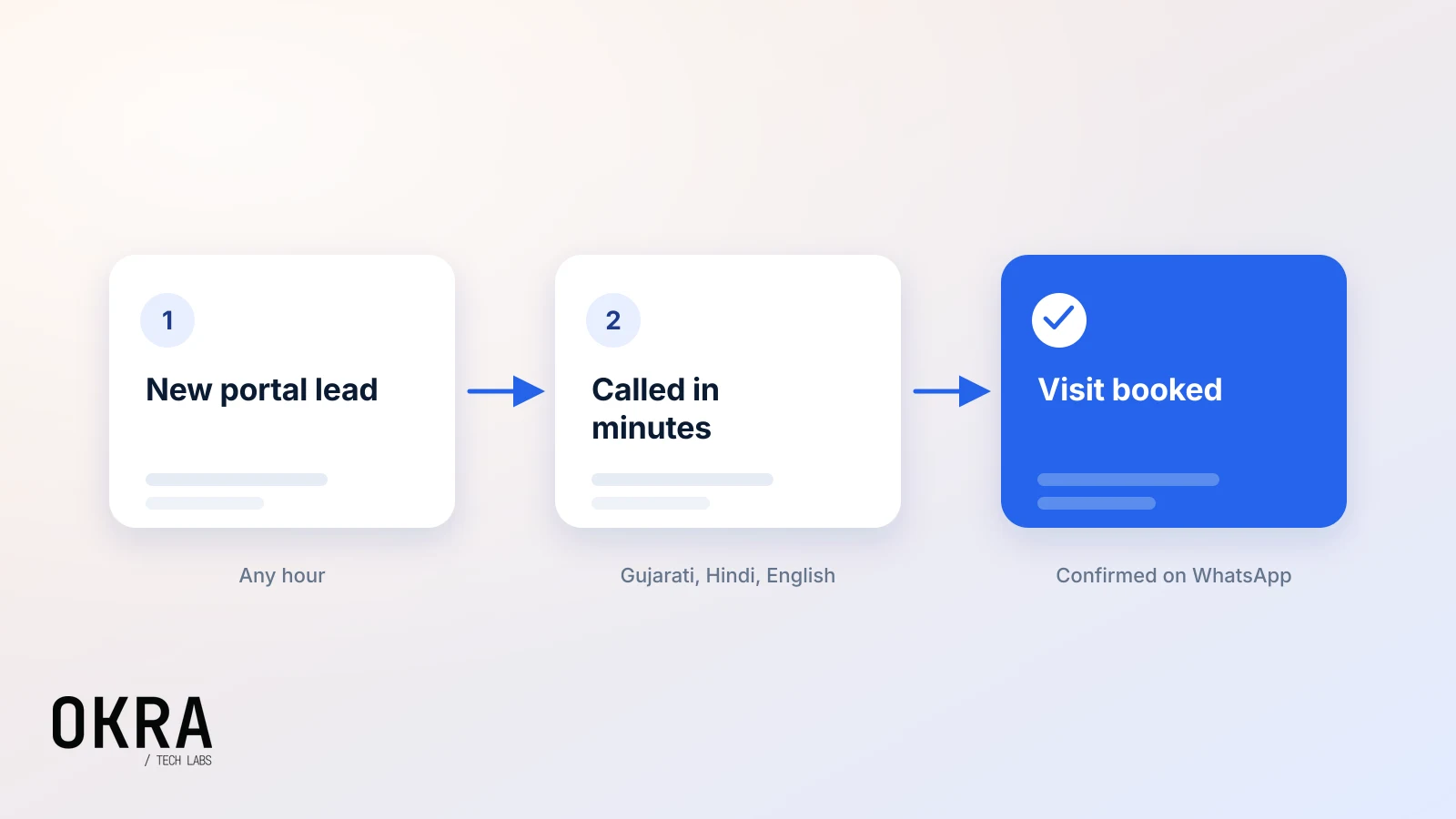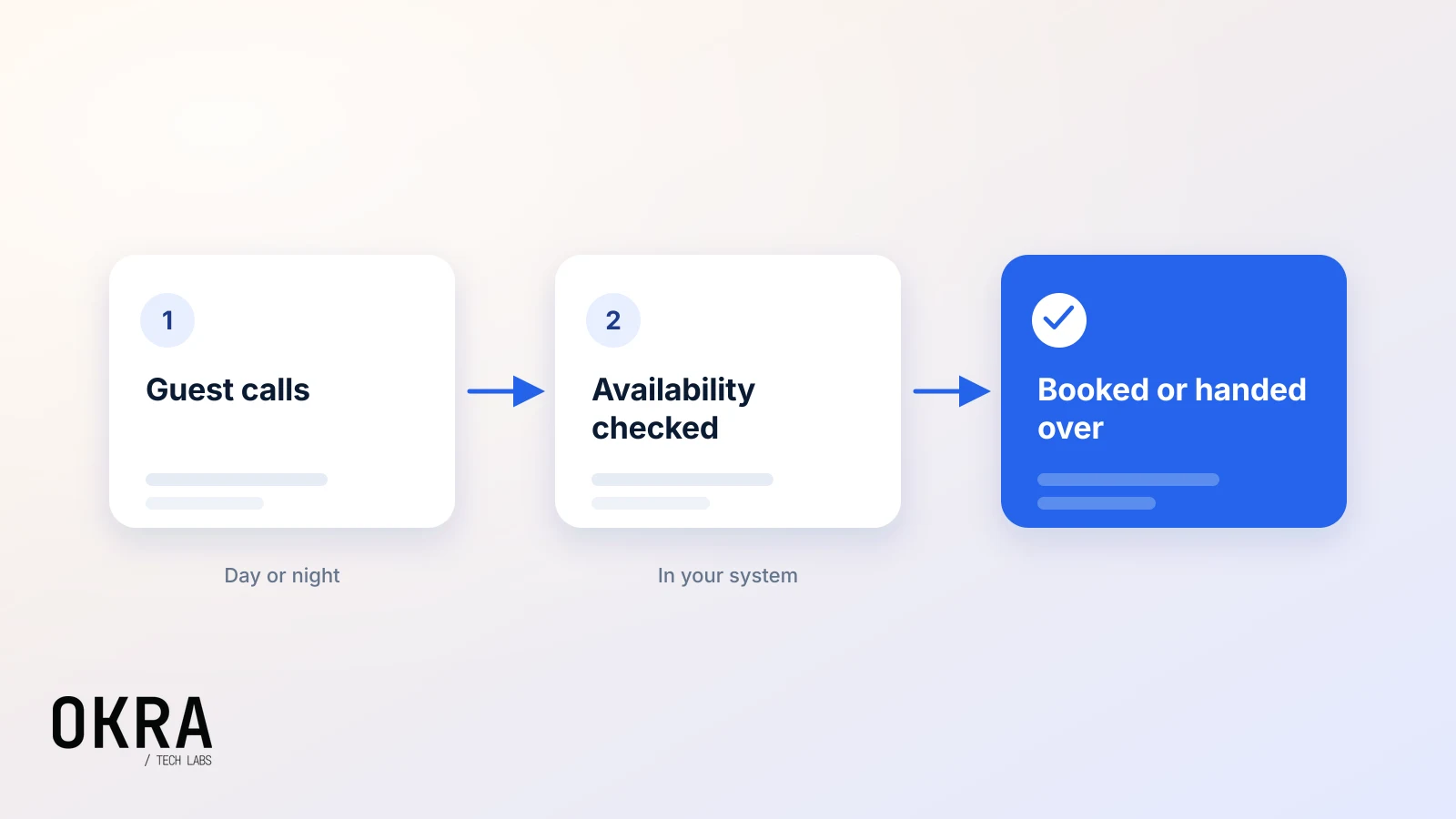
More site visits rarely need more leads. They need fewer losses between the enquiry and the visit. Seven steps do most of the work: measure each stage, reach every enquiry quickly, give the buyer a reason to come, offer a specific slot, confirm and remind, rebook the people who miss, and keep the advertising honest. Research on appointment reminders, from healthcare, shows that reminders raise attendance and that more than one reminder works better than one.
Ask a builder how to get more site visits and the usual answer is "more leads". So the portal budget goes up, more forms arrive, and the number of families walking through the sample flat barely moves.
The short answer is different. You raise site visits by losing fewer buyers between the enquiry and the visit. That is a process problem, and it can be fixed in seven steps, most of which cost nothing but attention.
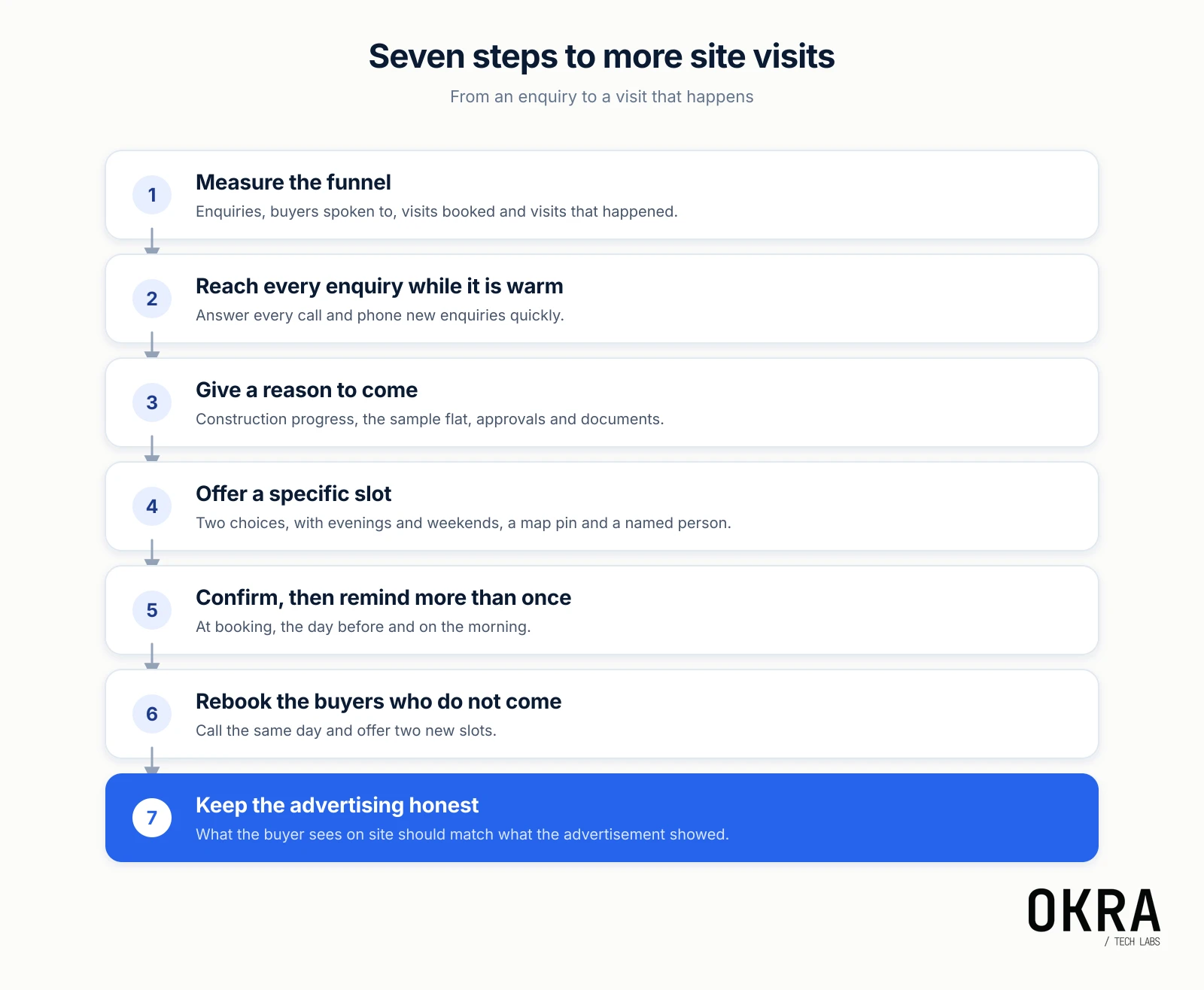
1. Measure the funnel before you change it
Count four numbers for last month: enquiries received, buyers actually spoken to, visits booked, and visits that happened. The first and the last are easy to find. The losses are in the middle.
The count tells you where to work. If most enquiries were never spoken to, the problem is calling. If visits are booked but people do not come, the problem is confirmation. Our post on where presales loses calls describes each leak.
2. Reach every enquiry while it is warm
A buyer who fills a form has often filled others too. The first project to call sets the comparison. The best-known study on this, published in the Harvard Business Review, found that companies that tried to reach a lead within an hour were far more likely to have a useful conversation than those that waited longer. That study is American and covers many industries, as we explain in our review of the research on lead response time, but the direction is hard to argue with.
This includes inbound calls. A call that rings out on a Sunday, while the team is showing flats, is an enquiry you paid for and did not answer.
3. Give the buyer a reason to come
"Please visit our site" is not a reason. A visit takes half a day and often the whole family. Tell the buyer what they will see that they cannot see on a screen.
What buyers want to see is not a mystery. In ANAROCK's Homebuyer Sentiment Survey for the first half of 2025, an online survey of about 8,250 people in 14 cities, 98% named assurance of timely completion among their top demands and 93% named construction quality. So invite them to check exactly those things: how far the building has come, the materials in the sample flat, the approvals and the RERA registration.
Use what the first call told you. A buyer who asked about schools should hear how far the school is, and be offered a drive past it.
4. Offer a specific slot, and make it easy
"Come any time this week" produces few visits. "Saturday at 11, or Sunday at 5?" produces a decision. Offer two slots, and include evenings and weekends, because that is when working families are able to come.
Then remove the small obstacles:
- Send a map pin, not an address.
- Name the person who will meet them.
- Say how long the visit takes.
- Ask who else will decide, and invite them too.
- If the site is far out, offer a pick-up.
5. Confirm, then remind more than once
A visit booked on Tuesday for Sunday has five days to be forgotten. Confirm it at once in writing, then remind.
There is no public study of site visit reminders in Indian real estate, so the nearest evidence is from healthcare, where missed appointments have been studied for years. A 2016 review in BMJ Open pooled 26 studies of digital reminders for clinic appointments. Across the main analysis, 67% of patients who got a reminder attended, against 54% of those who did not. Several reminders worked better than a single one, and voice and text reminders did about as well as each other. A clinic is not a housing project, so treat this as a direction, not a forecast.
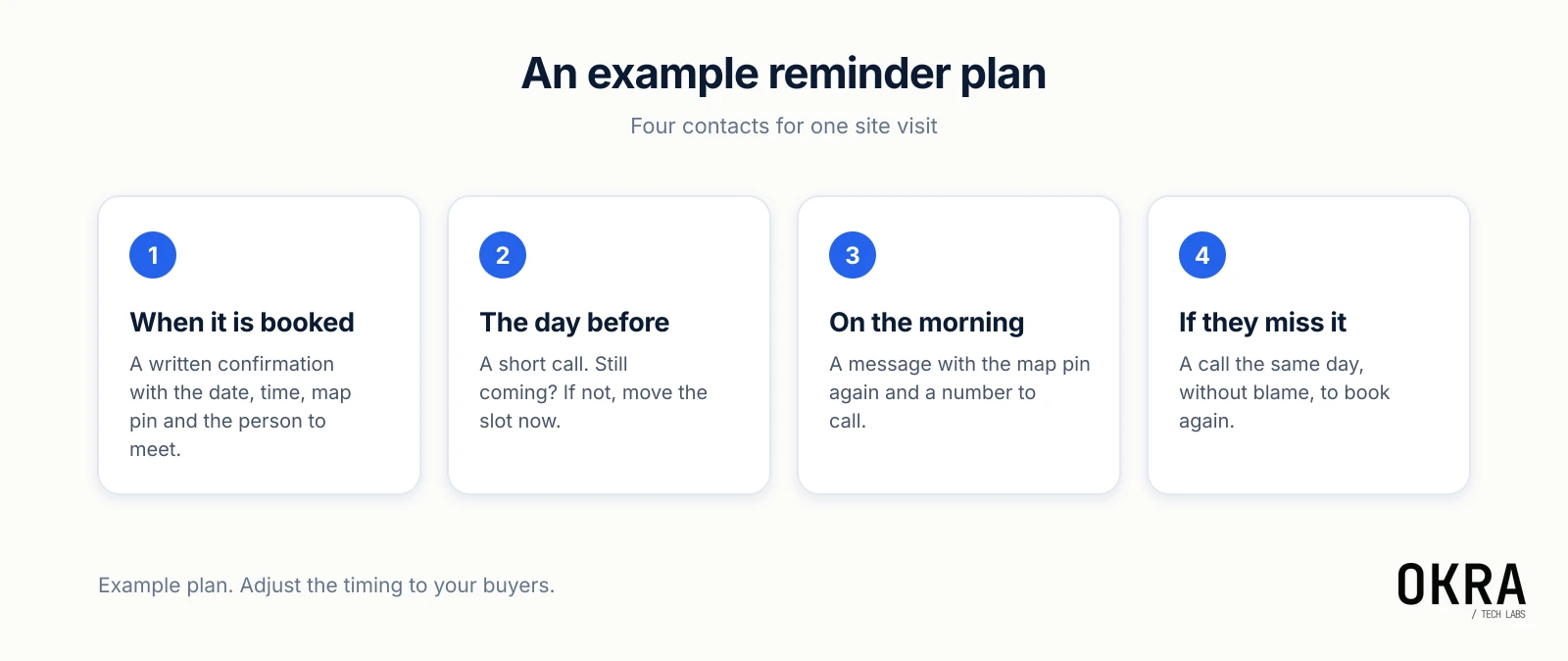
The day-before call matters most. It is the moment a buyer says "actually, can we do next week?", which is far better than an empty slot.
6. Rebook the buyers who do not come
A missed visit is rarely a refusal. A child fell ill, a relative arrived, it rained. Call the same day, without blame, and offer two new slots. It is an easy call to skip, because by Monday there are new leads to chase.
Keep a simple rule: nobody is marked as lost until they have said no, or until a fixed number of attempts over a few weeks has gone unanswered.
7. Keep the advertising honest
A buyer who arrives expecting what the advertisement showed, and finds something else, does not book. Honest advertising is also the law.
- Registration. Under the RERA Act, a project cannot be advertised before it is registered, and the registration number must appear in every advertisement, as Andhra Pradesh RERA's summary sets out.
- QR codes in Maharashtra. Since 1 August 2023, MahaRERA has required a QR code beside the registration number in project advertisements, with a penalty of up to ₹50,000 for each violation, according to Housing.com News. Check your own state's rules.
- AI images. Guidelines issued by the advertising regulator ASCI in September 2026, which take effect three months after publication, give a 3D model of an unbuilt housing complex as an example of content that needs a label when it could affect a buyer's decision.
Speak the buyer's language throughout
Every step above works better in the language the buyer uses at home. A family deciding on the largest purchase of its life asks more questions, and says yes to a visit more easily, in Gujarati or Hindi than in formal English. Indian regional languages are not a courtesy here. They are how the conversation happens.
Where a voice agent fits
Look at the seven steps again. Answering every call, phoning new enquiries within minutes, offering slots, confirming, reminding twice and calling back the no-shows are all phone work, and all of it is repeatable. It is also the work that gets dropped when the team is busy with the buyers in front of them.
That is what the AI calling agents we build for builders do: an AI voice agent that answers and makes calls in Gujarati, Hindi and English, books site visits and logs each call as a lead. Your team keeps the part only people can do, which is meeting the family at the gate.
Start with step 1 this week. The four numbers will tell you which of the other six to fix first.
Questions people ask
How can a builder increase site visits without buying more leads?
By losing fewer of the leads already paid for. Answer every call, phone new enquiries quickly, offer a specific time, confirm it, remind the buyer the day before and on the morning, and call anyone who does not turn up to book again.
Do reminders really reduce site visit no-shows?
There is no public study of property site visits in India. The nearest evidence is from healthcare: a 2016 review in BMJ Open of 26 studies found that patients who got reminders attended more often, and that several reminders worked better than one.
What should a site visit invitation include?
A date and time, the name of the person the buyer will meet, a map pin, what they will see (sample flat, construction progress, documents), how long it takes, and the project's RERA registration number.
Can an AI voice agent book site visits?
Yes, for the repeatable part: answering calls, phoning new enquiries, asking the basic questions, offering slots, and making reminder calls. Price talks and the visit itself stay with your sales team.
Sources
- Using digital notifications to improve attendance in clinic: systematic review and meta-analysis (BMJ Open, 2016)
- Homebuyer Sentiment Survey H1 2025 (ANAROCK Research)
- Provisions of the RERA Act, 2016 for advertisement of real estate projects (Andhra Pradesh RERA)
- QR code display in all MahaRERA-registered projects mandatory from August 1, 2023 (Housing.com News)
- Guidelines for Responsible Labelling of Synthetically Generated Content in Advertising (ASCI, September 2026)
- The Short Life of Online Sales Leads (Harvard Business Review, March 2011)