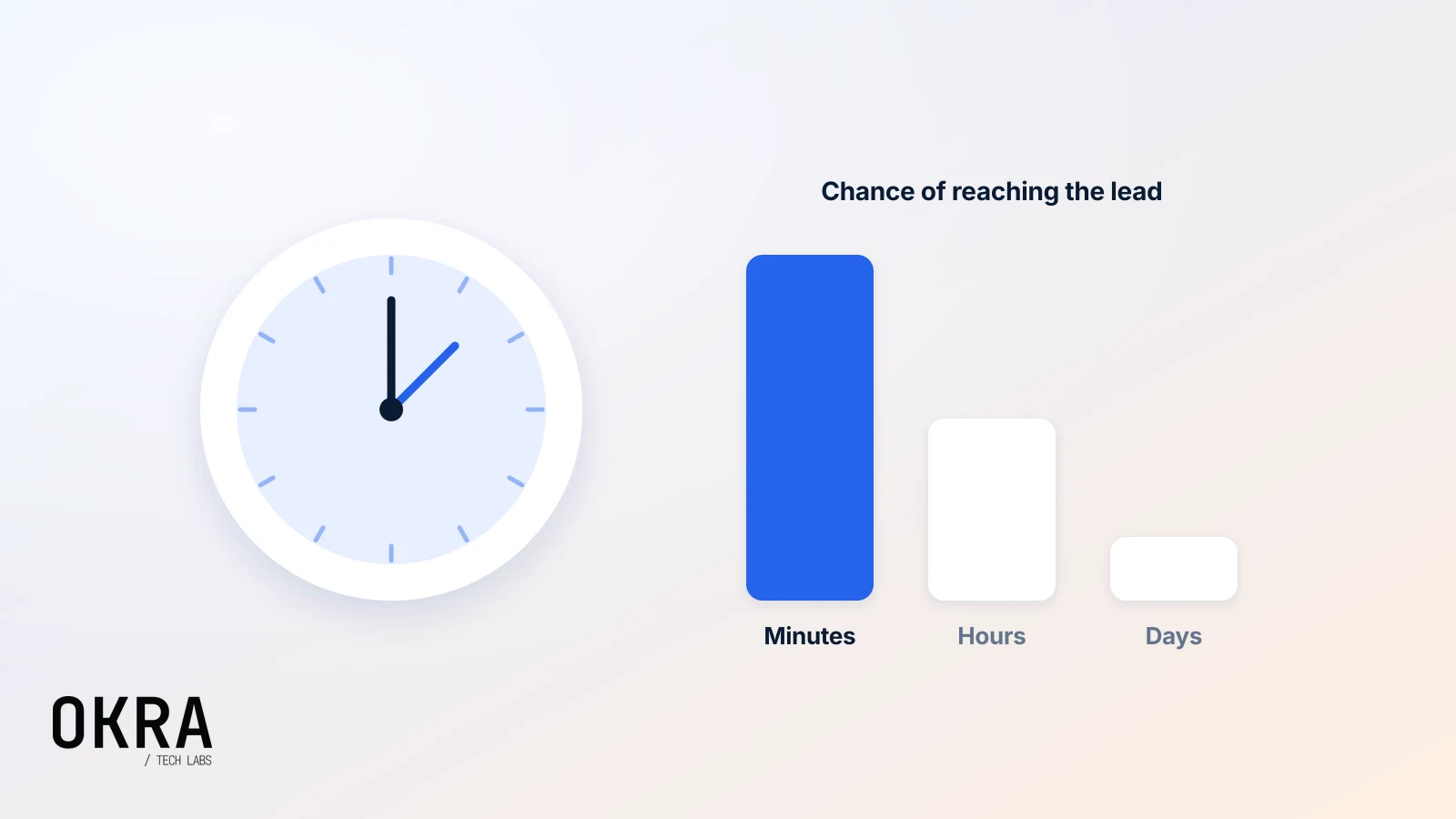
Published studies agree on two things: the chance of reaching and qualifying a lead falls sharply within minutes and hours of the enquiry, and most sales teams respond far more slowly than that. Almost all of the data is from the United States and much of it comes from software vendors, and we found no solid public study for India. Treat the exact figures with care, and treat the direction as settled.
Anyone who sells property in India has heard the line: call the lead within five minutes or lose it. It gets repeated in sales meetings and vendor decks, usually with a dramatic statistic attached and no source.
We went looking for the sources. Some of what is repeated holds up well. Some of it rests on thinner evidence than you would expect. And one thing is missing altogether. Here is what the published research says, and how far you should trust it.
The study most claims trace back to
In March 2011 the Harvard Business Review published The Short Life of Online Sales Leads. The article itself sits behind a paywall, so the figures below are as reported in a contemporary summary.
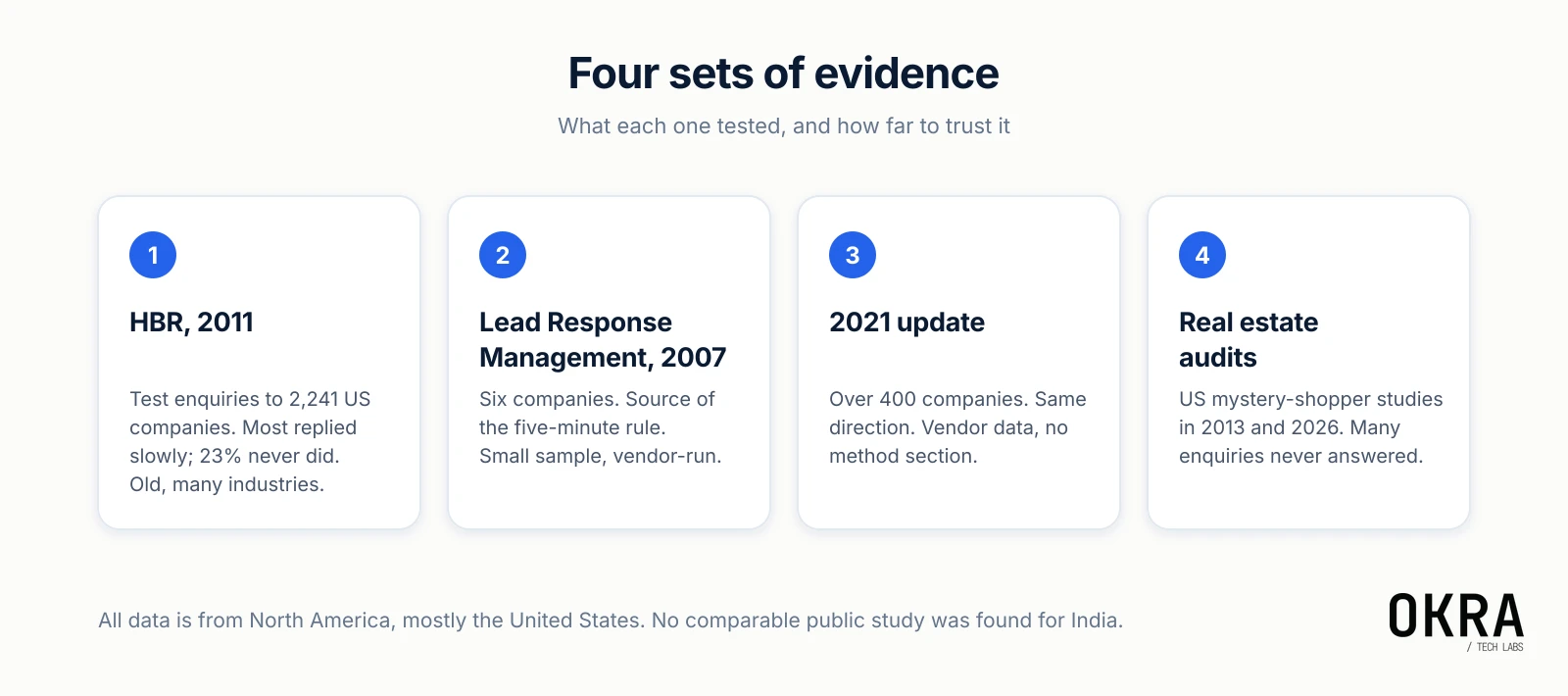
The researchers sent a test enquiry to 2,241 US companies and timed the replies. Only 37% responded within an hour. Another 16% took between one and 24 hours, 24% took longer than a day, and 23% never responded at all. Among those that did reply, the average was 42 hours (summary).
The second half of the study is the part that gets quoted. Using a separate set of 1.25 million leads, the authors found that firms which tried to contact a lead within an hour were nearly seven times as likely to qualify it as firms that waited even one more hour, and more than 60 times as likely as those that waited a day or longer (summary).
Two cautions. The data is American, covers many industries and is fifteen years old. And "qualify" meant having a real conversation with a decision-maker, not closing a sale.
Where the five-minute rule comes from
The five-minute figure is older. It comes from the 2007 Lead Response Management study, which looked at three years of data from six companies: over 15,000 leads and more than 100,000 call attempts. It reported that the odds of contacting a lead fell 100 times between a five-minute and a thirty-minute response, and the odds of qualifying it fell 21 times.
Those are startling numbers, and they come with real limits. Six companies is a small sample. The study was run with a sales software company whose customers supplied the data. The summary says plainly that it did not look at closing rates. We would cite it for the direction, not for the multiple.
A 2021 update from the same company, covering 5.7 million leads at more than 400 companies, pointed the same way: conversion was 8 times higher when the first attempt came within five minutes, and yet fewer than 1% of first attempts were that fast. It is a vendor's own data again, published as an infographic without a method section.
What the real estate studies found
Two studies tested property enquiries directly, both in the United States, both by posing as buyers.
The most recent was reported by Florida Realtors in October 2026. A mystery-shopper study sent 2,198 phone and website enquiries to local offices of 21 large brokerage brands. For website enquiries, 68% got no response within 24 hours and only 10% reached an agent within an hour. Phone enquiries did better at first, with 97% connecting, but only a third of callers spoke with an agent on the first call, and nearly three-quarters received no follow-up within a day.
An older one, the WAV Group's 2013 study, sent 384 buyer enquiries to 384 brokerages across 11 US states. It found that 48% were never answered. Agents who did respond made, on average, between one and two call-back attempts before giving up.
Thirteen years apart, the two studies describe the same thing: a buyer raises a hand, and much of the time nobody takes it.
What is missing: India
We could not find a public study of lead response in Indian real estate that states its sample and its method. Figures for India do circulate, mostly on software vendors' blogs, but without a source behind them we are not repeating them here.
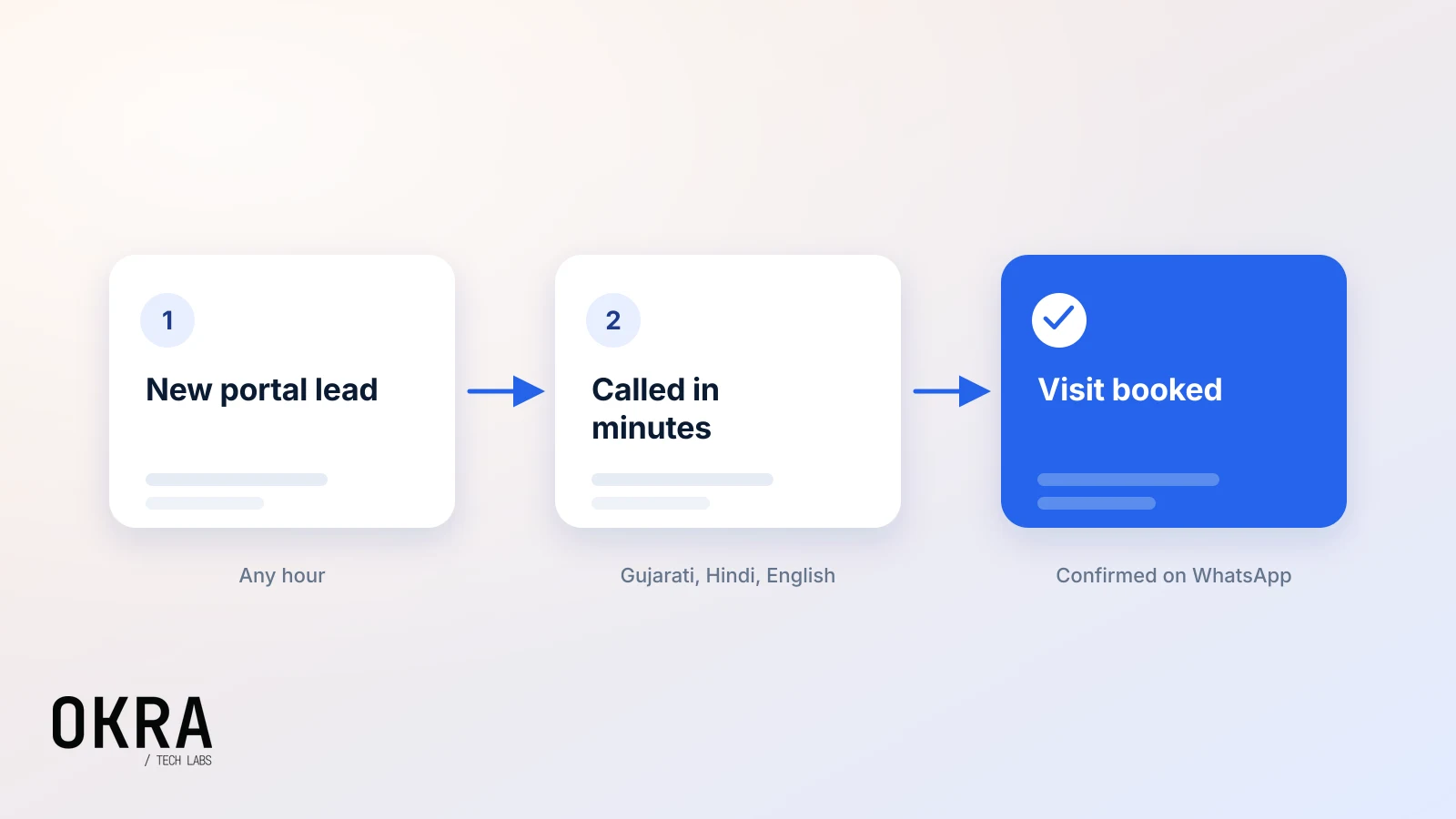
That gap matters, because the Indian market is not the American one. Enquiries arrive from property portals, WhatsApp, missed calls and channel partners, often to several builders at once, and often in Gujarati, Hindi or another of the Indian regional languages. It is reasonable to think speed matters at least as much when a buyer has enquired with four projects in one evening. But that is reasoning, not data.
What the evidence supports, and what it does not
Well supported: the chance of reaching a lead falls fast, within the first hour. Every study points the same way, across fifteen years and different methods.
Well supported: most teams are slower than they believe. Every audit that tested real response times found a large share of enquiries unanswered.
Weakly supported: any exact multiple. "100 times" and "seven times" come from specific datasets and should not be presented as laws.
Not supported: the idea that speed alone sells homes. None of these studies measured bookings.
What to do with this
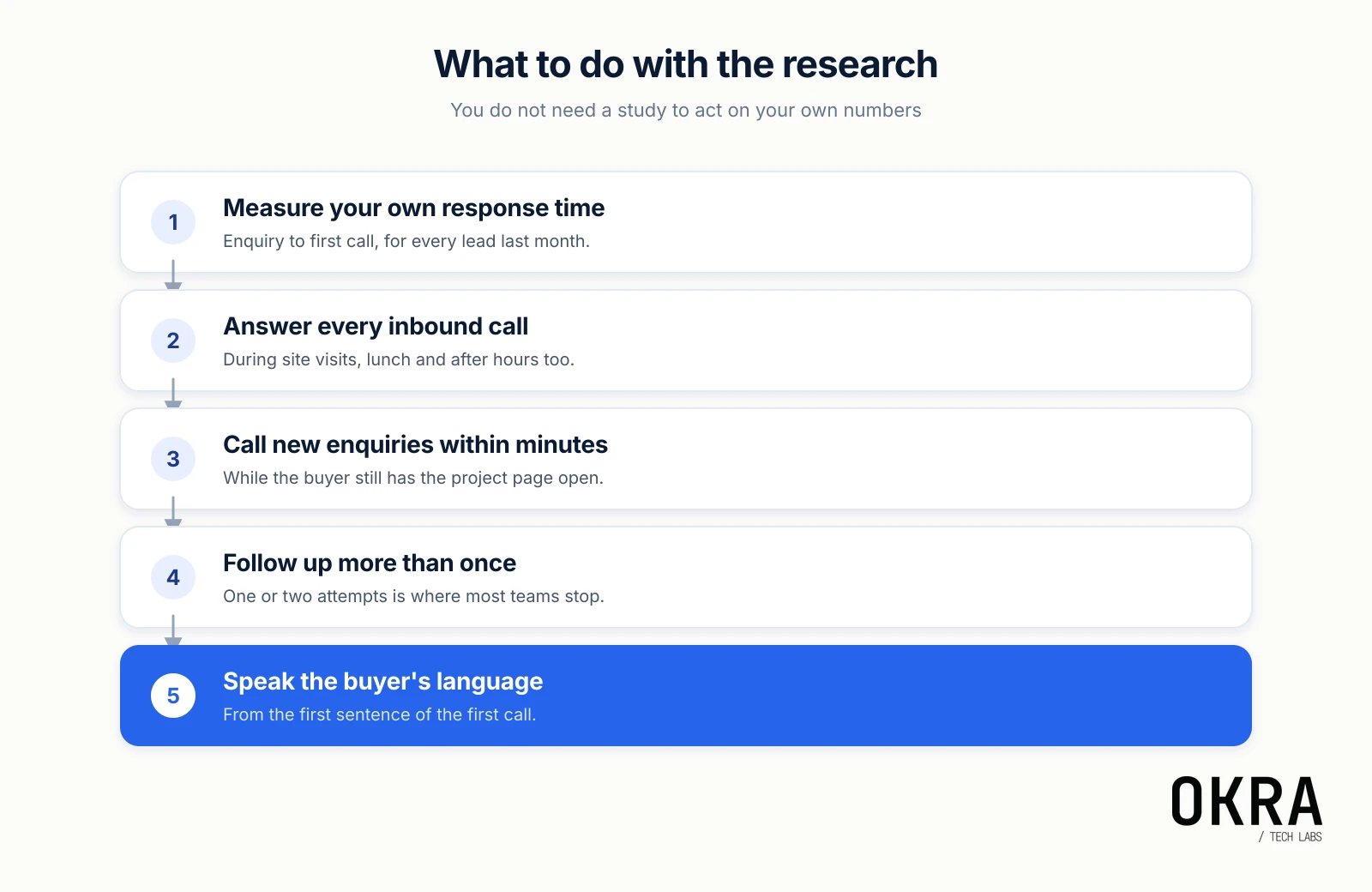
- Measure your own number. Take last month's enquiries and work out the time from enquiry to first call. Most teams have never looked.
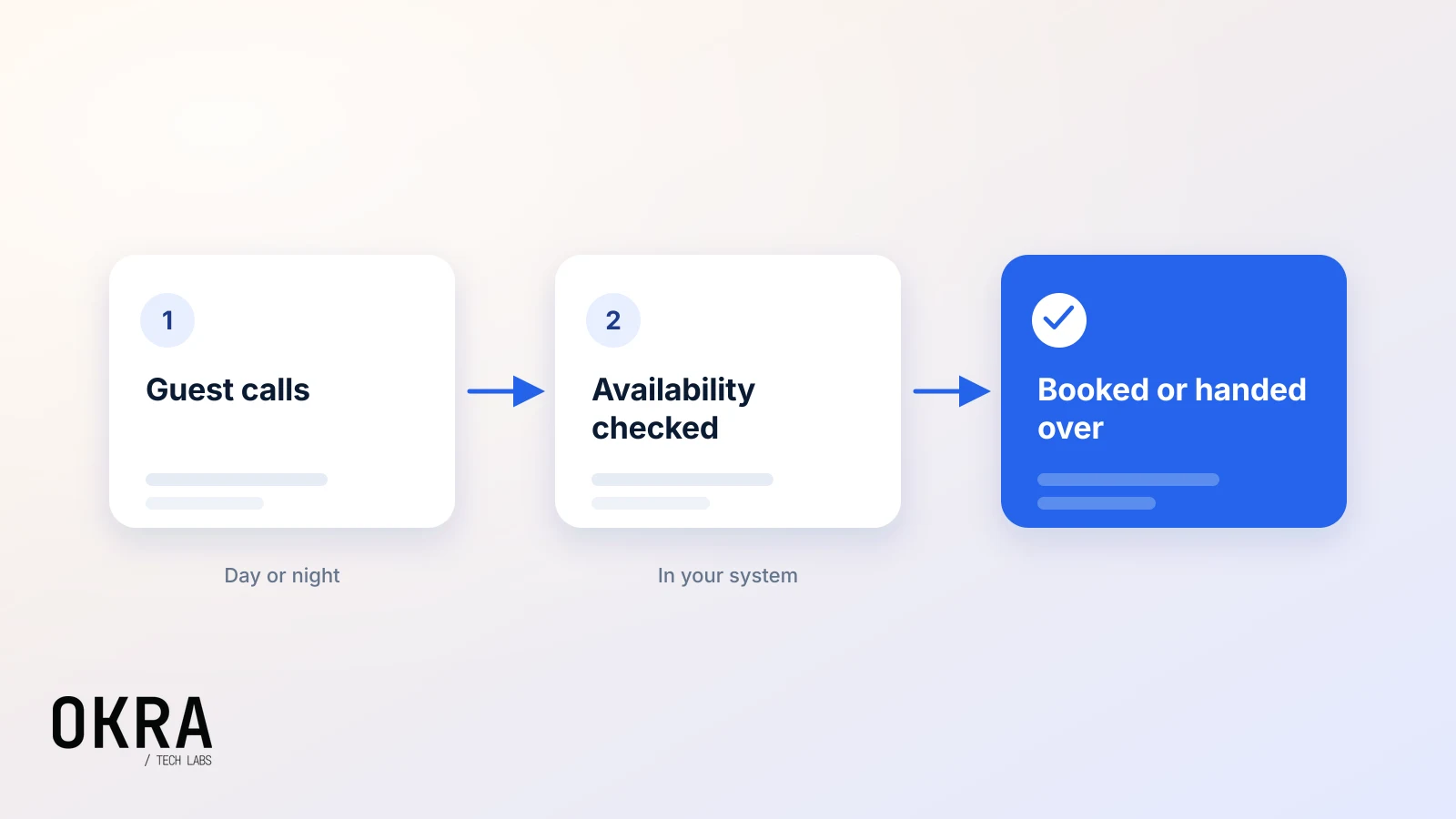
- Answer every inbound call, including during site visits, lunch and after hours.
- Call new enquiries within minutes while the buyer still has the project page open.
- Follow up more than once. One or two attempts is where the studies show most teams stopping.
- Speak the buyer's language from the first sentence.
The first item is the one that matters most. Your own response time is a better guide than any American study, and it costs nothing but an afternoon with your CRM export.
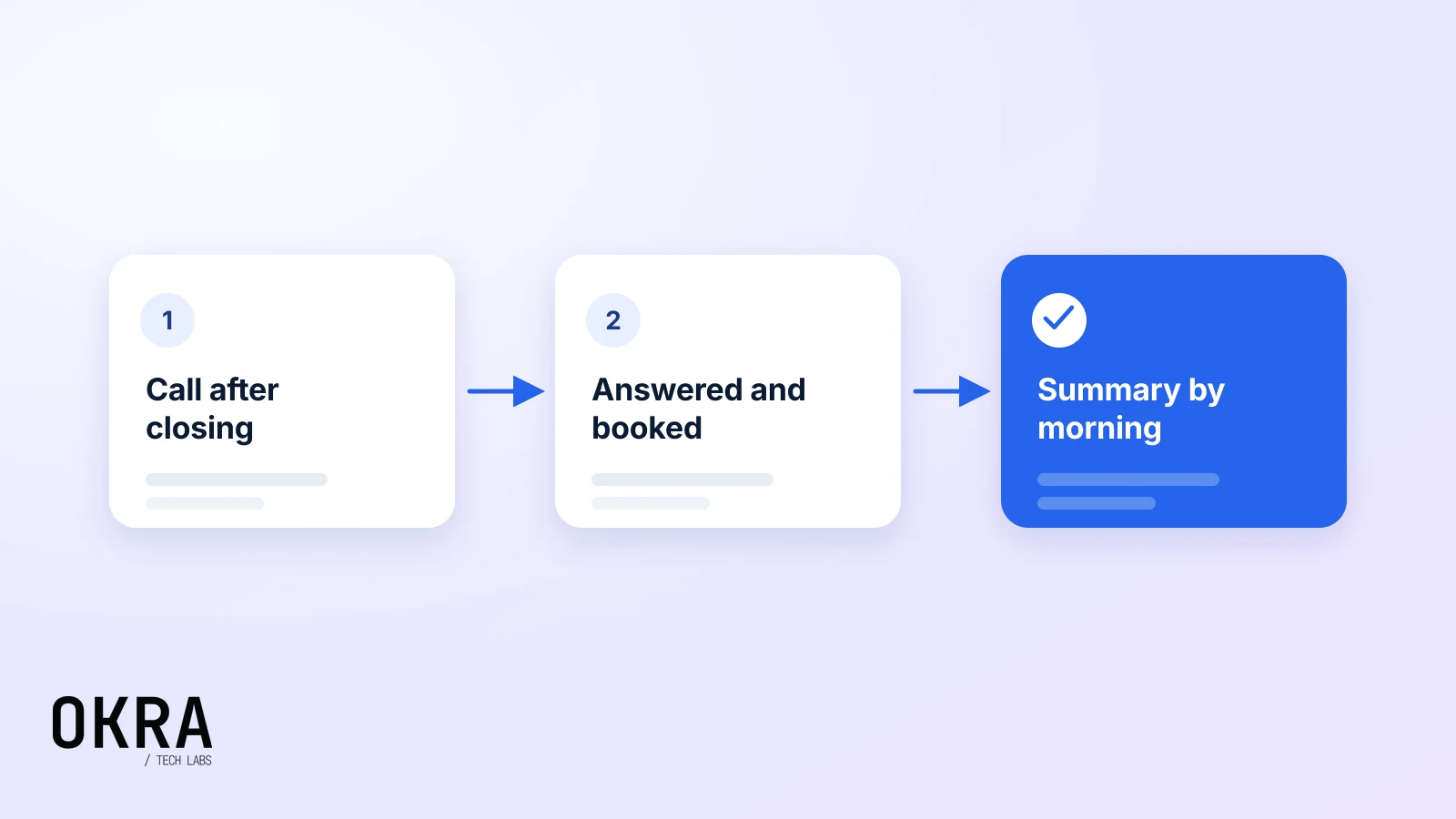
The hard part is the hours when the team is busy or the office is closed. That is the problem our AI calling agents for builders are built for: an AI voice agent that answers and makes calls in Gujarati, Hindi and English, books site visits and logs each call as a lead, so a person can pick up the conversation from there.
Questions people ask
How fast should a real estate team respond to a new lead?
As close to immediately as you can manage, and within minutes during working hours. The published studies differ on the exact numbers, but all of them show the chance of reaching a lead dropping steeply in the first hour.
Is the five-minute rule real?
It comes from a 2007 study of six companies, which found the odds of contacting a lead were far higher at five minutes than at thirty. The sample was small and the study was run with a sales software company, so the direction is credible but the precise multiple should not be quoted as fact.
Is there research on lead response time in Indian real estate?
We did not find a public study with a stated sample and method. Figures for India appear in vendor blogs without sources. The best available evidence is from the United States.
Does a faster first call guarantee more bookings?
No. The studies measure contact and qualification, not sales. Speed gets you the conversation; the site visit and the booking still depend on the project, the price and the follow-up.
Sources
- The Short Life of Online Sales Leads (Harvard Business Review, March 2011)
- Are you letting online leads go cold? Summary of the HBR study (SmartCompany, July 2011)
- Lead Response Management study, research summary (Elkington and Oldroyd, 2007)
- Lead Response Management 2021 (InsideSales)
- Real estate inquiries often fail to reach agents (Florida Realtors, October 2026)
- Agent Responsiveness Study 2013 (WAV Group)