Presales is the team between marketing and the sales desk. It takes every enquiry, makes the first call, finds out what the buyer wants and gets them to a site visit. Calls are lost in six places: unanswered inbound calls, slow first calls, giving up after one attempt, the wrong language, leads that never reach the CRM, and site visits nobody confirms. Each has a plain fix, and most start with measuring it.
A builder spends on portal listings, hoardings and social ads. The phone rings, the forms fill up. Then, somewhere between the enquiry and the site visit, most of those buyers disappear. The marketing gets blamed. Often the leak is one step later, in presales.
If you run a small or mid-sized project, you may not have a team called presales at all. You still have the job. Somebody has to pick up the phone. This post explains what that job is, and the six places it goes wrong.
What presales is
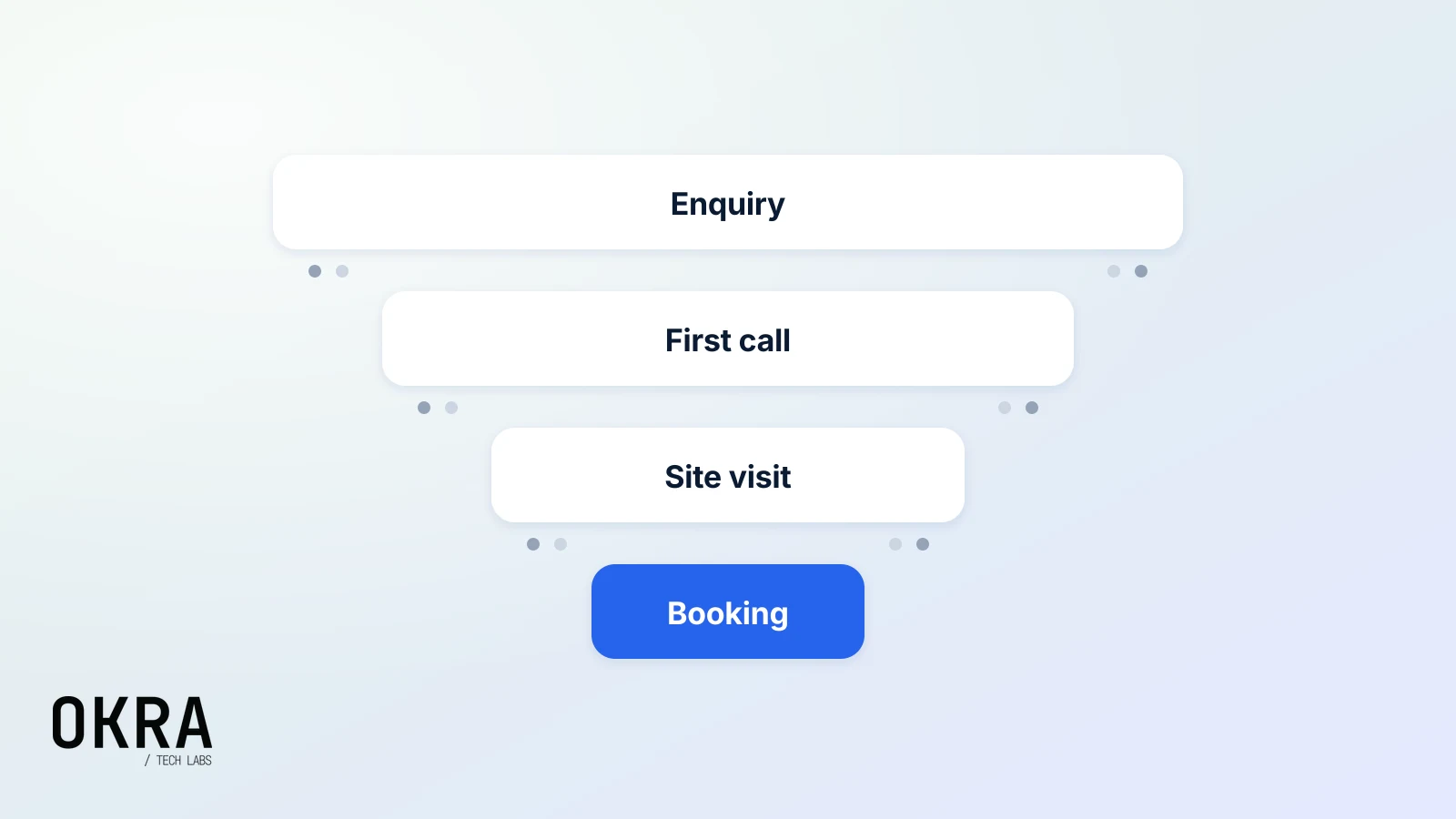
Presales is everything that happens between a buyer showing interest and a buyer walking onto your site. It is phone and chat work, and it has one goal: a site visit by someone who can actually buy.
Sales starts after that. The closing team meets the buyer, shows the flat, handles price and paperwork. Large developers keep the two teams separate, because the skills differ. Presales needs speed and patience on the phone. Closing needs presence and negotiation.
In smaller firms the same three or four people do both. That works until a Sunday afternoon, when everyone is walking buyers around the sample flat and the phones ring out.
The five stages
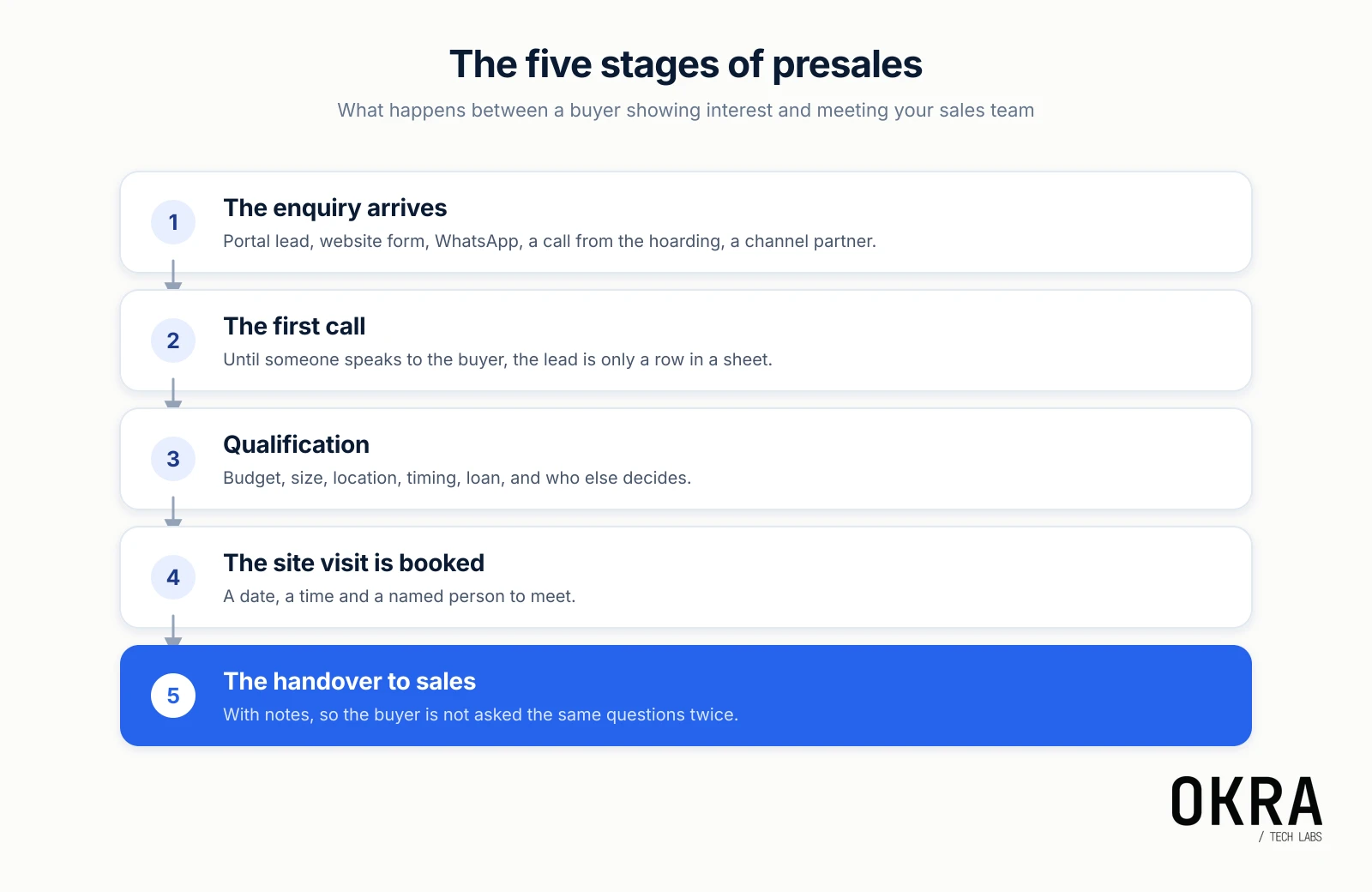
- The enquiry arrives. A portal lead, a website form, a WhatsApp message, a call to the number on the hoarding, a referral from a channel partner.
- The first call. Someone speaks to the buyer. Until this happens, the lead is only a row in a sheet.
- Qualification. Budget, flat size, preferred location, when they plan to buy, whether they need a loan, who else decides.
- The site visit is booked, with a date, a time and a named person to meet.
- The handover. The closing team gets the buyer's details and what was discussed, so the buyer is not asked the same questions again.
Each stage loses some buyers for good reasons. They were browsing, the budget did not fit, they bought elsewhere. The leaks below are different. They are buyers lost through process, who might have visited.
Six places calls are lost
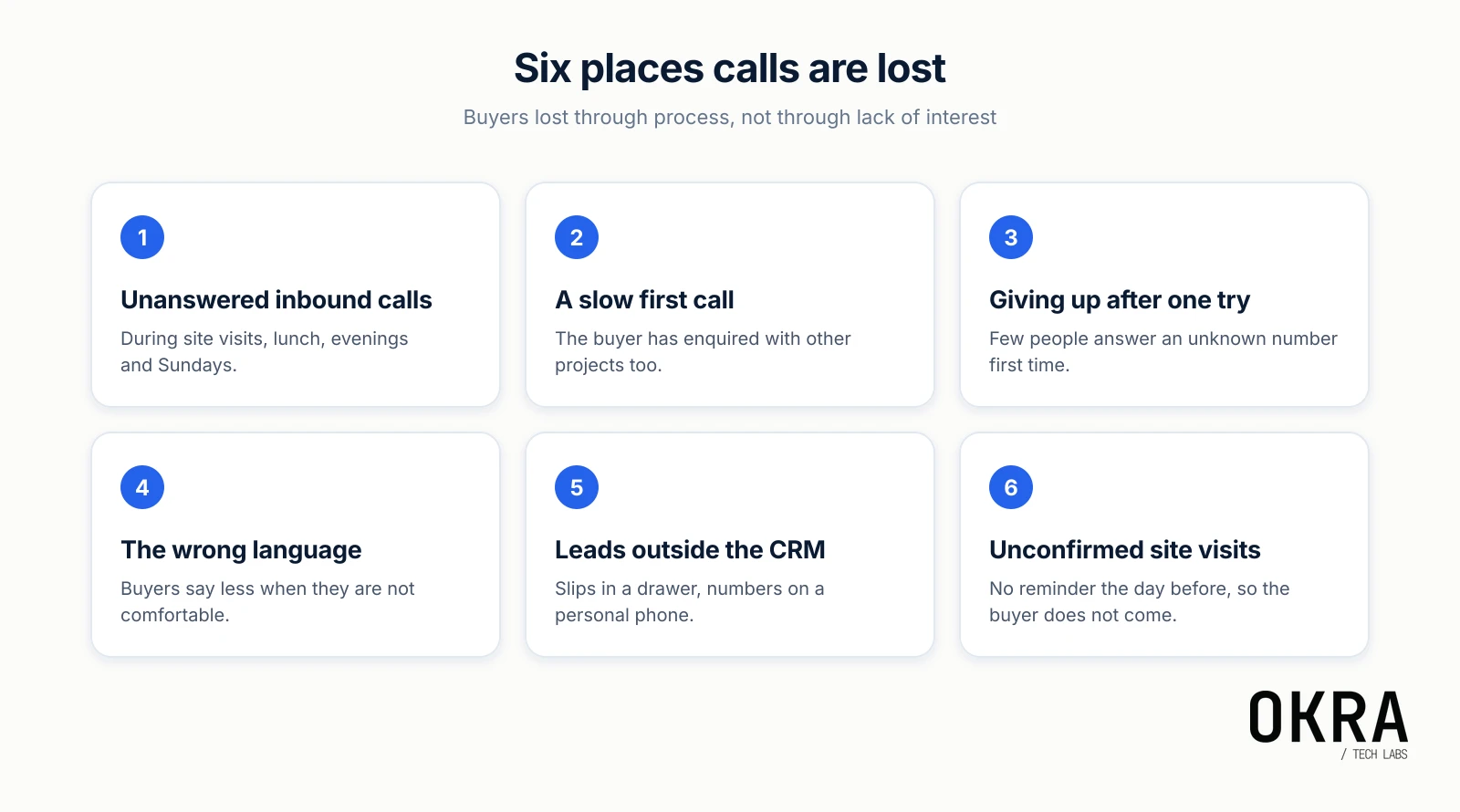
1. Inbound calls nobody answers
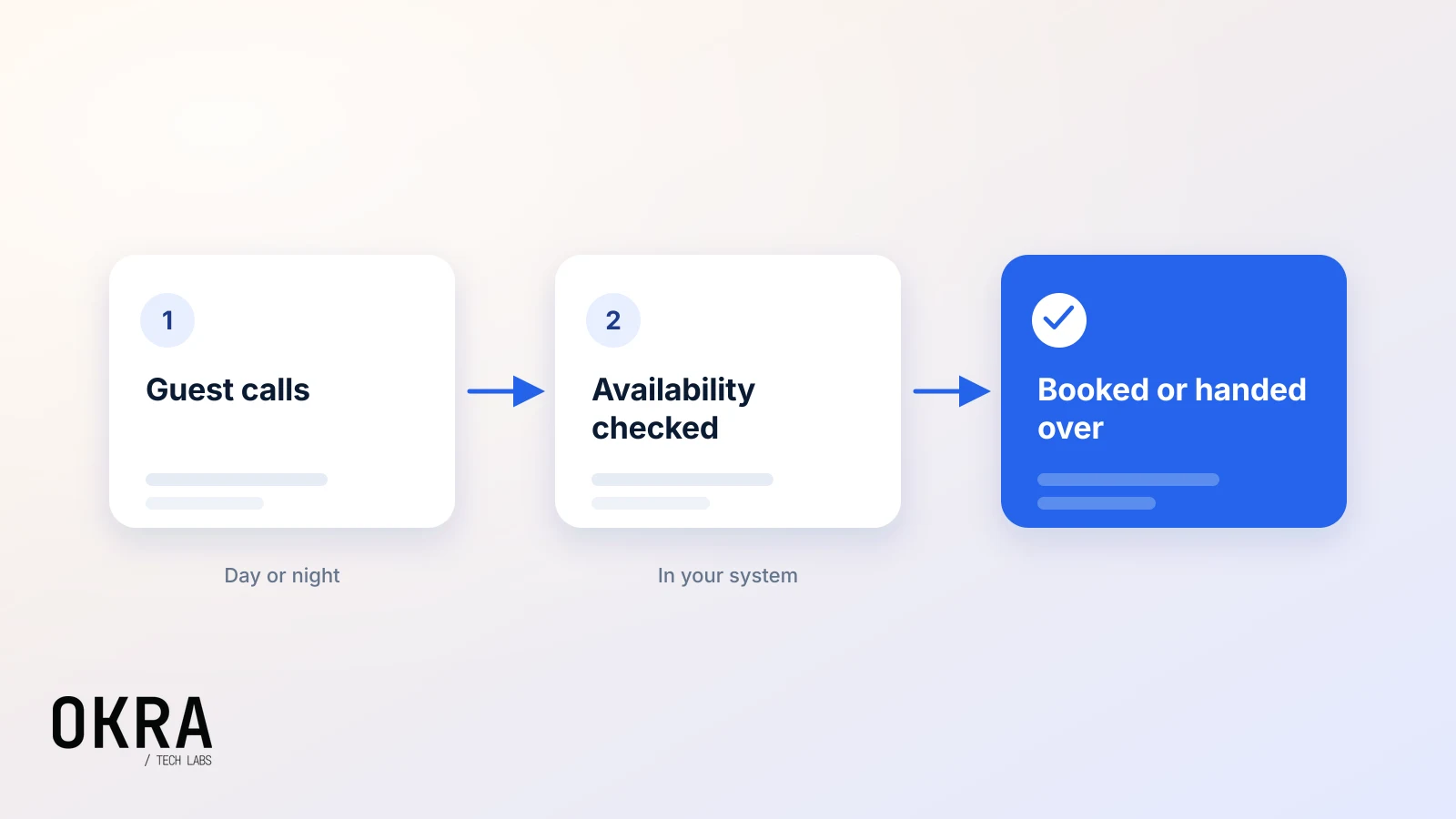
The buyer who calls is the warmest lead you will get: they chose to ring now. Calls come when the team is least able to take them, during site visits, at lunch, after seven in the evening and on Sundays. A missed call with no call-back is an enquiry you paid for and threw away.
2. A slow first call
For form and portal leads, the clock starts when the buyer presses submit. An often-cited Harvard Business Review study, The Short Life of Online Sales Leads, argued that most companies respond far too slowly to online enquiries. We go through that research, and its limits, in our post on lead response time. A portal lead has usually enquired about several projects, so the first builder to call sets the terms.
3. Giving up after one attempt
Buyers do not answer unknown numbers on the first ring. A US mystery-shopper study reported by Florida Realtors in October 2026 found that nearly three-quarters of people who phoned a brokerage received no follow-up within 24 hours. An older study by the WAV Group found 48% of buyer enquiries were never answered, and that agents who did respond averaged between one and two call-back attempts. Both are American studies, so treat them as a guide to the pattern, not as Indian numbers.
4. The wrong language
A buyer who writes in Gujarati and is called in formal English will be polite and brief. Comfort decides how much a buyer tells you about budget and family, and that is the whole point of the call. Indian regional languages are not an extra in presales. They are the default.
5. Leads that never reach the CRM
Walk-in slips in a drawer. Numbers saved on a personal phone. Portal leads that arrive by email and wait for someone to type them in. If a lead is not in one shared list with a status and an owner, nobody notices when it is forgotten.
6. Site visits nobody confirms
A visit booked on Tuesday for Saturday is an intention, not a plan. Without a reminder the day before, and a quick call on the morning, a share of those visits will not happen. And a buyer who did not show up rarely gets a second invitation.
How to plug each leak
- Count first. For one month, record every inbound call and whether it was answered, and for every form lead, the time to the first call. Most builders have never seen these two numbers.
- Give every lead an owner and a next step in one shared list.
- Set a rule for attempts: for example, three calls across two days and a WhatsApp message before a lead is marked unreachable.
- Match the language to the buyer from the first sentence.
- Confirm every site visit the day before and on the morning.
- Cover the hours your team cannot.
That last one is where software helps most, because it is a staffing problem with no good staffing answer. Nobody hires a night shift for a forty-flat project.
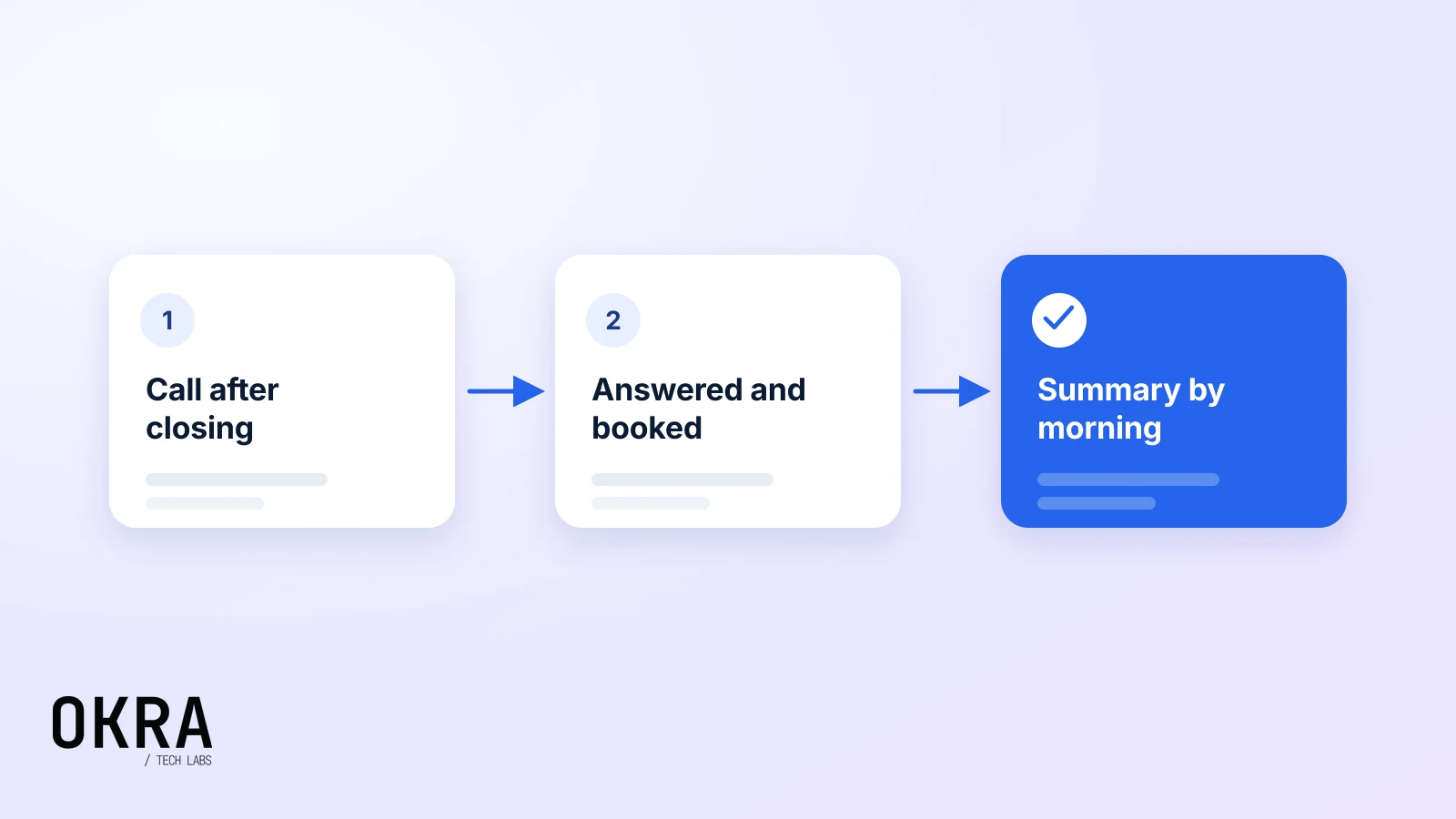
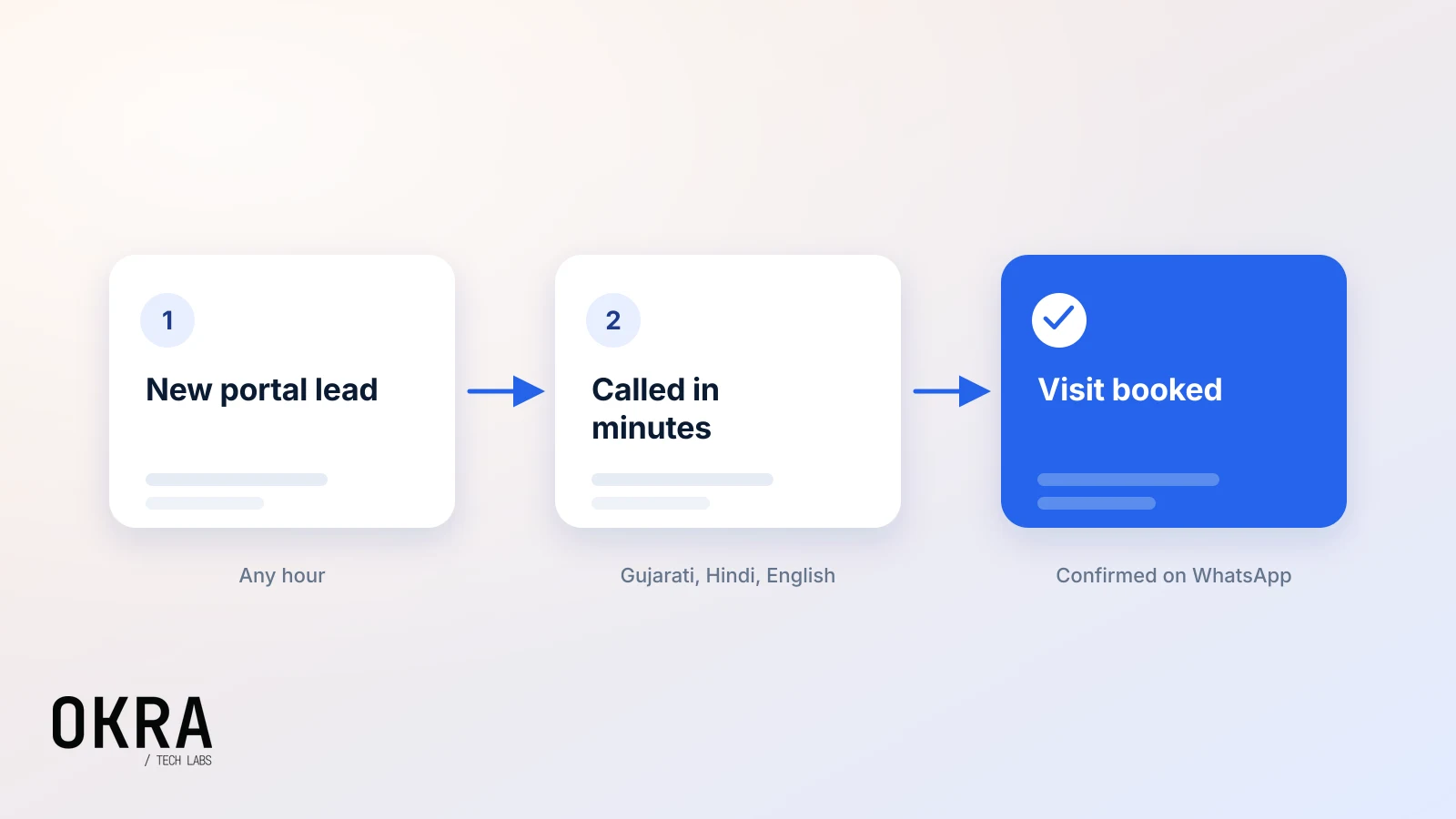
Our answer to it is an AI calling agent built for your project: an AI voice agent that answers and makes calls in Gujarati, Hindi and English, asks the qualifying questions, books the site visit and logs every call as a lead. Your team keeps the conversations that need a person, which are the ones that close.
Questions people ask
What is presales in real estate?
Presales is the function that handles a buyer's enquiry before the sales team meets them. It answers and makes the first calls, checks budget, location and timing, books the site visit and passes a qualified buyer to the closing team.
What is the difference between presales and sales in real estate?
Presales works on the phone and in chat, and its goal is a site visit. Sales works face to face at the site or office, and its goal is a booking. In small firms the same people do both, which is one reason calls go unanswered.
Why do real estate leads go cold?
Mostly because nobody reaches the buyer in time. Published mystery-shopper studies in the United States found large shares of property enquiries got no response within a day, and that most callers were not followed up.
Can an AI voice agent do presales calls?
It can do the repeatable part: answer every inbound call, call new enquiries quickly, ask the qualifying questions, book a site visit and log the result. A person should handle negotiation, objections about price and anything unusual.