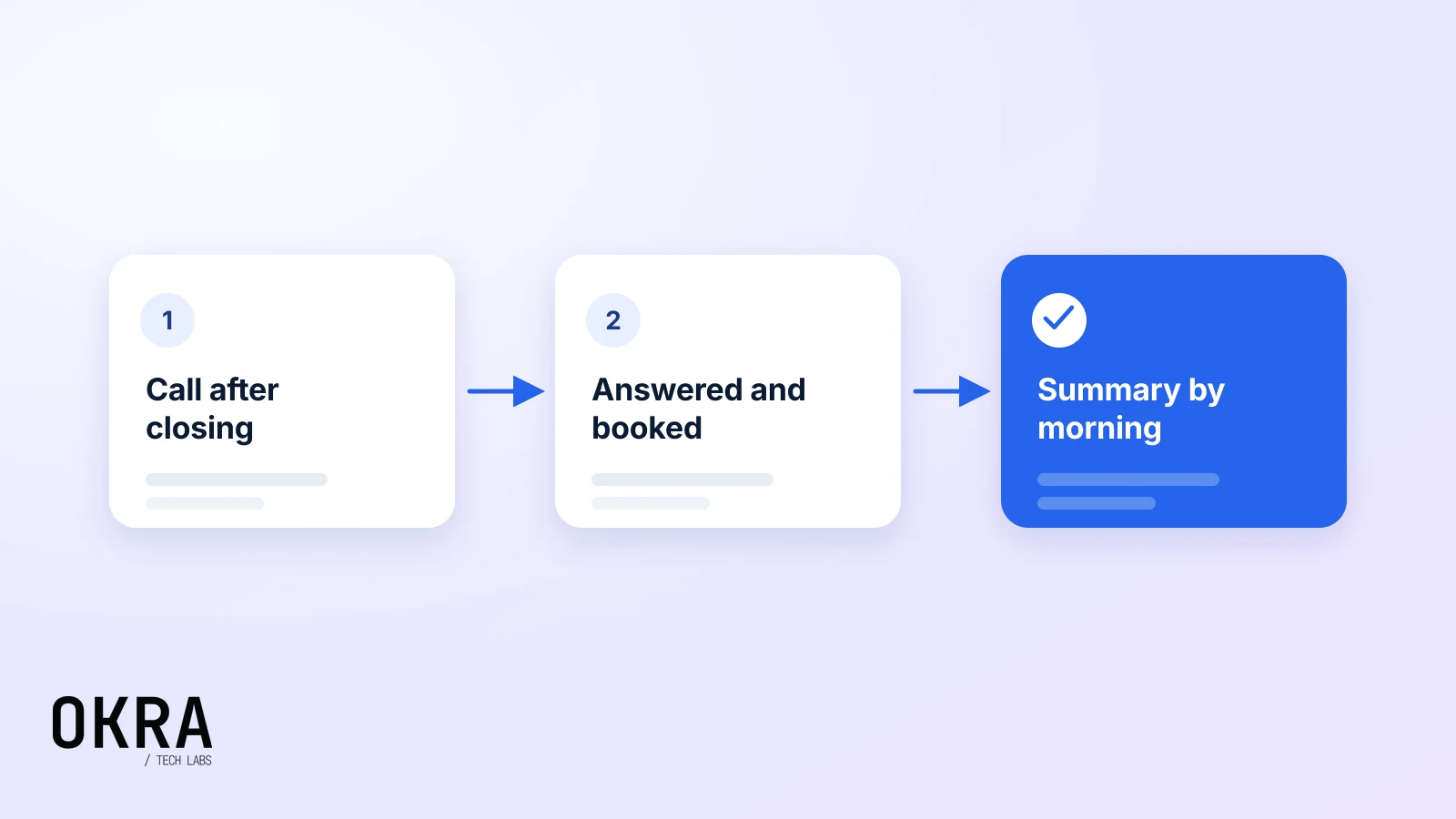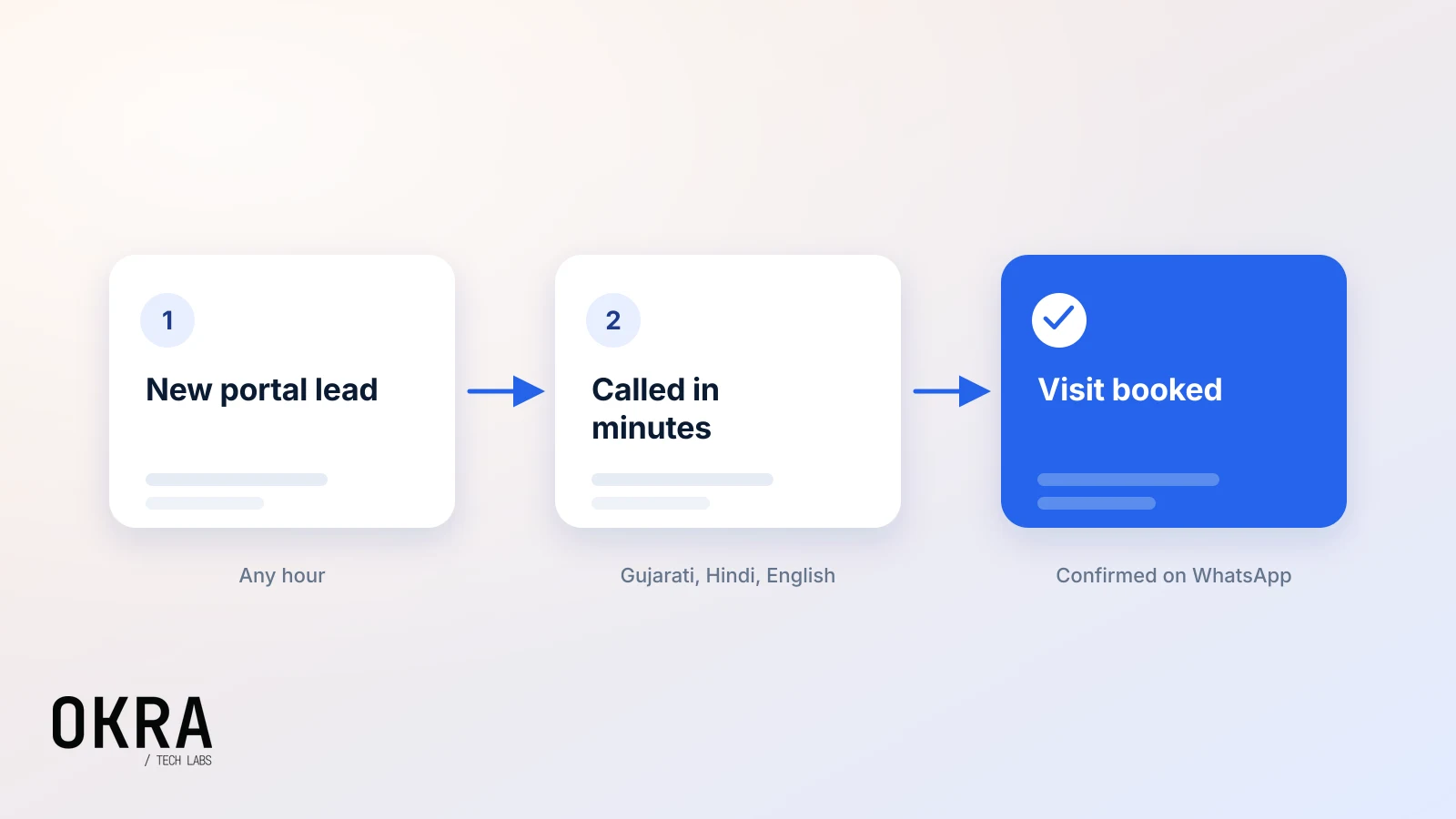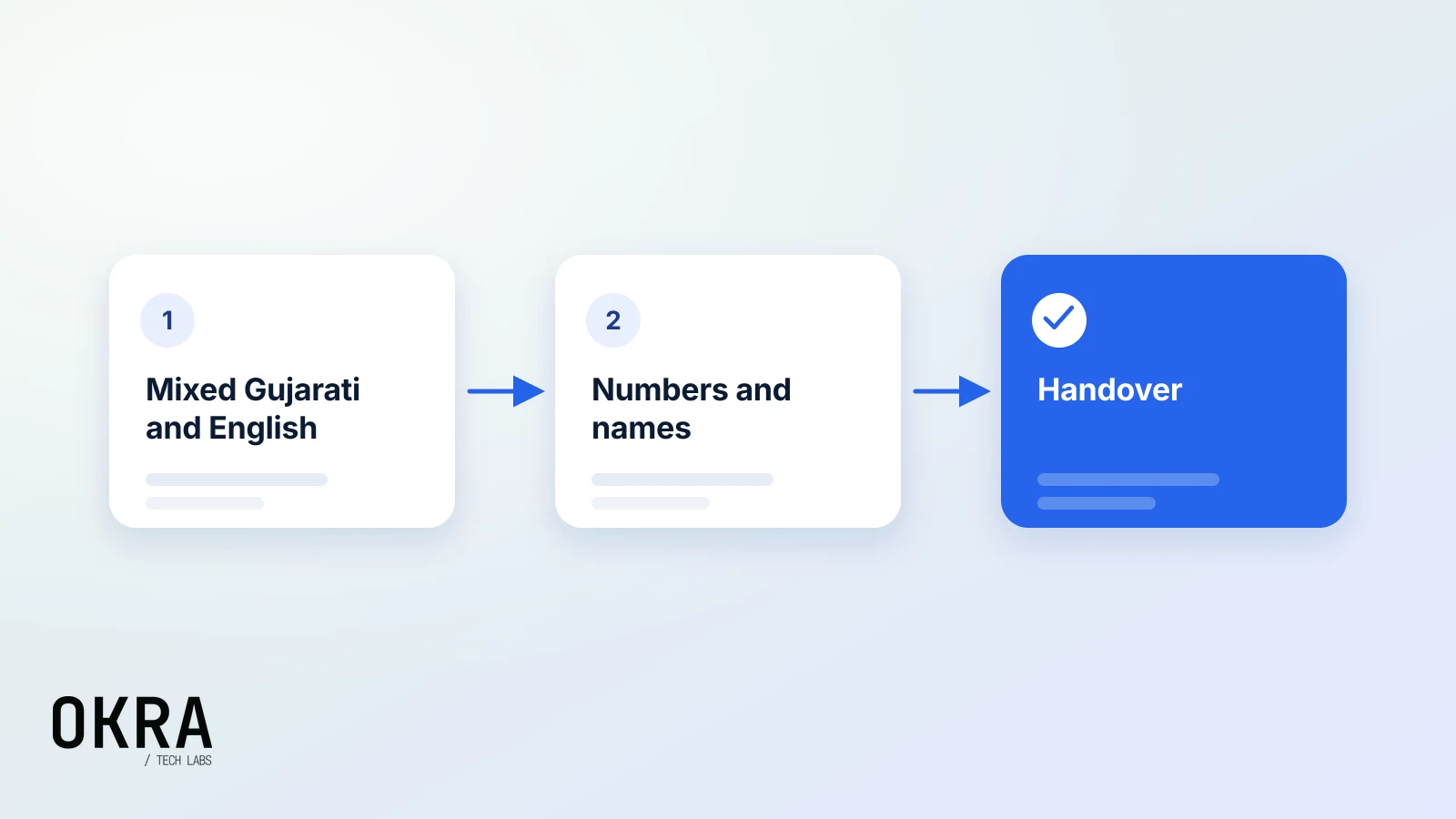
An AI receptionist for a hotel should answer every call, take room and banquet enquiries, check availability, make or hold bookings within the rules you set, answer guest questions about timings and facilities, and hand anything sensitive to staff with a summary. Before buying one, ask how it connects to your booking system, how it handles rates and payments, which languages it speaks on real calls, how it hands over, and where the call data goes.
A hotel phone rings for many reasons: a family checking room rates for a wedding, a guest asking about late checkout, an event planner wanting banquet dates, a traveller who is lost on the way. The front desk handles all of it while also checking guests in. Calls get missed, and some of them were bookings.
An AI receptionist can take the repeatable part of those calls. This post sets out what it should do, what it should never do, and the questions to ask before you let one answer your guests.
What it should do
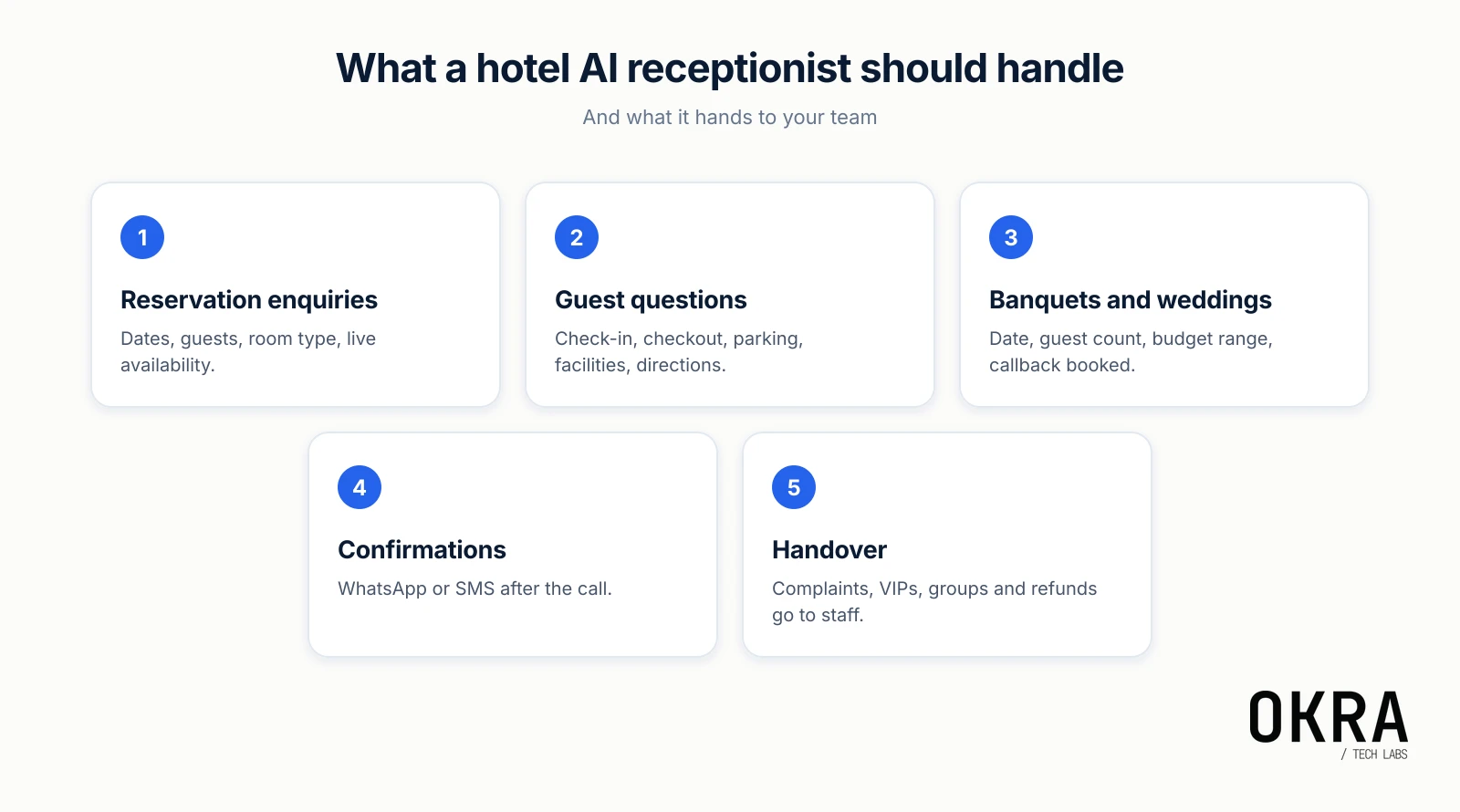
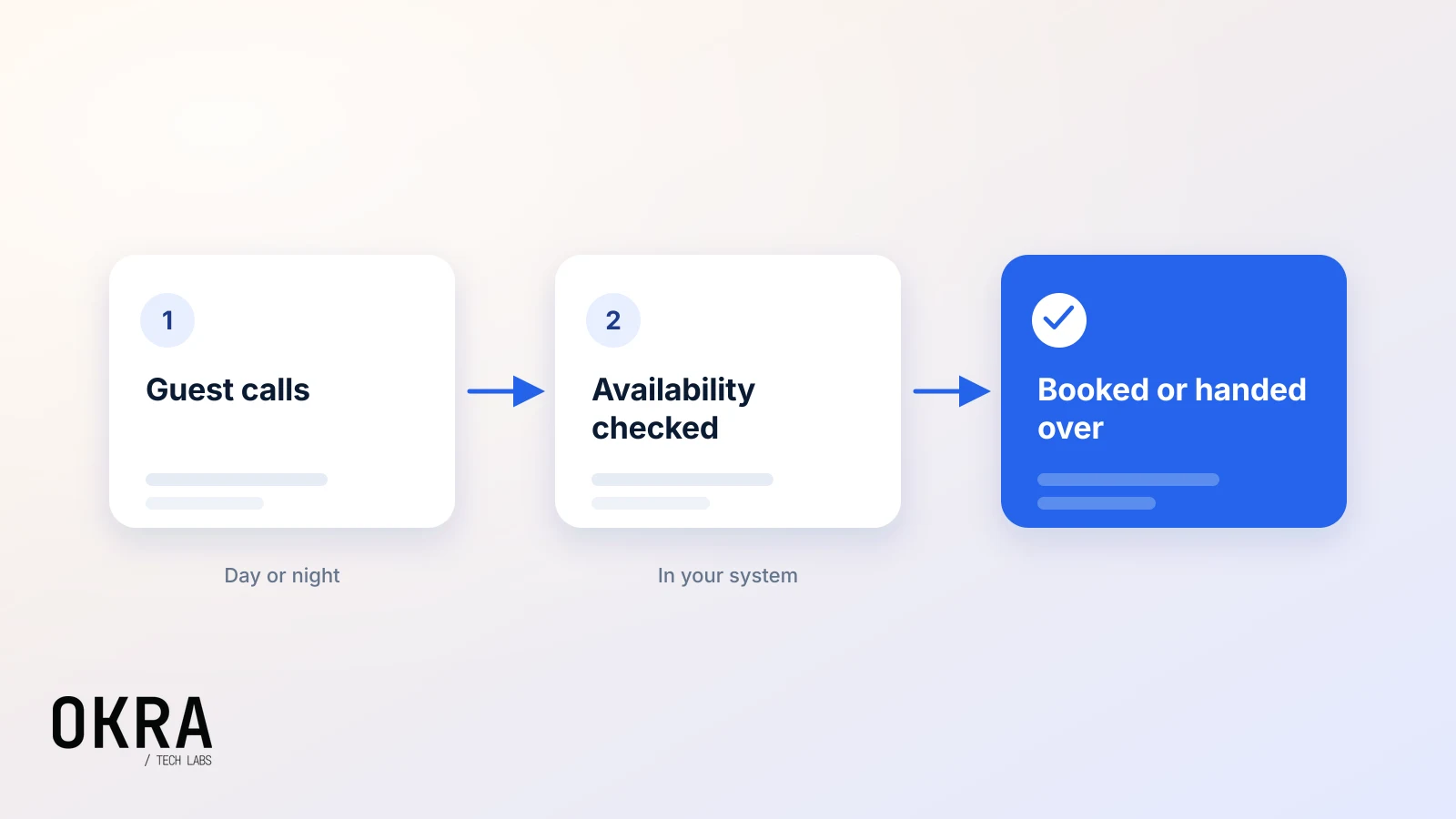
- Answer every call, including at night and when the desk is busy.
- Take reservation enquiries: dates, guests, room type, and check availability in your system.
- Quote only the rates you allow, and hold or create a booking within your rules.
- Answer guest questions: check-in and checkout times, parking, breakfast, pool and gym hours, directions.
- Capture banquet and wedding enquiries with the date, guest count and budget range, and book a callback with your events team.
- Send confirmations on WhatsApp or SMS. Meta's WhatsApp Business Platform uses approved templates for messages a business starts, so plan these in advance.
- Hand over anything sensitive to a person, with a summary.
What it should not do
It should not negotiate group rates, handle complaints on its own, take card numbers over the phone, promise refunds, or make decisions about a guest's safety or health. When it is unsure, it should say so and get a person.
Eight questions to ask before you buy
- Does it connect to our booking system? Without a live link to availability and rates, it can only take messages. Ask which property management systems it works with, and see it check a real date.
- How does it handle rates and offers? It should quote only from rates you set, never invent a discount, and pass anything unusual to sales.
- How are payments taken? The safe answer is a secure payment link sent after the call, not reading card details aloud.
- Which languages does it speak on real calls? For India and the Gulf, that usually means English and Hindi, plus the local language of your guests. Ask to hear real phone calls, not studio demos.
- How does it hand over to staff? Live transfer, callback, or both? What does the person receive: a recording, a transcript, a summary?
- What happens at peak times? It should answer many calls at once, so the line is never engaged during a festival weekend or a wedding season.
- Where is the call data stored, and for how long? Recordings and transcripts contain guests' personal details. Ask about storage, access and deletion.
- How will we know it works? Agree the numbers before you start: calls answered, enquiries captured, bookings made, and calls handed over.
How to start
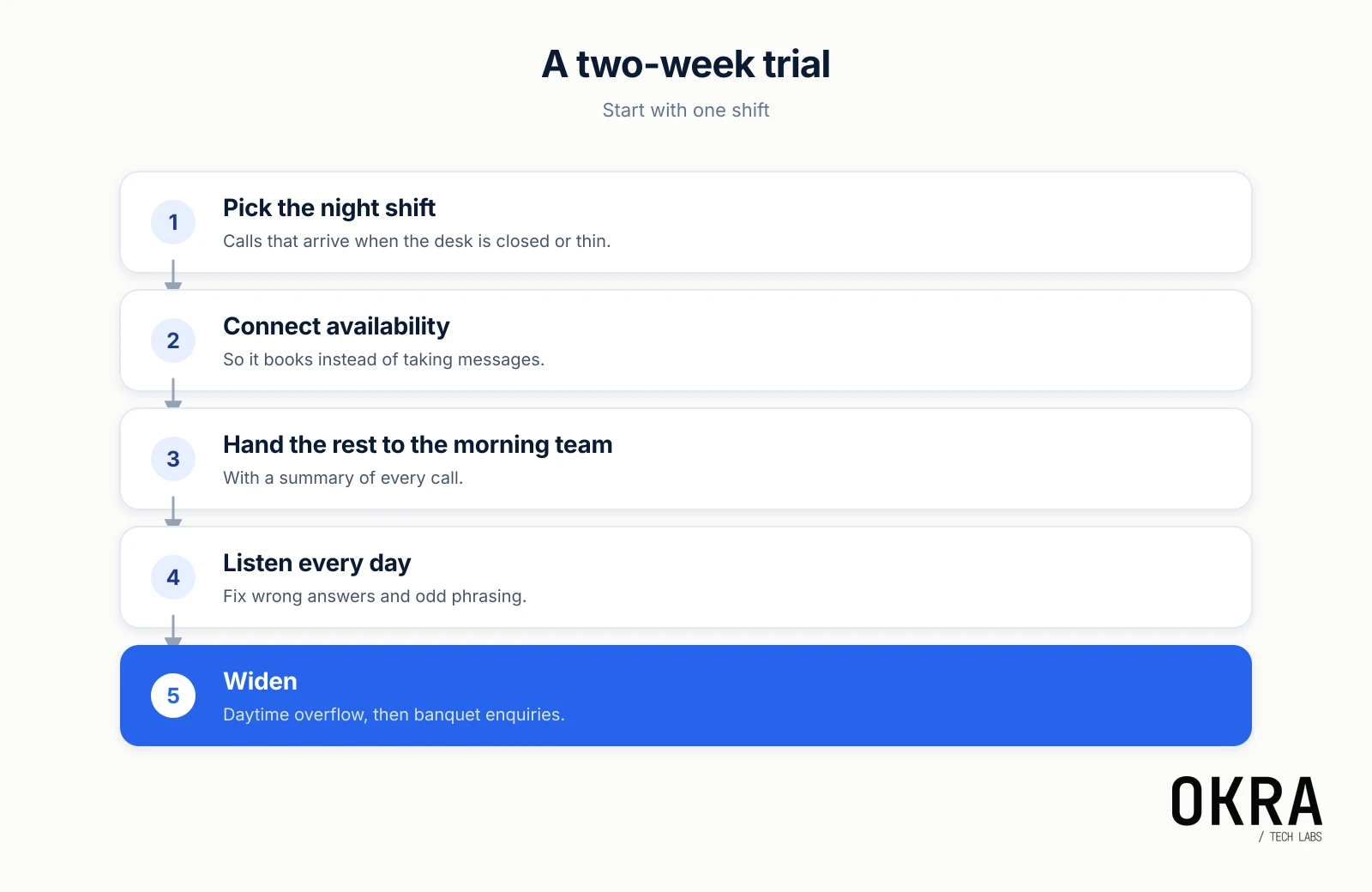
Start with one shift, usually nights. Connect it to live availability, let it take reservation enquiries and guest questions, and have it hand everything else to the morning team with a summary. Listen to the calls every day for the first two weeks. Enquiries that arrive out of hours go cold quickly, as research on online sales leads has long shown, so the night shift is where the gain is easiest to see.
Once the calls sound right, add the busy daytime overflow, then banquet enquiries. We build and run AI voice agents for hotels and other businesses that live on their phone lines, and we start every one of them this way.
Questions people ask
Can an AI receptionist take hotel bookings?
Yes, if it is connected to your property management or booking system. It can check availability, quote the rates you allow, and create or hold a booking. Payment details are best taken through a secure link, not read out on the call.
Will guests mind talking to an AI?
Guests mind slow answers more. Tell them at the start that they are speaking to an assistant, keep it quick and polite, and let them reach a person whenever they ask.
What should stay with hotel staff?
Complaints, VIP guests, group negotiations, refunds, anything about a guest's safety or health, and any request the agent is not sure about.
Which calls should a hotel automate first?
Calls that come when the front desk is busy or closed: night-time reservation enquiries, simple questions about check-in, parking and facilities, and banquet or wedding enquiries that need a callback.