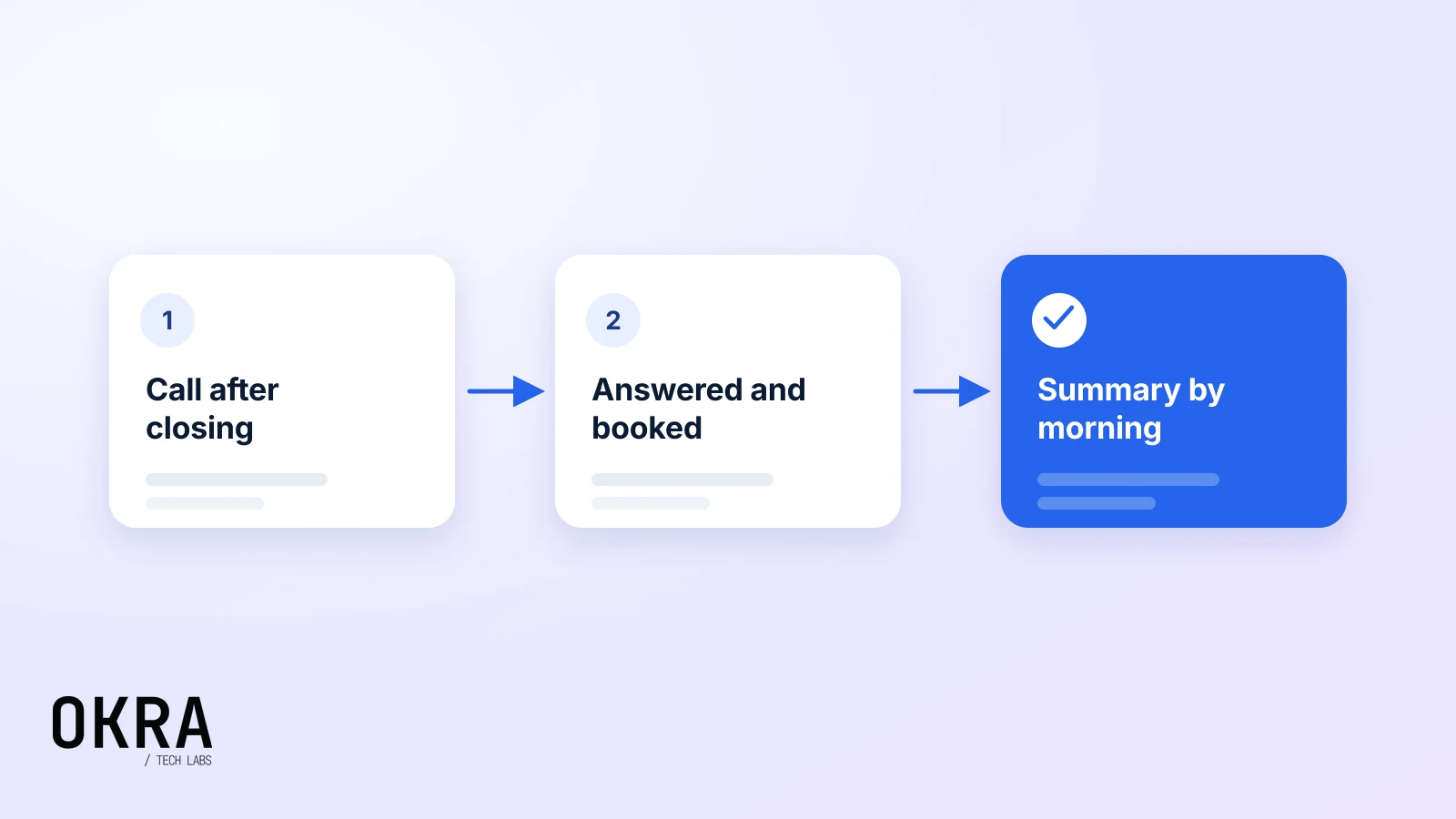
Calls that arrive when the desk is closed or busy are often bookings: a patient who wants tomorrow's appointment, a family planning a wedding stay. Most of them never call back. A clinic or hotel can cover these hours with a staff rota, a call centre, a callback promise, or an AI voice agent that answers, books and hands over in the morning. Start by counting what you miss.
A clinic closes its front desk at 8 pm. At 9.30 pm a parent calls to book the paediatrician for the morning. Nobody answers, so they call the next clinic on the map. A hotel's reservation line rings during the evening check-in rush; the caller wanted three rooms for a family wedding and gives up after two tries.
Neither call shows up as a loss anywhere. That is why after-hours and busy-hour calls are so easy to ignore, and so expensive.
What you lose
- New patients and guests. Someone calling for the first time has no loyalty yet. If you do not answer, they move on.
- Bookings for tomorrow. The most urgent requests arrive in the evening, for the next morning.
- High-value enquiries. Wedding stays, banquets, surgery consultations and health packages are often researched after work hours.
- Your staff's morning. A list of missed numbers to call back, half of whom no longer need you.
The pattern is the same one seen in sales: interest is highest at the moment someone reaches out, and fades quickly, as research on online sales leads found.
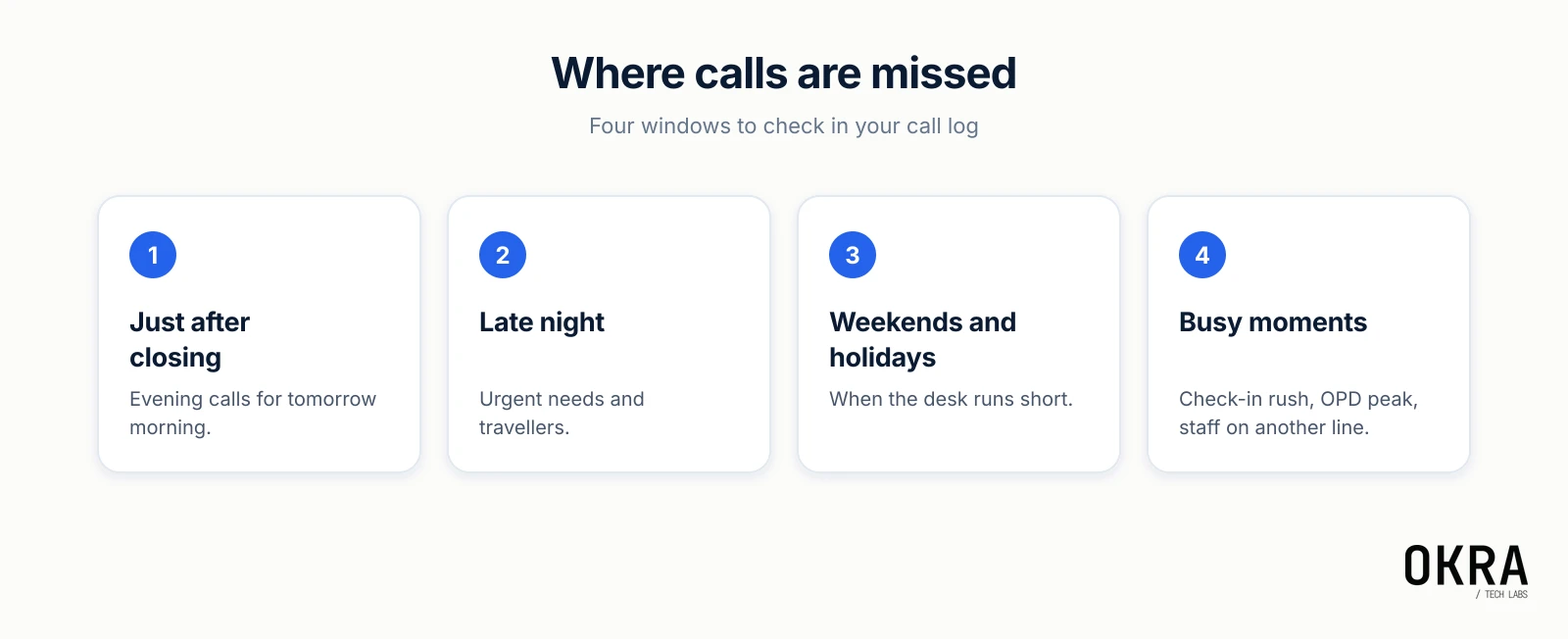
Step one: count what you miss
Before choosing a fix, measure the gap for one month:
- Export the call log from your phone system or operator.
- Count unanswered calls by hour and by day of the week.
- Check how many of those numbers called again, and how many booked.
- Look at the busiest missed hours. They tell you where to start.
Most businesses are surprised by one of two things: how many calls arrive just after closing, or how many are missed during the busiest daytime hour, when staff are on another line.
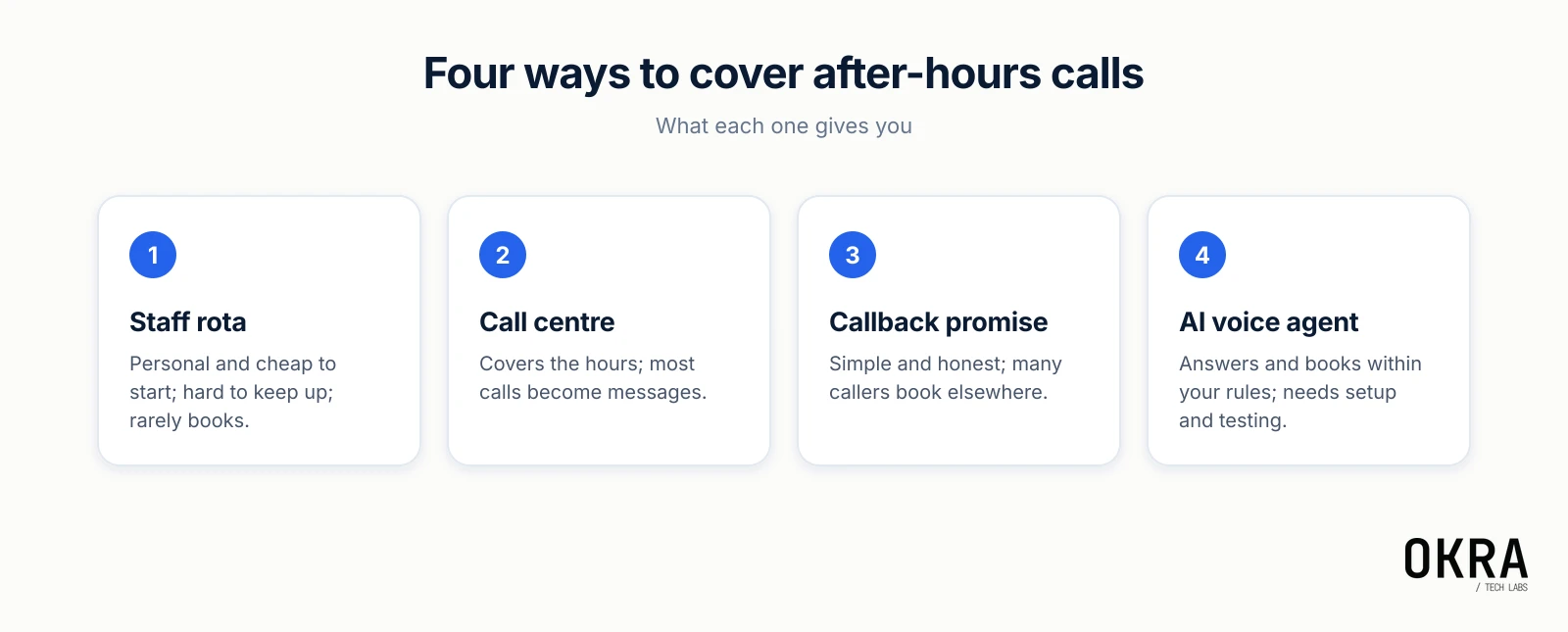
Four ways to cover the gap
1. A staff rota or on-call phone. Cheap to start and personal, but hard to keep up night after night, and the person on call is often not at a computer to check availability.
2. A call centre or answering service. Covers the hours, but agents rarely know your schedule, rooms or doctors, so most calls become messages for the morning.
3. A callback promise. A recorded message saying you will call back first thing. Honest and simple, but many callers will have booked elsewhere by then.
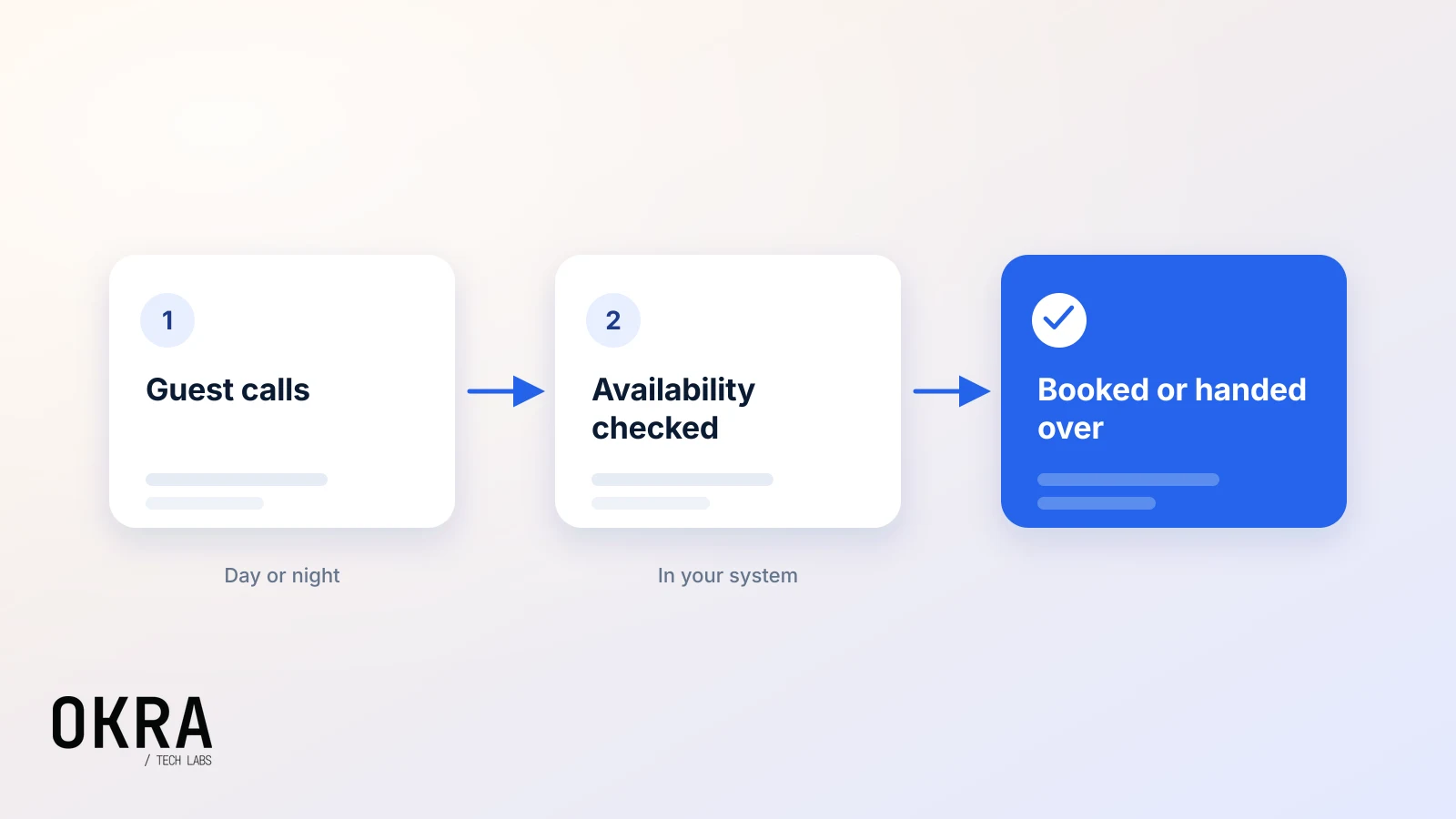
4. An AI voice agent. Answers every call in the caller's language, checks real availability, books or holds the slot within your rules, answers simple questions, and hands the morning team a summary. It needs setup and testing, and clear rules for what it must pass to a person.
If you choose an AI agent
- Set hard limits. For a clinic: no medical advice, ever, and the emergency number given immediately when needed. For a hotel: no rate negotiation, no card numbers on the call.
- Connect it to real availability, so it books instead of taking messages.
- Start with nights only, then add the busy daytime overflow once it works.
- Read the summaries every morning for the first month, and listen to a sample of calls.
- Mind the calling rules for any reminder or follow-up calls it makes. Promotional calls must come from 140-series numbers, and answering your own line is always the safest use. Our post on TRAI calling rules explains the details.
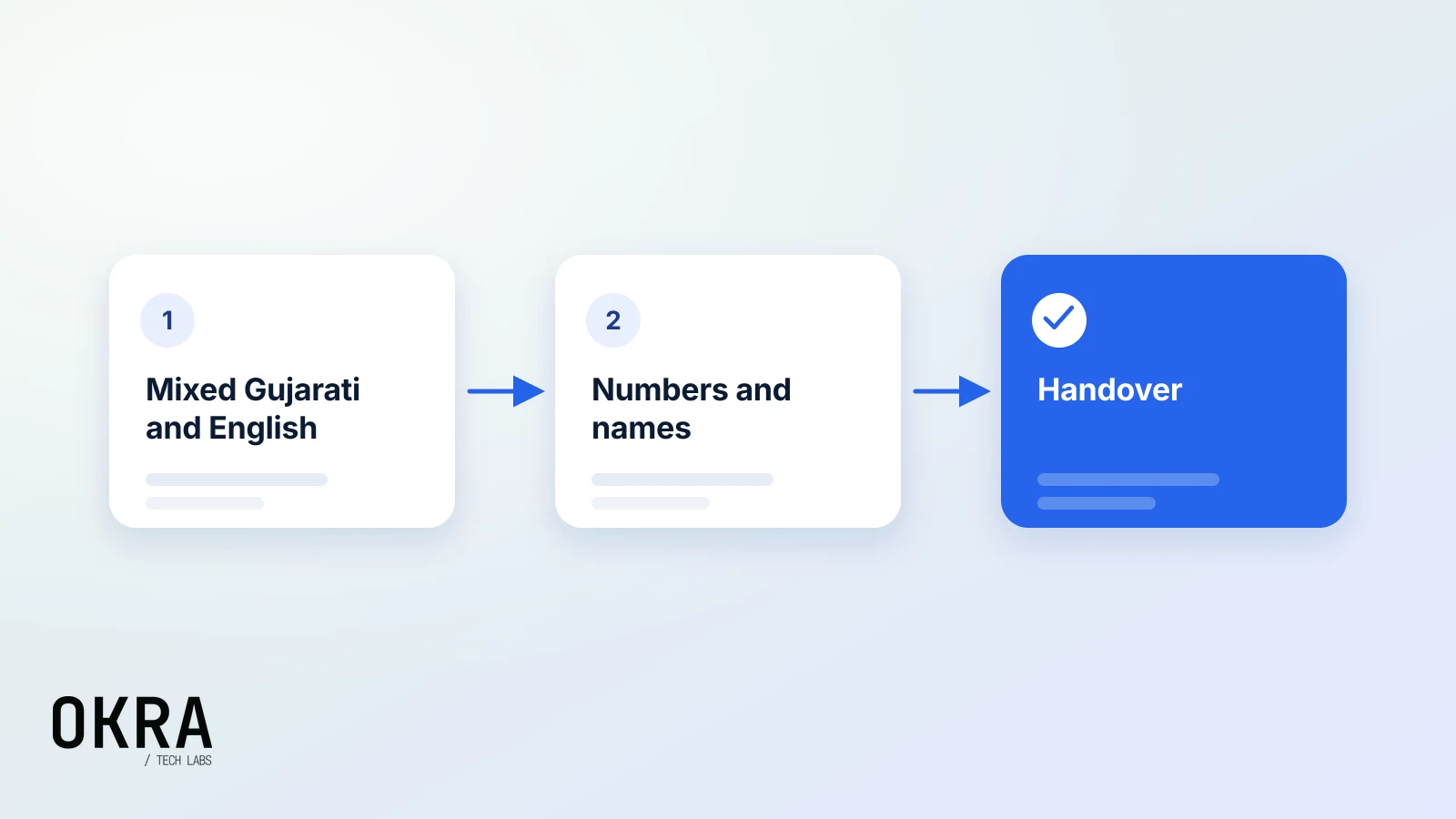
We build AI voice agents that cover exactly these hours for clinics, hospitals and hotels, in Gujarati, Hindi and English, and we always start by counting the calls that are missed today.
Questions people ask
How do I know how many calls my clinic misses?
Your phone system or operator can export a call log. Count calls that were not answered, by hour of day and day of week, for one month. Then check how many of those numbers called back.
Is a missed call really a lost booking?
Not always, but often. People with an urgent need, such as a sick child or a booking for this weekend, try the next clinic or hotel instead of waiting.
What can an AI agent do after hours?
Answer the call, book or hold an appointment or room within your rules, answer simple questions, take a message for anything else, and give the morning team a summary of every call.
What about emergencies?
An after-hours agent for a clinic must never give medical advice. It should give the emergency number and the hospital's emergency contact straight away and, where you have one, transfer to the on-call doctor.