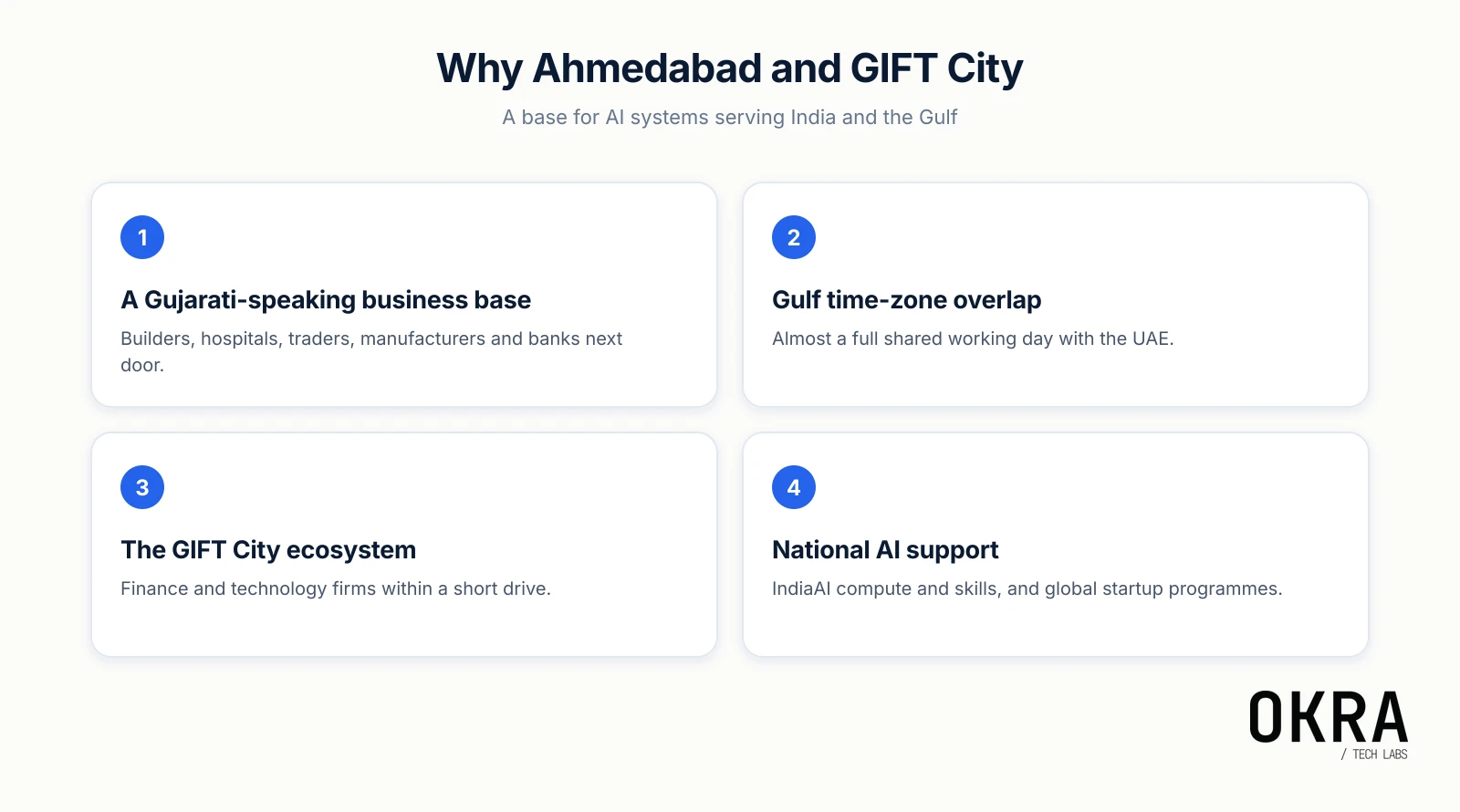
Ahmedabad and GIFT City suit an AI engineering team serving India and the Gulf: a large local business base that runs on Gujarati, time zones that overlap with the UAE, a growing tech and finance ecosystem around India's first International Financial Services Centre, and national support for AI. For local businesses, the advantage is a team that speaks the customer's language and can sit in the same room. The questions to ask any AI team are the same everywhere.
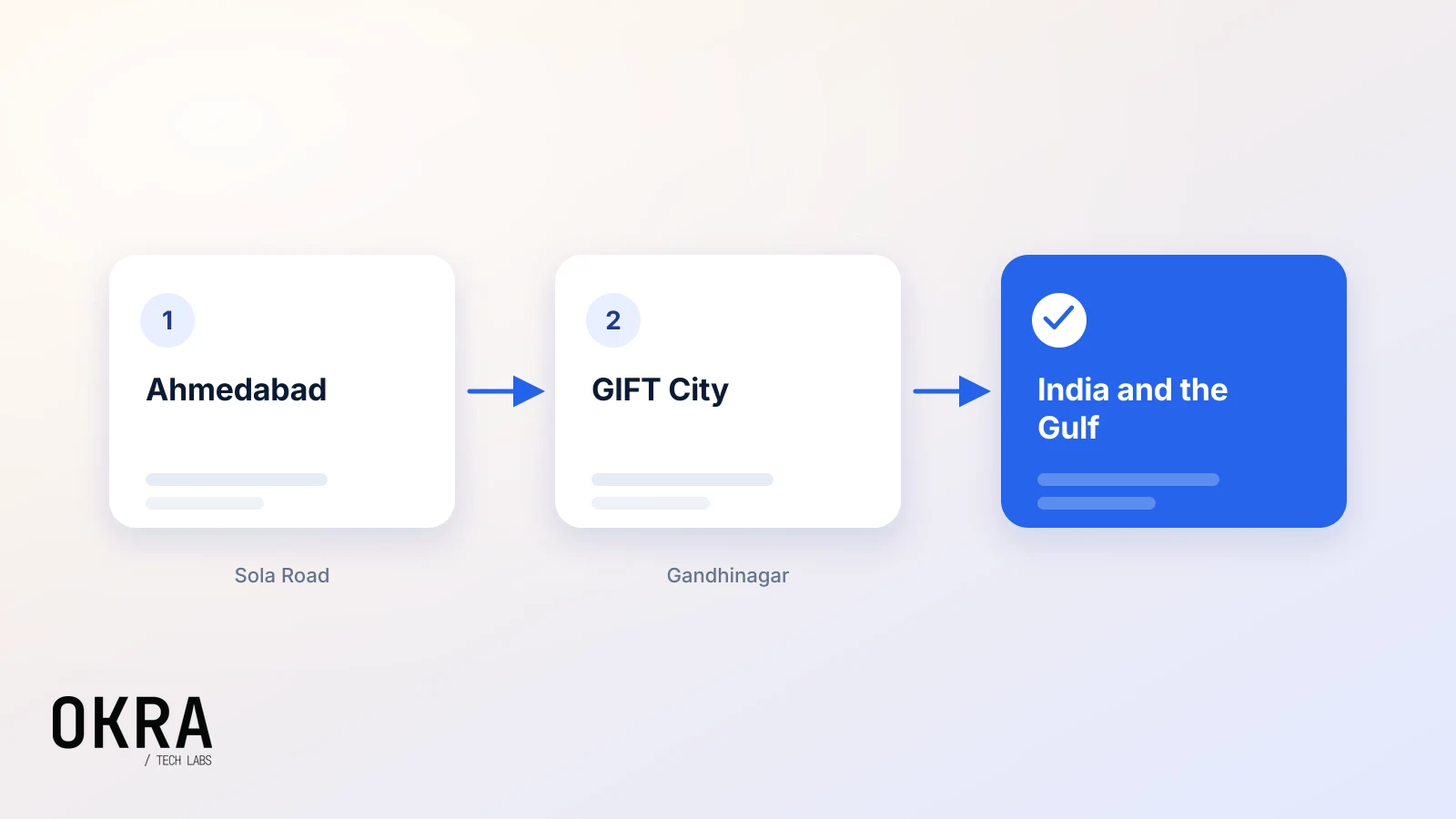
OKRA Tech Labs builds AI systems from an office on Sola Road in Ahmedabad and another at GIFT City. People sometimes ask why a team that works for clients across India and the Gulf would choose Gujarat. This post answers that, and sets out what businesses here should look for in any AI team, including ours.
A business base that runs in Gujarati
Gujarat is one of India's great business states: builders, hospitals, textile and diamond traders, manufacturers, co-operative banks, schools. A large share of that business is done in Gujarati. The 2011 census counted about 55 million first-language Gujarati speakers.
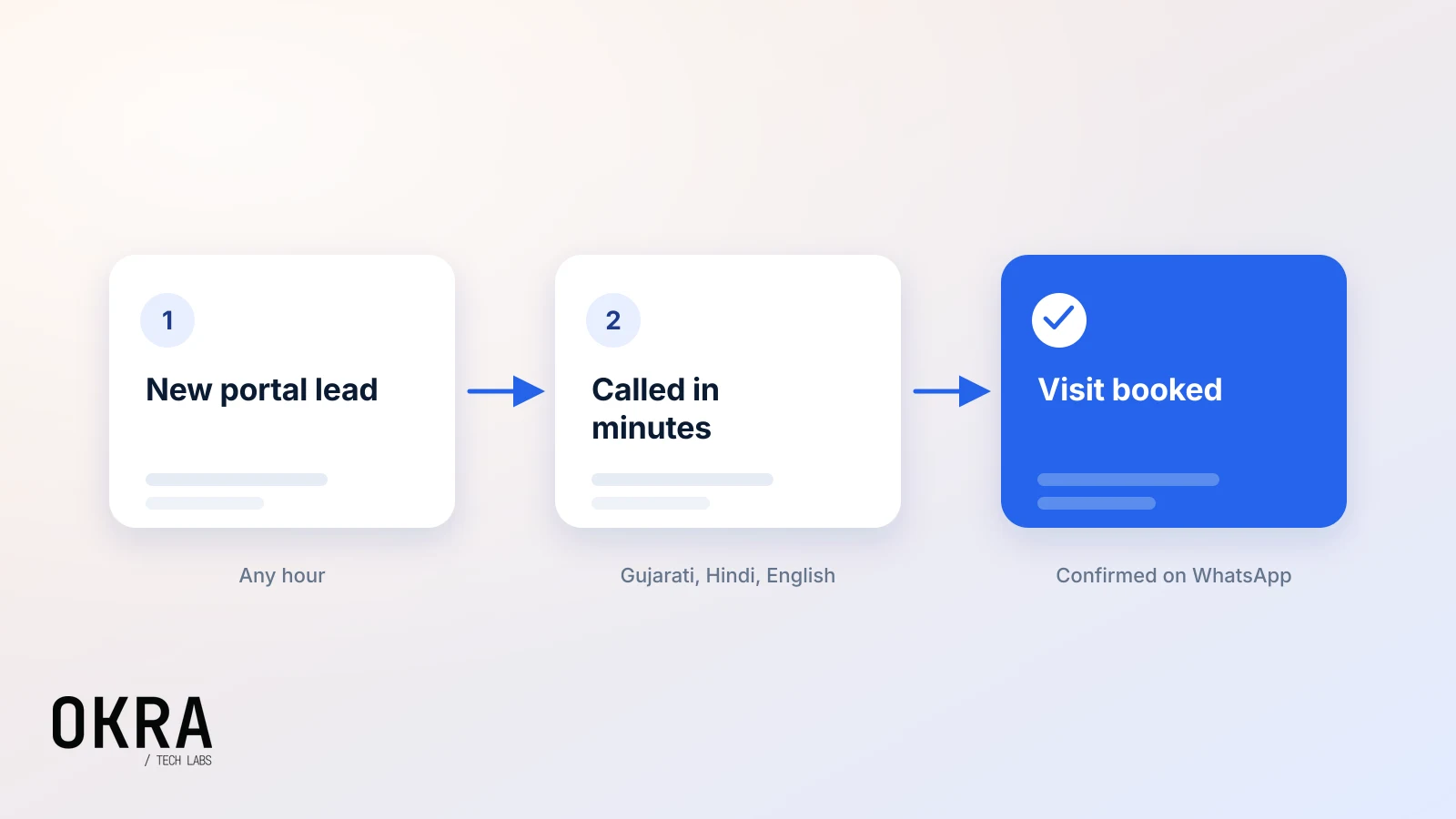
That matters for AI. Systems that speak to customers, such as voice agents, WhatsApp assistants and support bots, have to work in the language customers actually use, including the everyday mix of Gujarati, Hindi and English. Building those systems next to the people who will use them makes them better. You can test with real callers in a week, not guess from a distance.
Working hours that overlap with the Gulf
The UAE is a short flight away and only one and a half hours behind India. A team in Ahmedabad shares almost a full working day with clients in Dubai and Abu Dhabi, which makes it practical to build, review and support systems for Gulf businesses without night shifts. Many Gulf businesses also have Gujarati- and Hindi-speaking customers and staff.
The GIFT City ecosystem
GIFT City, between Ahmedabad and Gandhinagar, is described by its developer as India's first International Financial Services Centre and a smart city built to international standards. Banks, fintech firms, global finance teams and universities have set up there. For an AI team, that means clients and partners in finance and technology within a short drive, and a place to meet them.
National support for AI
The Government of India's IndiaAI programme is building compute access, datasets and skills for AI work in the country. Global programmes help too: OKRA is a member of NVIDIA Inception, NVIDIA's programme for startups. Teams outside the big metros can now get the same tools and compute that used to be limited to a few cities.
What local businesses should ask any AI team
Being local is a starting point, not a reason to hire. Whoever you speak to, ask:
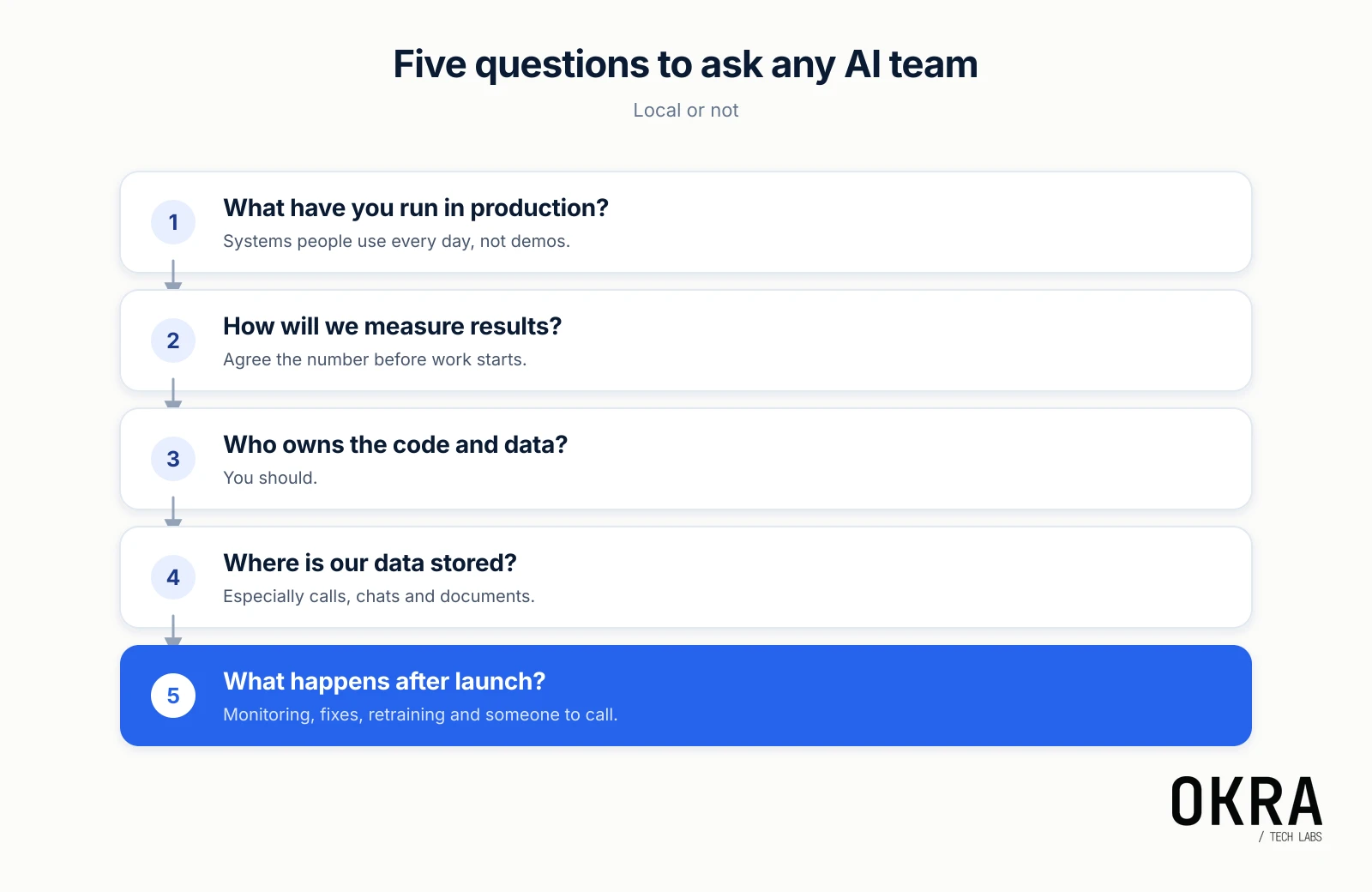
- What have you built and run in production? Not demos. Systems people use every day.
- How will we measure results? Agree the number the system should move before work starts.
- Who owns the code, models and data? You should.
- Where will our data be stored? Especially for customer calls, chats and documents.
- What happens after launch? Monitoring, fixes, retraining and someone to call.
Our posts on why AI pilots never reach production and what decides the cost of an AI agent in India go deeper on both. If you are a business in Gujarat thinking about AI, we are happy to meet in Ahmedabad or at GIFT City.
Questions people ask
Why build AI products from Ahmedabad?
It is close to a large base of businesses that run in Gujarati and Hindi, it has a growing engineering talent pool, and it shares working hours with both Indian and Gulf clients.
What is GIFT City?
Gujarat International Finance Tec-City, near Gandhinagar, is described by its developer as India's first International Financial Services Centre and a planned smart city. Many finance and technology firms have offices there.
Does a local AI team matter?
For systems that talk to your customers, often yes. A team that understands Gujarati, local business habits and your customers' questions can build and test faster, and can meet you in person.
What should a Gujarat business ask an AI team?
What it has built and run in production, how it will measure results, who owns the code and data, where data is stored, and how it supports the system after launch.