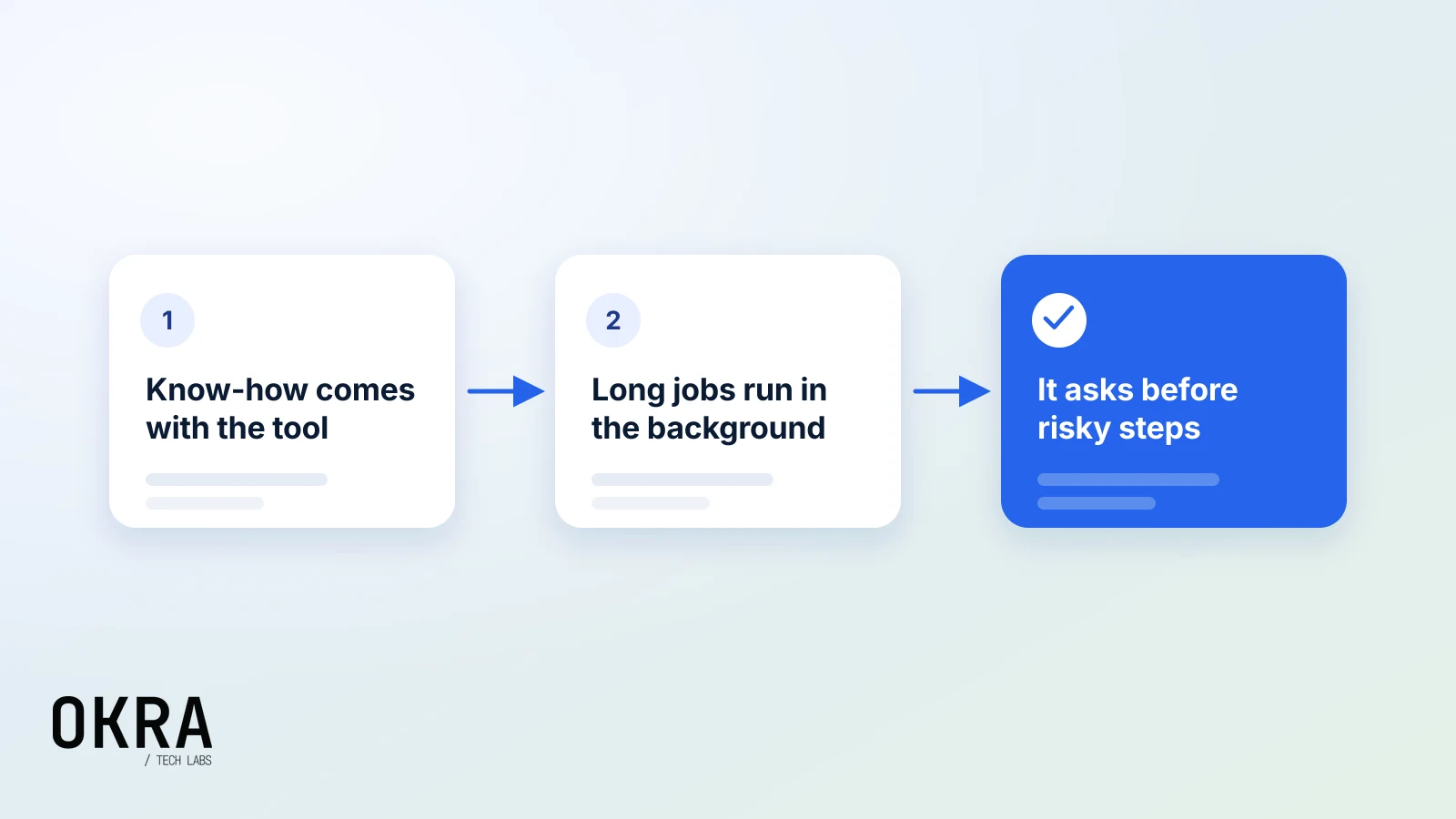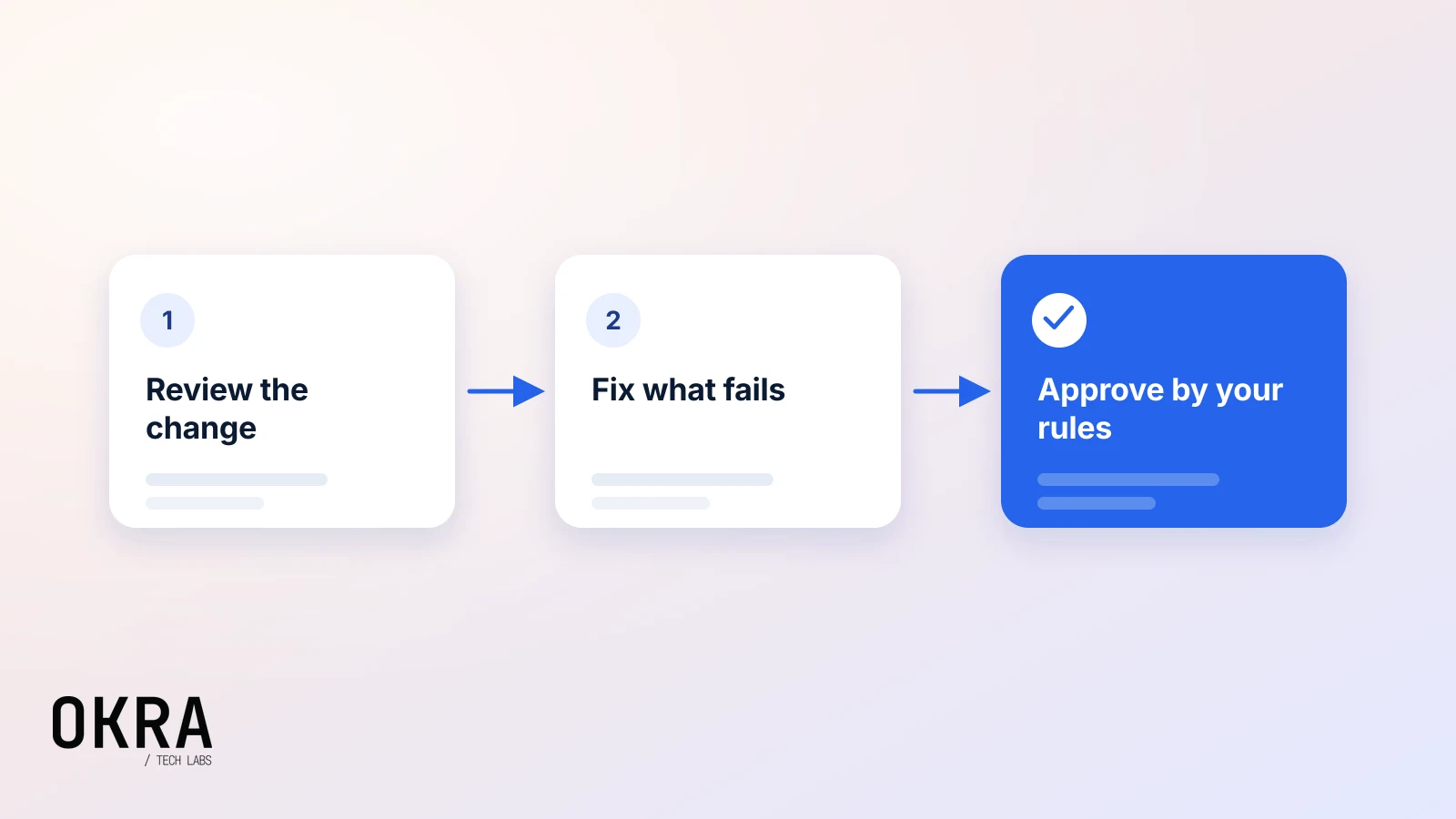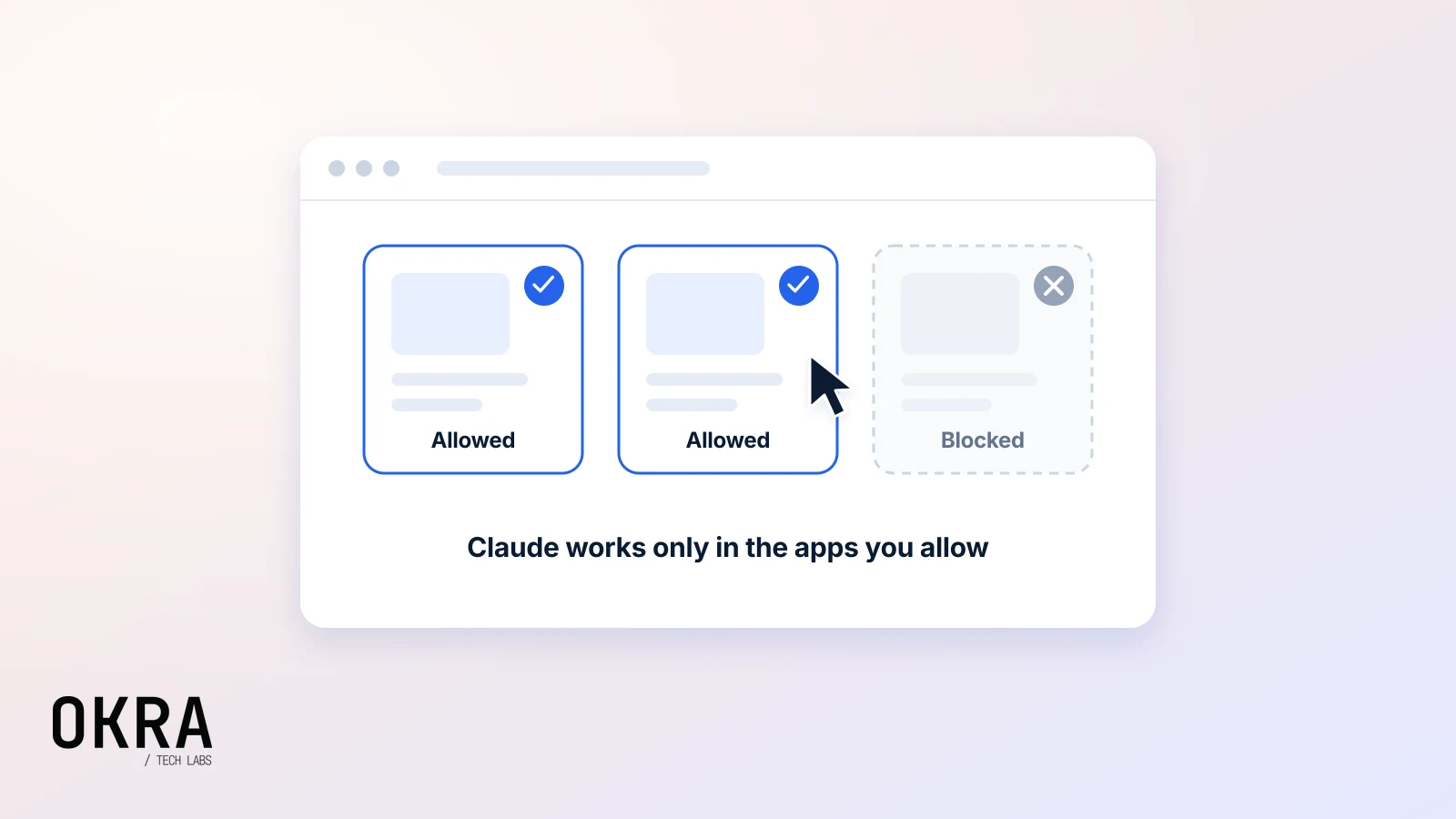
Claude Opus 5.5 is strongest at long-running agent work, research that checks figures against sources, and writing that follows your style rules. For marketing, that points to sourced research, on-brand first drafts, competitor tracking, reading campaign reports, and running content pipelines with a person approving what goes live.
Anthropic released Claude Opus 5.5 on 22 September, the first model in its Claude 5.5 family. In its announcement, Anthropic says Opus 5.5 performs at the level of Claude Fable 5.1 on most work while costing 40% less to run than Opus 5.
Anthropic pitches it mainly for agentic coding and knowledge work, not marketing. But several of its stated strengths are exactly what marketing teams spend their days on: research, writing to a brief, keeping track of competitors and making sense of reports. Here is how to put it to work.
What Opus 5.5 is good at
From Anthropic's launch post, the strengths that matter for marketing are:
- Research that checks itself. Anthropic describes it as a reliable researcher that checks figures against their sources.
- Writing that follows rules. Anthropic says its writing is clearer, puts the key information first and follows a user's style rules.
- Web data collection and chart reading. It leads Anthropic's comparisons on large-scale web data collection and chart recognition.
- Long agent runs and computer use. It is built to power long-running agents and posts the top score among the compared models on a computer-use benchmark.
On price, the Claude Opus page and launch coverage put it at $4 per million input tokens and $20 per million output tokens, down from $5 and $25 for Opus 5.
1. Market and audience research with sources attached
Most AI research briefs fail the same way: confident numbers nobody can trace. A model that checks figures against sources is useful here, as long as you make sourcing a hard requirement.
Try it on: a market-sizing brief for a new city, a buyer-persona summary built from public reviews and forums, or a one-page summary of a sector report.
Prompt rule worth adding: "Every number must have a link. If you cannot find a source, say so instead of estimating."
2. On-brand first drafts from your style guide
Paste your brand voice guide, banned words list and two or three posts you liked into a project, and ask for drafts against it. A model that follows style rules saves the editing pass where a reviewer rewrites everything into the house voice.
Try it on: blog first drafts, LinkedIn posts in the founder's voice, email nurture sequences, and product page copy.
Keep a person on: facts, claims and anything with a number. Style is the easy part; accuracy is the editor's job.
3. Competitor tracking across the web
Web data collection is where agents earn their cost. Set up a weekly run that visits competitor pricing pages, product pages and blogs, and reports only what changed.
Example (illustrative): a real estate developer in Ahmedabad gets a Monday note listing new projects launched nearby, any change in advertised offers, and new pages on competing developers' sites, each with a link.
Keep a person on: interpretation. The agent reports changes; your team decides what they mean.
4. Reading campaign reports and dashboards
Strong chart reading means you can hand the model screenshots or exports from ad platforms and analytics tools and ask the questions you would ask an analyst.
Try it on: "Which campaigns lost efficiency this month, and what changed in targeting or creative at the same time?" or "Summarise this report for the founder in five lines."
Keep a person on: the underlying data. Spot-check a few figures against the source dashboard before acting on the summary.
5. Content operations: briefs, internal links and checks
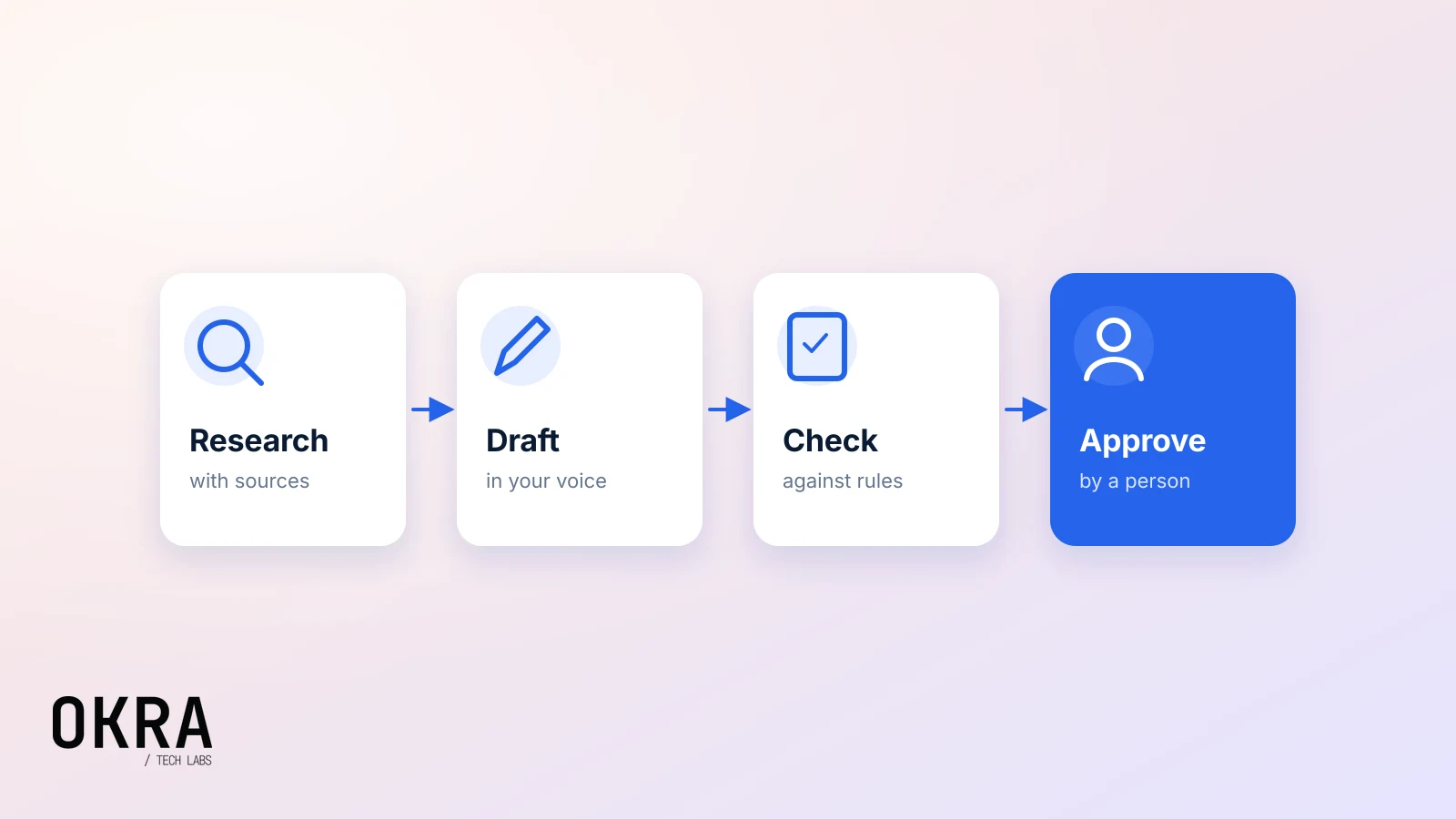
This is where long agent runs pay off. A content pipeline is many small steps: keyword research, brief, draft, internal links, image prompts, metadata, a final check against your rules. A model built for long multi-step work can run the whole chain and hand an editor a finished draft.
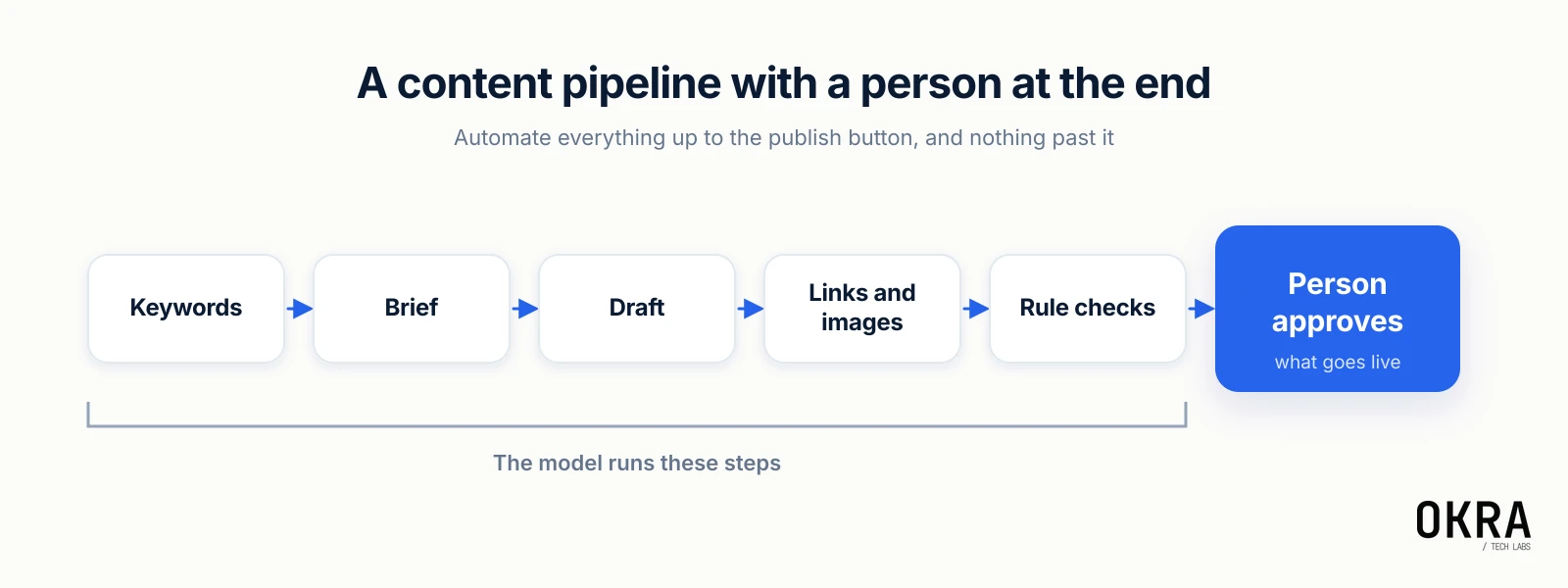
Try it on: turning a list of target keywords into briefs, adding internal links to an existing post, or checking a batch of drafts against your publishing rules (sources present, no banned claims, title and description length).
Keep a person on: the publish button. Automate everything up to it, and nothing past it.
6. Localising campaigns for regional audiences
Indian and Gulf campaigns often run in several languages. Use the model for first-pass adaptation: rewriting a campaign line so it works culturally, not just translating it word for word.
Keep a person on: every language you publish in. Have a native speaker review the final copy, especially for Indian regional languages and Arabic, where tone and formality matter.
How to roll it out without wasting money
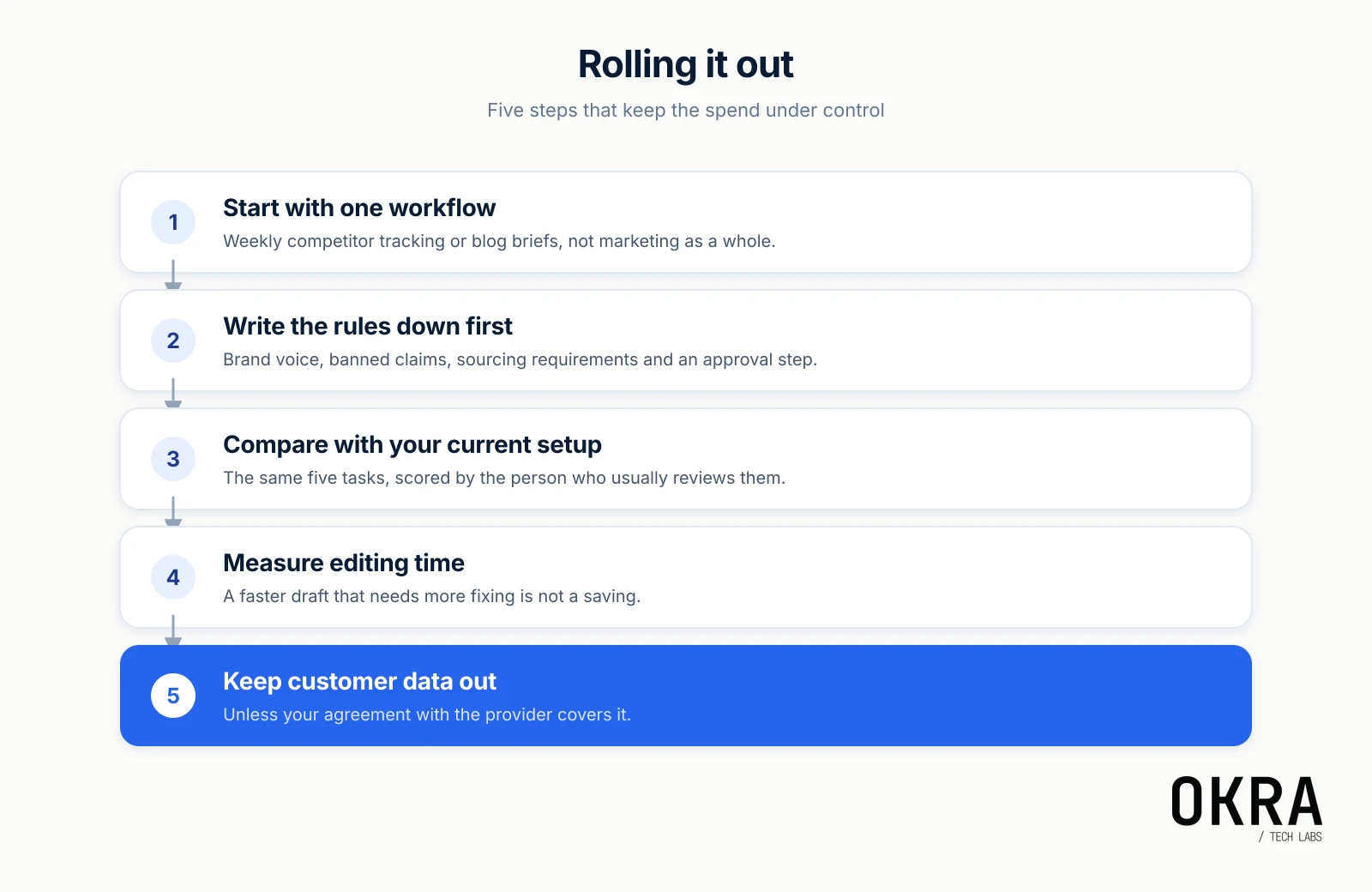
- Start with one workflow, such as weekly competitor tracking or blog briefs, not "marketing" as a whole.
- Write the rules down first: brand voice, banned claims, sourcing requirements and an approval step.
- Compare against your current setup on the same five tasks, scored by the person who usually reviews them.
- Measure editing time, not just output volume. A faster draft that needs more fixing is not a saving.
- Keep customer data out unless your agreement with the provider covers it. Anthropic says Opus 5.5 supports zero data retention on the API, which is worth asking about for sensitive work.
Opus 5.5 will not replace a marketing team. Used on the right steps, with a person approving the output, it removes the slowest parts of the job.
Questions people ask
When was Claude Opus 5.5 released?
Anthropic released Claude Opus 5.5 on 22 September 2026 as the first model in its Claude 5.5 family. It is available through the Claude apps on paid plans, the Claude API as claude-opus-5-5, and major cloud platforms.
How much does Claude Opus 5.5 cost?
Anthropic prices it at $4 per million input tokens and $20 per million output tokens, and estimates about 40% lower total cost than Opus 5 on typical workloads.
Is Claude Opus 5.5 good for marketing?
Anthropic does not position it specifically for marketing, but its stated strengths (sourced research, writing that follows style rules, web data collection, chart reading and long agent runs) map well onto marketing work. Test it on your own briefs before rolling it out.
Can Claude Opus 5.5 publish content automatically?
It can run long multi-step jobs and operate software, but publishing should stay behind a human approval step. Use it to draft, check and prepare; let a person decide what goes live.