An ad creative engine takes a campaign brief and produces many ad variants (headlines, copy, images and short videos) in the brand's voice, checks each one against the brand file and advertising rules, sends them to a person for approval, publishes the approved ones, and feeds results back into the next round. For an education brand, the checks matter as much as the output, because claims about results and placements must be accurate.
This is an example build. It describes how an AI ad creative engine for an education brand works, step by step. The brand, the numbers and the screens are illustrative, not a client's.
Picture a group of coaching institutes, or a university, running admissions campaigns across Meta, Google and YouTube. Each campaign needs dozens of ads: different courses, cities, audiences and formats. A small marketing team can make a handful a week. The engine's job is to make many good ones, safely, and learn which work.
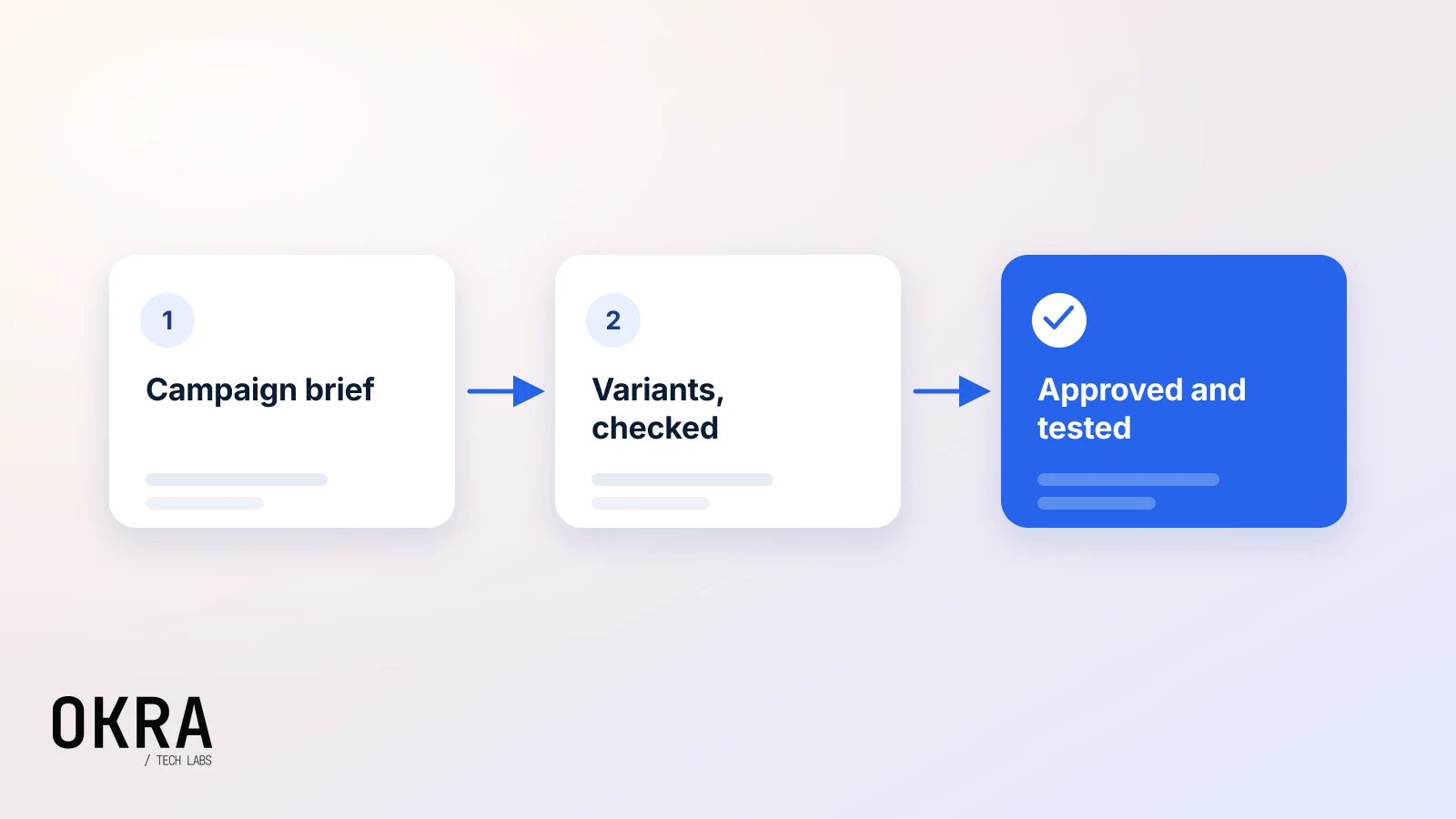
1. The brief
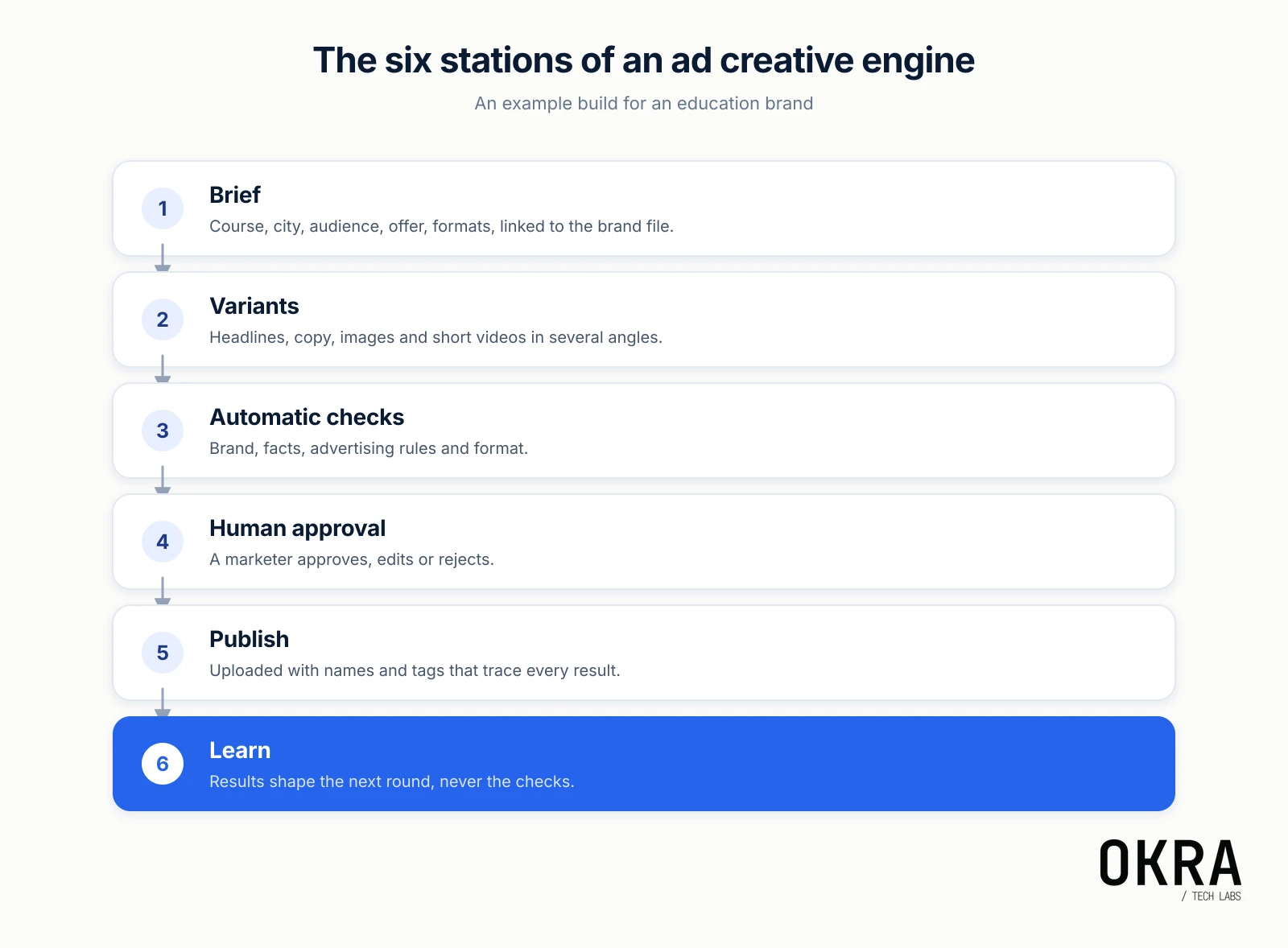
Every round starts with a short brief a marketer fills in: the course, the city, the audience (for example, parents of Class 10 students), the offer, the deadline and the formats needed. The brief links to the brand file, which holds the logo rules, colours, tone, approved facts and banned phrases.
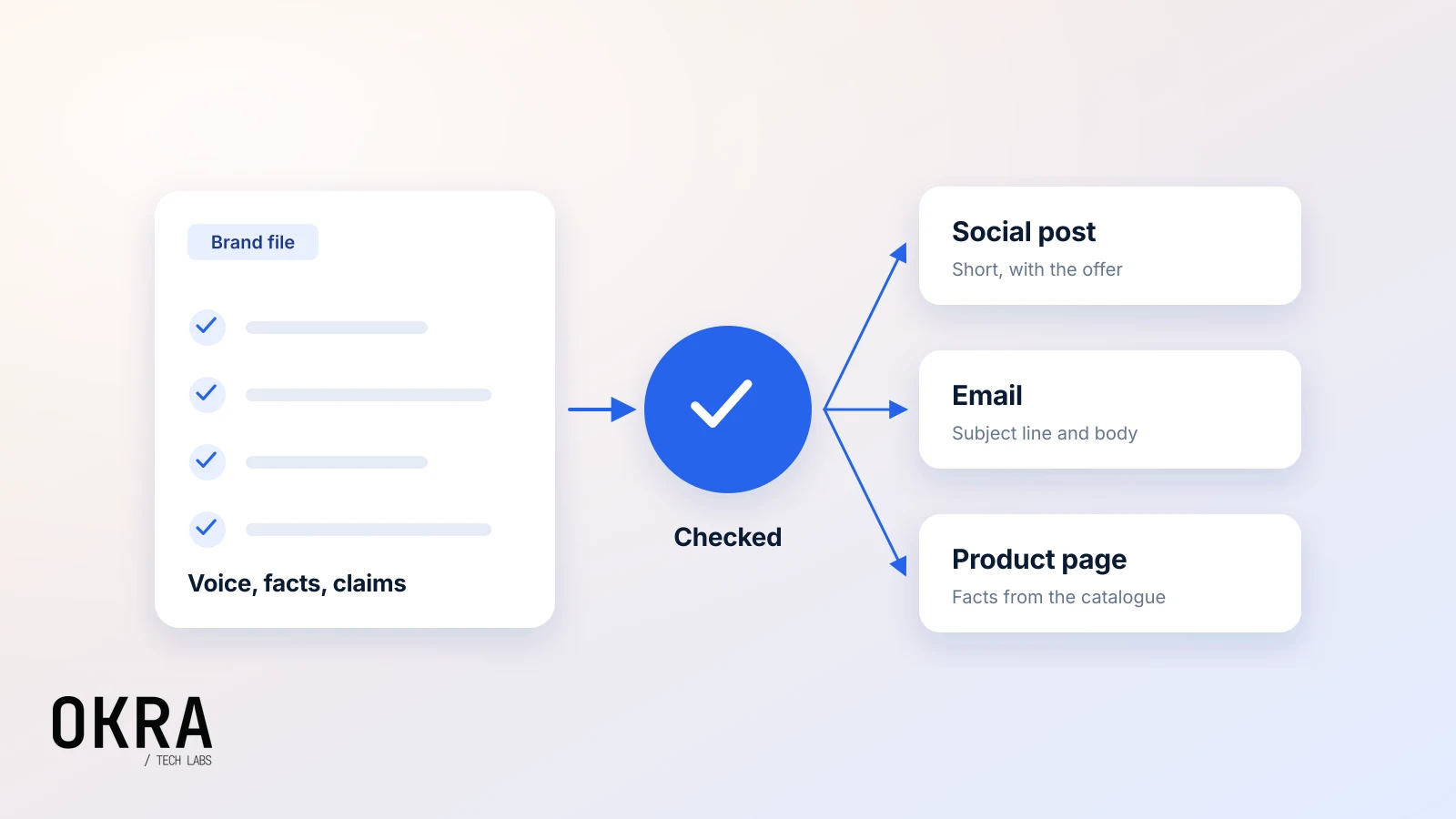
The approved facts are the heart of it: course duration, fees, batch dates, faculty names, accreditation, and any result the institute can prove. The engine may only state facts from this list.
2. Variants
From the brief, the engine writes headlines and body copy in several angles: outcome, schedule, faculty, location, and the parent's point of view. It produces image layouts from approved templates and photographs, and short video cuts from approved footage. Each variant is tagged with its angle, so results can be compared later.
3. Automatic checks
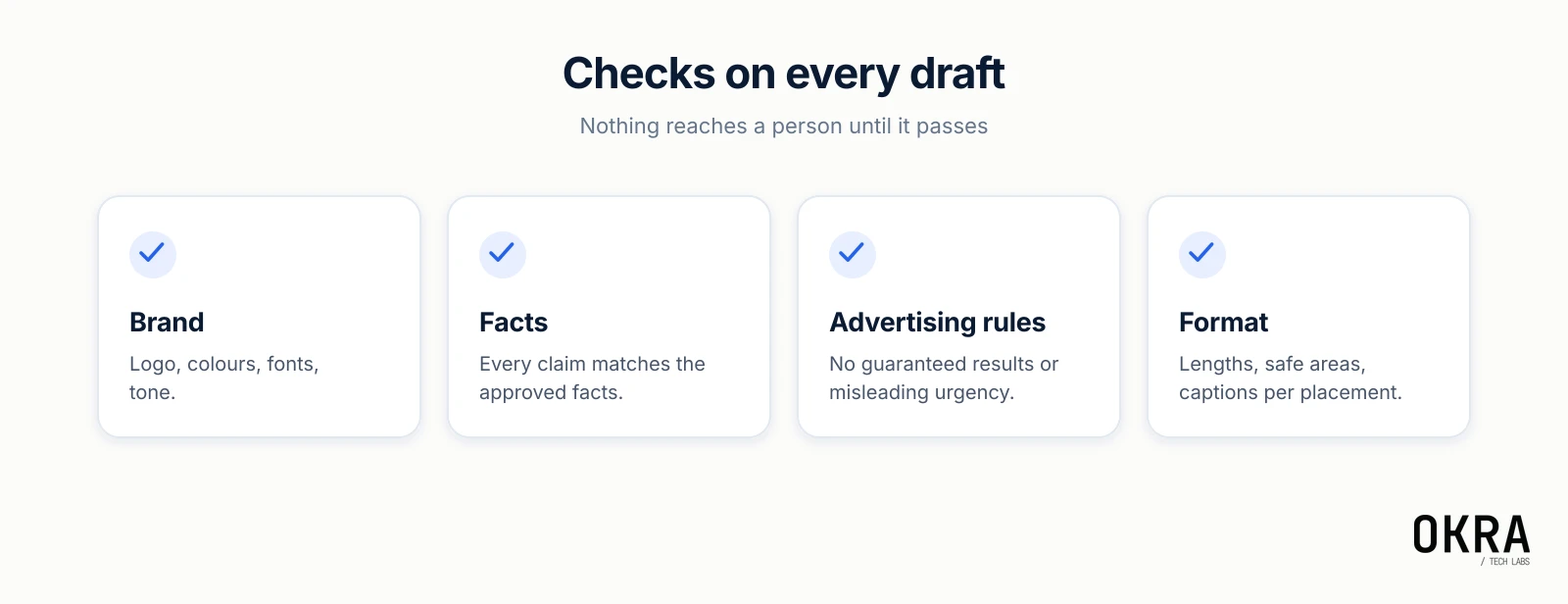
Before any person sees a draft, it passes checks:
- Brand. Logo placement, colours, fonts, tone.
- Facts. Every number and claim must match the approved facts. For example, a draft that says "100% placement" when the brand file says nothing of the kind fails here.
- Advertising rules. Claims about guaranteed results, rankings, or misleading urgency are flagged. Platforms have their own policies too; Meta's Advertising Standards, for example, set out what ads on its apps may and may not do.
- Format. Text length, safe areas on images, video length and captions for each placement.
A draft that fails goes back for another attempt. One that keeps failing goes to a person with the failure marked.
4. Human approval
A marketer reviews the drafts that passed, in one queue, grouped by campaign. They approve, edit or reject. Edits are recorded, so the engine learns the team's preferences over time. Nothing goes live without this step.
5. Publish
Approved ads are uploaded to the ad platforms with consistent names and tags, so every result can be traced back to its variant, angle and brief.
6. Learn
After each round, the engine pulls results from the platforms: reach, clicks, leads and, where the CRM allows, enquiries that became admissions. It looks for patterns, for instance which angle works for which city or audience, and uses them to shape the next round. It never relaxes the checks to chase results.
What the team gets
In this example, the marketing team spends its time on the brief, the approval queue and the results, instead of resizing images. The brand gets more variants tested, a record of what works for each audience, and every ad checked against the same rules.
What it takes to build
- A brand file with approved facts, kept up to date by one owner.
- Access to approved photos, footage and templates.
- Connections to the ad platforms and the CRM.
- An approval queue the marketing team will actually use.
- Clear rules on claims, agreed with whoever is responsible for the institute's advertising.
The same pattern works for other regulated or sensitive categories, such as healthcare and finance. Our example build of a content engine for a consumer brand shows the same idea applied to organic content.
Questions people ask
What is an AI ad creative engine?
A system that turns a campaign brief into many ad variants, checks them against your rules, gets them approved and published, and learns from how they perform.
Why is education advertising sensitive?
Ads speak to students and parents making big decisions. Claims about results, placements, rankings or guaranteed outcomes must be true and provable, and ad platforms have their own rules on what ads may say.
Does a person still approve the ads?
Yes. In this example every ad passes automatic checks first, then a marketer approves it before it goes live. Automatic checks catch most problems; a person catches the rest.
How does the engine learn?
It reads which variants performed best for each audience and channel, and uses those patterns to shape the next round of variants, within the same checks.